
Description
Product Introduction
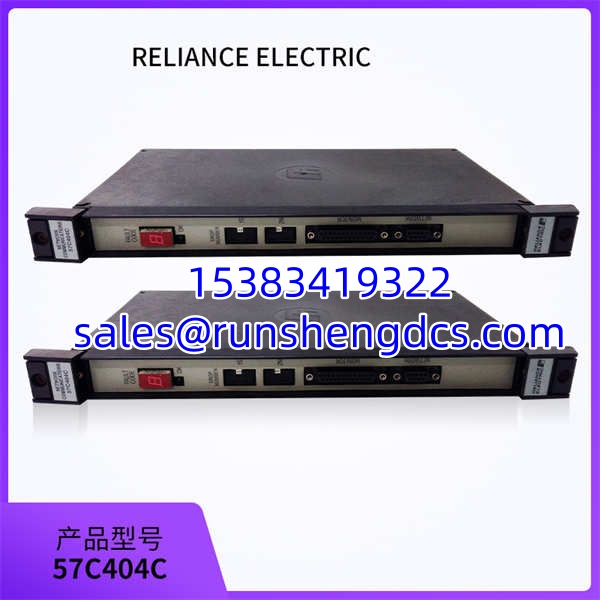
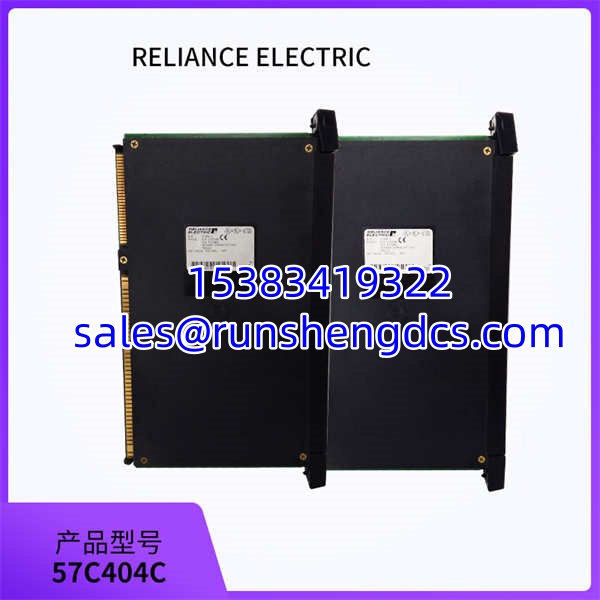
In legacy industrial control architectures, the failure of a central communication node can paralyze an entire production line. The RELIANCE 57C404C is the engineered backbone of the Reliance Electric AutoMax system, designed to solve the critical challenge of coordinating data exchange between the main processor, I/O racks, and upper-level systems. It is not merely a peripheral card; it is the central nervous system that ensures deterministic signal routing and system expansion capabilities.
In our field experience, the RELIANCE 57C404C is the unsung hero of steel mills, power plants, and paper manufacturing facilities that have relied on Reliance systems since the 1990s. Operating on a stable 5 VDC supply via the backplane, it features redundant electronic design and exceptional anti-interference performance. For plants running mature AutoMax architectures, securing a verified RELIANCE 57C404C is often the difference between a prolonged, costly outage and a rapid, seamless restoration of process control.
Key Technical Specifications
- Product Model: 57C404C
- Manufacturer: RELIANCE ELECTRIC
- Product Type: Communication / Interface Control Module
- System Compatibility: Reliance AutoMax / PLC Architecture
- Operating Voltage: 5 VDC (Supplied via backplane)
- Interface Type: AutoMax Backplane Bus
- Operating Temperature: 0℃ to +60℃
- Storage Temperature: -40℃ to +85℃
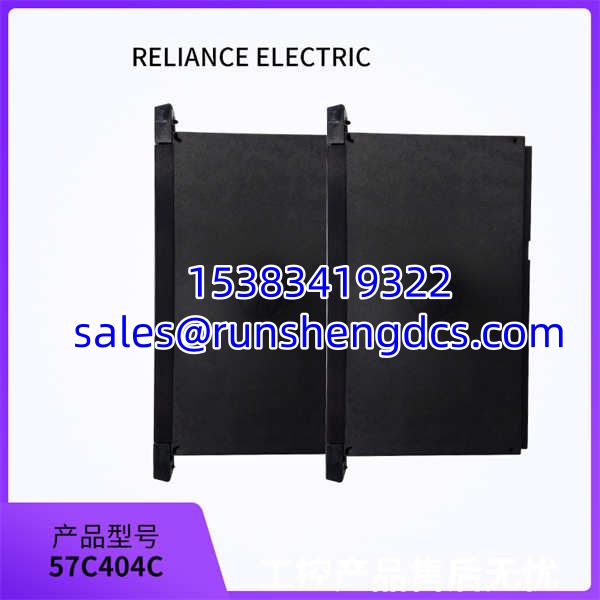
- Form Factor: Standard Plug-in Card (Rack Mount)
- Typical Application: Data Exchange, System Expansion, Signal Coordination
Application Scenarios & Pain Points
The RELIANCE 57C404C typically becomes the focal point when an aging AutoMax rack exhibits intermittent bus faults, dropped communications, or fails to recognize newly added I/O modules. We’ve seen cases where a degraded communication interface caused asynchronous data updates, leading to false safety trips in continuous manufacturing processes. This module acts as the reliable bridge, restoring stable peer-to-peer coordination across the backplane.
- Steel & Metallurgy: Maintaining continuous operation in rolling mills and blast furnace controls. The RELIANCE 57C404C’s robust anti-interference design ensures that heavy motor noise does not corrupt critical position or speed feedback data.
- Power Generation: Supporting legacy turbine and boiler control systems. As a core interface unit, it reliably routes safety permissives and operational status signals between the central CPU and distributed field I/O racks.
- Pulp & Paper Manufacturing: Coordinating high-speed web tension and drive controls. The deterministic nature of the RELIANCE 57C404C prevents the micro-stutters in communication that can cause paper breaks or quality defects.
- Legacy System Maintenance: Extending the lifecycle of 1990s-era DCS architectures. For facilities planning gradual upgrades but unable to afford a full rip-and-replace, this module provides the essential spare part needed to keep the existing AutoMax infrastructure alive and stable.
RELIANCE 57C404C
Quality Control Process
We know that a communication module with degraded backplane connectors can cause phantom bus errors that take days to troubleshoot. That’s why our QC for the RELIANCE 57C404C goes far beyond a visual check. We treat every unit as a critical infrastructure component, and our testing reflects that level of scrutiny.
- Visual & Mechanical Inspection: We inspect the RELIANCE 57C404C for bent backplane pins, damaged card guides, and verify the integrity of the AutoMax bus connectors. We also check for any signs of thermal stress or capacitor aging on the internal PCB.
- Backplane Power Verification: We install the module into a live AutoMax test rack and verify that it correctly draws and regulates its 5 VDC supply. We monitor the power-on self-test sequence to ensure the module initializes without drawing excessive current.
- Bus Communication Test: We configure a multi-rack AutoMax test environment and force high-speed data exchanges through the RELIANCE 57C404C. We verify that it successfully routes messages between the master CPU and remote I/O nodes without packet loss or timing violations.
- Signal Integrity Check: We inject simulated electrical noise into the test environment to verify the module’s anti-interference shielding and redundant circuit design. We confirm that communication remains stable even under degraded electrical conditions.
- Final Certification: Only units passing all electrical, communication, and environmental tests receive our QC label. We provide a test report detailing the successful backplane handshake and data routing integrity for your maintenance records.
Installation Pitfalls Guide
I’ve seen a perfectly good RELIANCE 57C404C blamed for a system crash because of a loose backplane connection or a mismatched system revision. Don’t let a simple installation error cost you days of downtime. Here are the traps we see most often:
- Backplane Seating Force: The RELIANCE 57C404C relies on high-density backplane connectors. Do not use excessive force or pry the card into place. If it doesn’t seat smoothly, check for bent pins on the backplane or misaligned card guides. Forcing it will damage the delicate bus traces.
- 5VDC Power Budget: While the module operates on 5 VDC from the backplane, adding multiple communication modules can overload the power supply. Always calculate your total backplane 5VDC load before installing the RELIANCE 57C404C to prevent brownouts during system startup.
- System Revision Matching: Reliance AutoMax systems span several decades. Ensure the hardware revision of the RELIANCE 57C404C matches the firmware expectations of your existing CPU module. Mixing incompatible revisions can result in bus initialization failures.
- Grounding and Noise: Although this module has excellent noise immunity, it is not immune to a floating ground. Ensure the AutoMax rack is properly bonded to the facility earth ground. A floating chassis can induce common-mode noise that mimics a failed communication card.
- Slot Placement: The RELIANCE 57C404C must be installed in the designated communication/interface slot as defined by your AutoMax hardware manual. Installing it in a standard I/O slot will prevent the CPU from recognizing the module during the power-up scan.