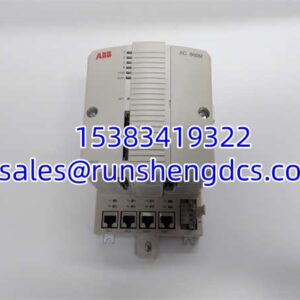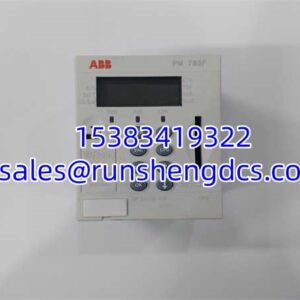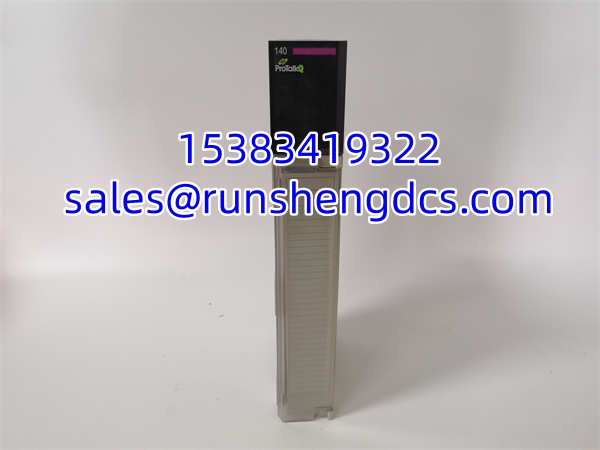

Description
Key Technical Specifications
- Part Number: PTQ-PDPMV1
- Protocol: PROFIBUS DP V0/V1 (IEC 61158 compliant)
- Communication Speed: 9.6 kbps to 12 Mbps (auto-detect)
- Communication Interface: 1× PROFIBUS DP port (9-pin D-Sub, RS-485, optically isolated at 1500V)
- Slave Capacity: 31 slaves per segment (no repeater); up to 125 with repeaters
- Data Mapping: Up to 2048 bytes input / 2048 bytes output
- Power Supply: Quantum backplane 5V DC, max 1.2A draw
- Processor Architecture: Siemens ASPC2 Step E ASIC + Infineon C165 microcontroller
- Firmware: Flash-upgradable
- Hot Standby: Unity HEC hot standby compliant — max 4 modules per rack in hot standby config, 6 in non-redundant
- Compatible PLCs: Schneider Quantum Unity series (140CPU65xx, 140CPU67xx, etc.)
- Configuration Software: ProSoft Configuration Builder (PCB); also includes FDT/DTM comDTM for field device integration
- Operating Temperature: 0–60°C
- Certifications: PROFIBUS PTO certified; Schneider CAPP approved; ATEX/IECEx (zone ratings on label)
- Dimensions: Standard Quantum single-slot module form factor
- Weight: ~0.8 kg
Product Introduction
Picture a Schneider Quantum PLC sitting in a control cabinet, tasked with talking to 20 variable frequency drives, a handful of remote I/O racks, and a bank of field instruments — all on PROFIBUS DP. The PLC itself doesn’t speak PROFIBUS natively. That’s where the PTQ-PDPMV1 lives. It plugs directly into the Quantum backplane as an option module, grabs processor memory (3x/4x data tables), and acts as a full DPV1 master — handling cyclic I/O (DPV0) and non-cyclic parameter reads, diagnostics, and alarm acknowledgments (DPV1 Class 1 and Class 2 services).
The module runs on a Siemens ASPC2 Step E ASIC paired with an Infineon C165 microcontroller, which is old-school silicon but proven in the field. Processor data transfer and PROFIBUS I/O are asynchronous — meaning the bus traffic doesn’t block the PLC scan cycle. That matters when you’ve got a 12 Mbps bus loaded with 30+ slaves and you can’t afford the PLC scan to stall every time a drive reports a fault. Configuration happens through ProSoft Configuration Builder (drag-and-drop bus view) or via Ethernet directly to the module. Firmware is flash-upgradable, which is a lifesaver when a slave device vendor pushes a GSD update.
Troubleshooting Quick Reference
| Fault | Likely Cause | Probability | Quick Check | Fix |
|---|---|---|---|---|
| Module not recognized by Quantum PLC | Module not seated properly or backplane slot fault | ~55% | Check if PLC hardware config shows the module; reseat in slot | Reseat firmly; try a different slot; verify backplane connector pins |
| No PROFIBUS communication | Bus wiring, termination, or baud rate mismatch | ~60% | Check 9-pin D-Sub wiring (pins 3/8 for DP); verify termination resistors | Confirm 120Ω termination at both ends; verify baud rate matches slave config |
| Intermittent slave dropouts | Cable degradation, EMI, or repeater failure | ~45% | Run bus diagnostic via PCB software; check for CRC errors | Shield cables; check repeater power; shorten segment if needed |
| PLC scan time spikes | Too many slaves or oversized I/O mapping | ~30% | Check total I/O byte count against 2048-byte limit; monitor scan time in Unity | Reduce mapped data; split across multiple PTQ modules |
| Hot standby switchover fails | Module not configured for HEC redundancy | ~25% | Verify Unity HEC config; check max 4-module limit per rack | Reconfigure HEC settings; reduce module count if over limit |
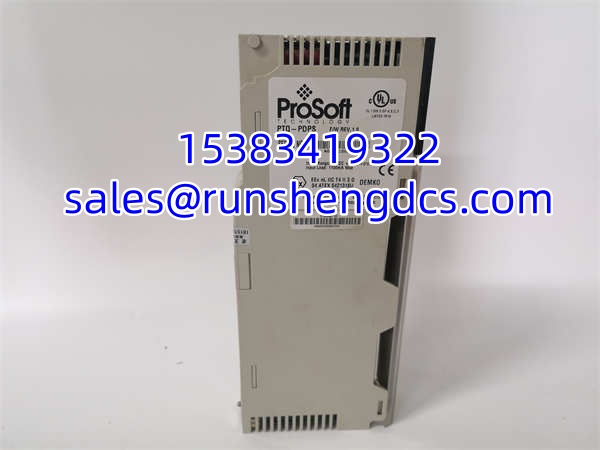
PROSOFT PTQ-PDPS
Application Scenarios & Pain Points
- Power distribution substation automation: A utility’s Schneider Quantum PLC manages switchgear status via PROFIBUS DP slaves. The PTQ-PDPMV1 handles cyclic status polling and non-cyclic parameter changes. Pain point — the module is legacy, and when it fails, the utility scrambles to find a surplus unit with matching firmware revision to avoid reconfiguring every slave’s GSD file.
- Petrochemical process control: A refinery uses Quantum PLCs with multiple PTQ-PDPMV1 modules managing PROFIBUS PA field devices through DP/PA couplers. Pain point — when a module develops intermittent bus faults, the diagnostic data can point to any slave on the segment, making root cause analysis slow without proper bus analyzer tools.
- Water treatment SCADA integration: A water plant runs PROFIBUS-connected pump VFDs and flow meters through a Quantum PLC. Pain point — the plant needs to add new slaves but the existing PTQ-PDPMV1 is already at the 31-slave segment limit, forcing them to install repeaters and redesign the bus topology.