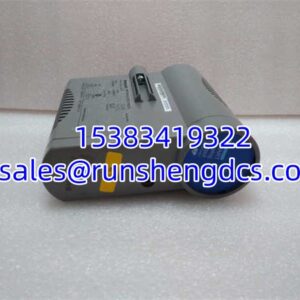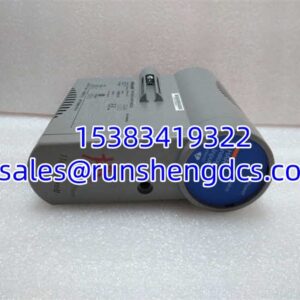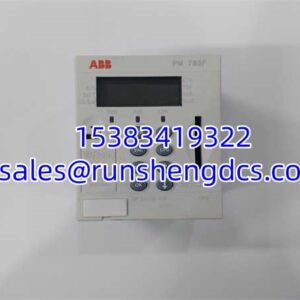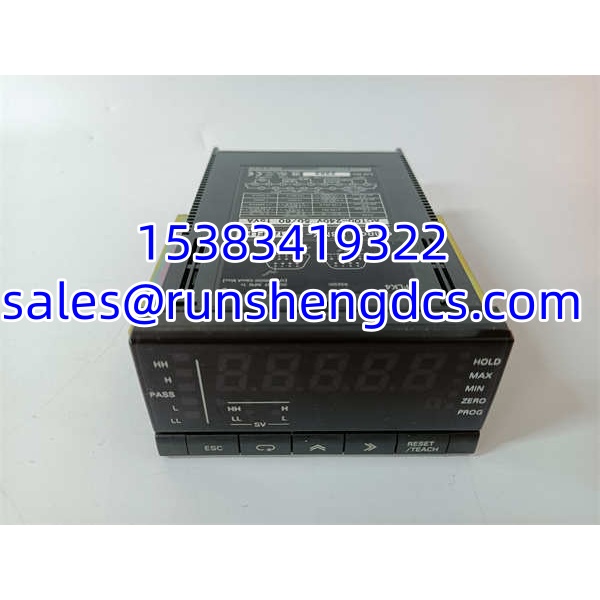
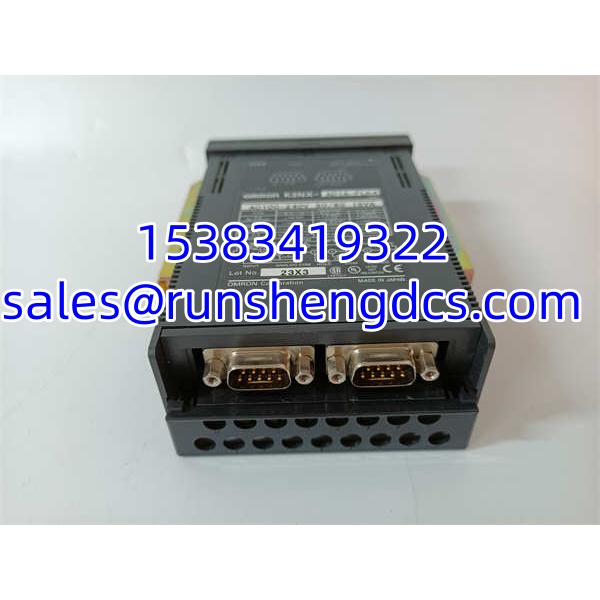

Description
Key Technical Specifications
| Parameter | Specification |
|---|---|
| Series | OMRON K3NX Digital Panel Meter |
| Model Code | K3NX-AD1A-FLK4 |
| Input Type | DC voltage (multi-range; exact ranges vary by revision — verify with OEM datasheet) |
| Input Channels | 1 |
| Power Supply | AC 100–240 V |
| Communication | RS-232C |
| Comparison Outputs | NPN open-collector: HH, H, PASS, L, LL |
| Display | 7-segment digital display |
| Front Panel Protection | NEMA 4 / IP66 equivalent (K3NX series) |
| Sensor Supply | DC 12 V, typically up to 80 mA for external transmitters |
| Mounting | Panel-mount digital meter |
| Typical Environment | Indoor industrial panels; verify temperature/humidity limits per datasheet |
Product Introduction
Panel meters get swapped more often than engineers admit, usually because someone assumed “DC voltage input” meant any range, any scaling, any protocol. The K3NX-AD1A-FLK4 is the kind of unit that survives in older panels because it does one job without fuss: take a DC voltage signal, show it, compare it, and send it upstream over RS-232C.
It sits at the edge of the control system — downstream of transmitters or signal conditioners, upstream of a PLC, HMI, or data logger. The FLK4 suffix is the important part. It adds RS-232C communication plus five discrete NPN open-collector outputs (HH, H, PASS, L, LL), which is useful when you need both serial readback and hardwired alarm indication. The AC 100–240 V supply makes it easy to drop into legacy cabinets. Bottom line: it is a straightforward process indicator, not a controller, and not a replacement for an NX-series analog input.
QA/QC Transparency SOP
- Intake & Origin Verification — Confirm the full model code K3NX-AD1A-FLK4. Check for cracked front bezels, damaged terminal blocks, or missing dust seals. FLK4 units must have the RS-232C option; non-FLK4 variants will not communicate.
- Live Functional Testing — Apply a calibrated DC voltage source across the input range. Verify display scaling, decimal point placement, and response time. Cycle HH/H/PASS/L/LL setpoints and confirm each NPN output switches correctly.
- Electrical Parameter Tests — Measure AC supply current at 120 V and 240 V. Check insulation between power terminals and signal terminals. Verify the DC 12 V sensor supply is present and within tolerance under load.
- Communication Verification — Connect RS-232C to a PC or PLC serial port. Confirm baud rate, data bits, parity, stop bits, node address, and protocol mode. Read back the present value and verify it matches the applied input.
- Final QC & Packaging — Record setpoints, communication parameters, and test results. Clean the front panel, fit the mounting gasket, and ship in anti-static packaging with terminal covers installed.
Field Engineer Gotchas
- RS-232C Distance Limit — RS-232C is good for roughly 15 meters. Beyond that, you will get framing errors or intermittent reads. If the meter is far from the PLC or PC, use an RS-232C-to-RS-422/RS-485 converter instead of running raw RS-232C across the plant floor.
- Serial Parameter Mismatch — OMRON serial devices often default to non-standard settings such as 9600 baud, 7 data bits, even parity, 2 stop bits. If your PLC or PC expects 8N1, the meter will not respond. Match both ends exactly before blaming the hardware.
- NPN vs PNP Confusion — The outputs are NPN open-collector. Connecting them to a PNP-only PLC input will give you nothing but confusion. Verify the PLC input type and add pull-up resistors if required.
- Scaling and Decimal Point Errors — The meter can scale and shift the displayed value. A replacement unit loaded with factory defaults will display raw counts, not engineering units. Export or photograph the original configuration before swapping.
- Sensor Supply Overload — The DC 12 V transmitter supply is typically limited to around 80 mA. Powering multiple transmitters from one meter can sag the voltage and corrupt the reading. Check the loop current budget.
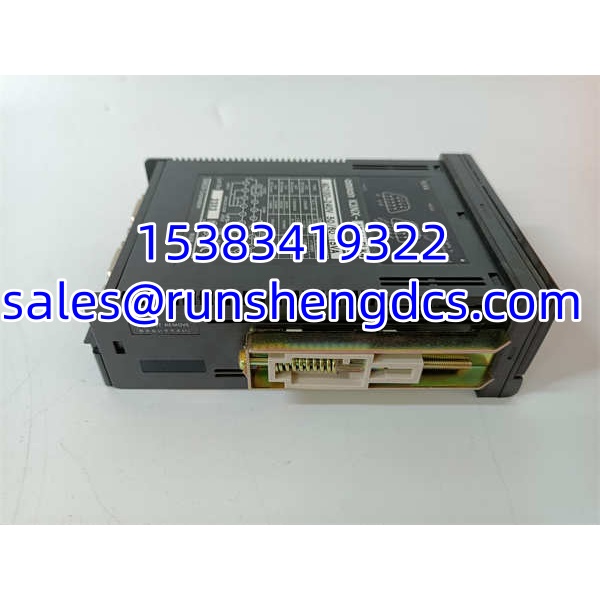
OMRON K3NX-AD1A-FLK4
Application Scenarios
- Hydraulic pressure monitoring — A 0–10 V pressure transmitter feeds the K3NX-AD1A- on a press panel. The HH output triggers a beacon when pressure exceeds the safe envelope, while RS-232C feeds the value to a legacy PLC.
- DC motor speed indication — A tachometer amplifier outputs 1–5 V proportional to motor speed. The meter provides local operator feedback and sends the value to a supervisory system over RS-232C.
- Process level indication — A level transmitter outputs 0–5 V into the meter. The PASS band confirms normal operation; L and LL outputs drive low-level alarms without requiring PLC logic.
FAQ
A: No. It is a DC voltage digital panel meter with comparison outputs and RS-232C communication. It does not perform PID temperature control.
Q: Can I use this as an NX-series analog input?
A: No. The OMRON NX-AD series are modular analog input units for the NX machine automation platform. The -AD1A- is a standalone panel meter.
Q: What RS-232C protocol does it use?
A: It uses an OMRON serial command set compatible with Host Link-style communication. Exact command format, baud rate, and data format must be confirmed in the manual for this specific option code.
A: Mechanically and electrically it may fit, but you will lose RS-232C communication and the five NPN comparison outputs. Verify the existing wiring before substituting.
Q: Does it accept 4–20 mA directly?
A: The AD variant is a DC voltage input type. A 4–20 mA signal would need a shunt resistor or signal conditioner to convert current to voltage. Check the approved input ranges in the datasheet.
Q: Is this part still available?
A: The series has been widely deployed, but availability of specific suffix combinations varies by region and distributor. Surplus and refurbished units are common. Confirm the option before purchasing.
Q: Can I power a 2-wire transmitter from the meter?
A: Yes, if the transmitter operates from 12 V and draws less than the sensor supply current limit, typically around 80 mA. Verify the transmitter loop requirements before connecting.