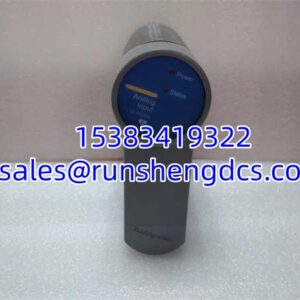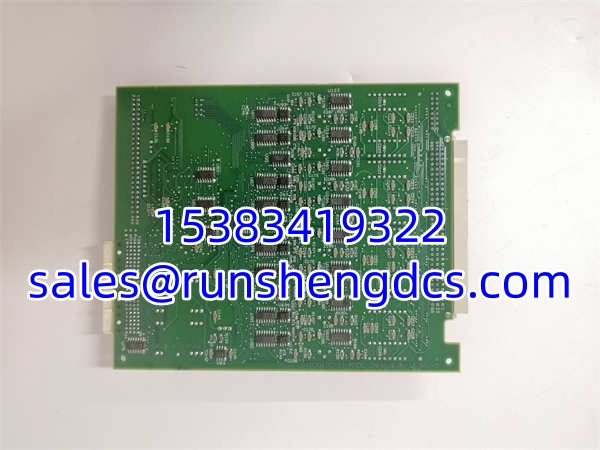

Description
Key Technical Specifications
| Parameter | Specification |
|---|---|
| Filter Type | 8th-Order Elliptic (Sharp Rolloff) |
| Cutoff Frequency | 10 Hz to 25 kHz (Software Programmable) |
| Max Sample Rate | 333 kS/s (Any Gain) |
| Input Range | ±50 mV to ±5 V (Per Channel) |
| Gain Settings | 1, 2, 5, 10, 20, 50, 100 |
| Channels | 8 Independent Analog Inputs |
| Filter Bypass | Programmable Per Channel |
| External Clock | Yes (For Tracking Filter Apps) |
| Connector | 32-Pin Front Signal Connector |
| Architecture | Hybrid SCF + Continuous-Time Active |
Product Introduction
Aliasing ruins data faster than bad wiring, and the SCXI-1141 exists to stop it before the ADC ever sees the signal. This isn’t a generic conditioner; it’s a dedicated 8th-order elliptic filter that gives you a sharp cutoff to separate signal from noise without the phase distortion of lower-order designs.
You get 10,000 discrete software-selectable frequencies from 10 Hz to 25 kHz, plus per-channel bypass if you need raw data on specific inputs. The hybrid design (switched-capacitor + continuous-time) keeps noise low while letting you tune the cutoff via NI-DAQmx, not jumpers. Bottom line — if you’re doing vibration, acoustics, or any dynamic analysis, this module is your first line of defense against garbage data.
QA/QC Transparency SOP
- Intake & Visual Inspection: Check front connector pins for bending/corrosion; verify SCXI bus edge connector is clean and undamaged.
- Live Functional Testing: Install in SCXI chassis; run NI MAX self-test and verify all 8 channels report correct ID and gain settings.
- Filter Response Verification: Inject swept sine wave (10 Hz–30 kHz); confirm -3dB point matches programmed cutoff within ±2% using a spectrum analyzer.
- Gain & Offset Calibration: Apply precision DC voltages at each gain setting; measure output error; must be within NI-DAQmx specified tolerance (typically ±0.1%).
- Final QC & Packaging: Clean contacts with IPA; seal in anti-static bag with pin protector; include test report showing filter response curve.
Field Engineer Gotchas
- Cutoff Frequency ≠ Sample Rate:
- Risk: Setting cutoff to 25 kHz but sampling at 50 kS/s still causes aliasing.
- Fix: Follow Nyquist strictly; set cutoff ≤ 40% of sample rate for elliptic filters.
- War Story: Engineer set 25 kHz cutoff, sampled at 50 kS/s, and wondered why his vibration spectrum had ghost peaks at 26 kHz. Nyquist isn’t a suggestion; it’s physics.
- Per-Channel Bypass Trap:
- Risk: Forgetting to bypass unused channels leaves them filtering noise that couples into adjacent channels.
- Fix: Explicitly bypass or terminate unused inputs; don’t assume “off” means “disconnected.”
- Warning: The module doesn’t auto-bypass. If you’re not using Ch 3-7, program them to bypass or ground them.
- External Clock Ground Loops:
- Risk: Using EXT CLK without proper grounding introduces 60 Hz hum into your filtered signal.
- Fix: Connect EXT CLK shield to A GND (Pin A28/C28) at the module, not chassis ground.
- Reality Check: Tracking filter apps are notorious for ground loops. If your noise floor jumps when you enable external clock, check your grounding first.
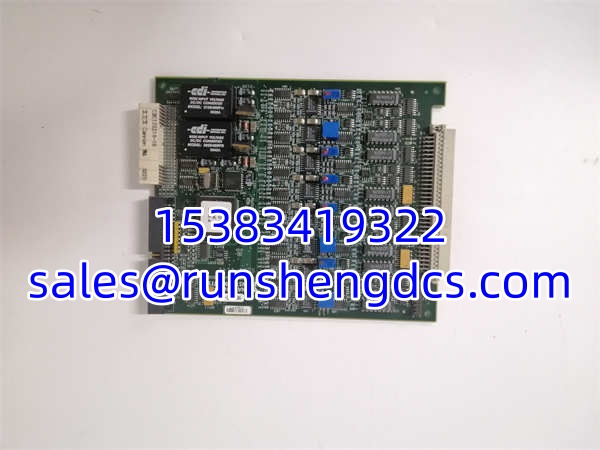
NI SCXI-1141 182610D-01
Application Scenarios
- Rotating Machinery Vibration Analysis: 8th-order elliptic roll-off prevents high-frequency bearing noise from aliasing into the 1X–10X RPM bands, ensuring accurate fault diagnosis.
- Acoustic Emission Testing: Sharp cutoff at 20 kHz isolates AE signals from structural resonances; per-channel bypass allows simultaneous raw and filtered monitoring.
- Structural Modal Testing: Programmable 10 Hz–25 kHz range covers typical structural modes; 333 kS/s max rate supports high-frequency impact hammer tests.
Case Study: Ghost Peaks in Turbine Blade Testing
A wind turbine OEM kept seeing 28 kHz peaks in blade vibration data, but no physical source existed. The SCXI-1141 was set to 25 kHz cutoff, but sampling was only 50 kS/s. The elliptic filter’s stopband wasn’t steep enough to kill energy at 28 kHz, which aliased back into the passband. Solution: Increased sample rate to 100 kS/s and added a 2nd-stage analog pre-filter. Lesson: Elliptic filters are sharp, not magic. Always verify stopband attenuation at your actual sampling rate.
FAQ
Q: Can I use this module with a PXIe-4300 DAQ?
A: No. The SCXI-1141 requires a dedicated SCXI chassis and a compatible DAQ device with SCXI bus interface (e.g., PXI-6259 with SCXI cable). PXIe-4300 is a standalone C Series module; it doesn’t support SCXI signaling.
Q: What’s the difference between SCXI-1141, 1142, and 1143?
A: Filter response only. 1141 = Elliptic (sharp rolloff), 1142 = Butterworth (flat passband), 1143 = Bessel (linear phase). Same hardware, different firmware/config. Verify which response your analysis software expects.
Q: Does the 333 kS/s rate apply to all 8 channels simultaneously?
A: No. 333 kS/s is the per-channel max rate when sampling sequentially. Total throughput depends on your DAQ device’s backplane bandwidth. Check your DAQ spec for aggregate SCXI throughput.
Q: Can I daisy-chain multiple SCXI-1141 modules?
A: Yes, but each needs its own SCXI-to-DAQ cable. They don’t share a single cable like some multiplexer modules. Plan your cabling and chassis slots accordingly.
Q: My system shows “Filter Not Configured” in NI MAX. Fix?
A: The module isn’t recognized. Check: (1) SCXI chassis power, (2) DAQ device SCXI bus connection, (3) Module seated fully, (4) NI-DAQmx driver version supports 1141. Run chassis self-test in MAX first.
Q: Is the 182610D-01 suffix critical?
A: Usually no. The suffix indicates revision/manufacturing lot. Functionally identical to base SCXI-1141, but verify gain/offset specs if replacing in a calibrated system. Older revisions may have slightly different noise floors.
Q: Can I use this for DC measurements?
A: Technically yes, but it’s overkill. The filter adds offset drift and settling time. Use a DC-coupled SCXI module (e.g., 1102) for pure DC. The 1141 shines on dynamic signals >10 Hz.