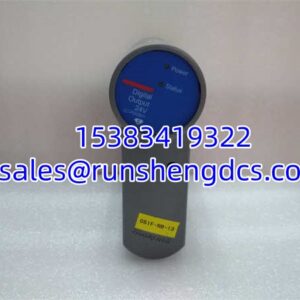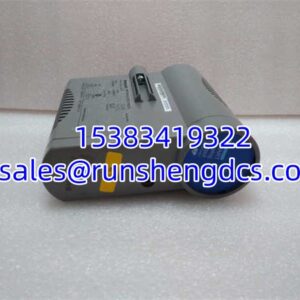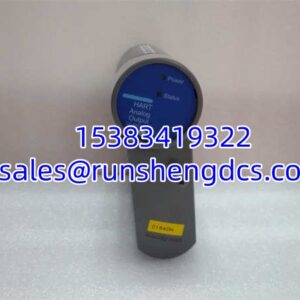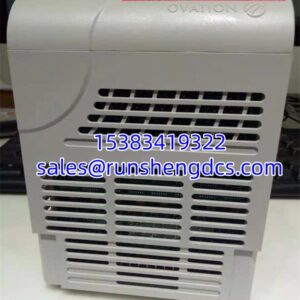

Description
Key Technical Specifications
- Input Channels: 32 differential or 64 single-ended (configurable via terminal block wiring)
- Input Voltage Range: ±10 V maximum (with programmable attenuation for higher ranges)
- Programmable Gain: 1, 2, 5, 10, 20, 50, 100, 200 (software-selectable per channel group)
- Resolution: 16-bit (determined by the connected DAQ device)
- Sampling Rate: Up to 250 kS/s aggregate (multiplexed across all channels — not per channel)
- Bandwidth: DC to 100 kHz (gain-dependent)
- Low-Pass Filter: Jumper-selectable 4 Hz anti-aliasing filter per channel group
- Input Impedance: 10 MΩ differential, 5 MΩ common-mode
- Common-Mode Rejection: >100 dB at 60 Hz
- Cold-Junction Compensation: On-board temperature sensor on SCXI-1300 terminal block for thermocouple CJC (accessible via mtemp/dtemp channels)
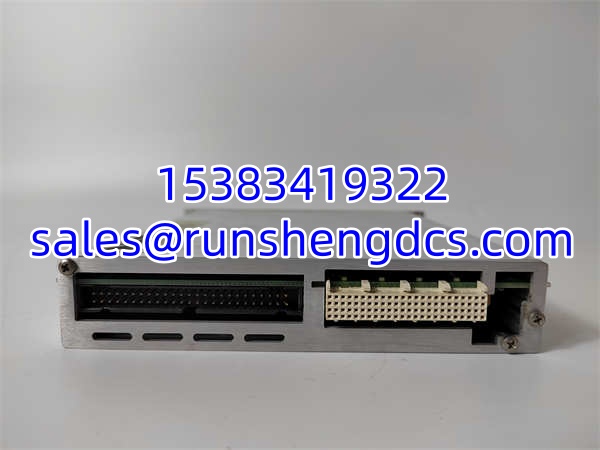
- Connectors: 96-pin male DIN C front connector; 50-pin male ribbon cable rear connector to DAQ device
- Compatible Chassis: SCXI-1000 (8-slot), SCXI-1001, SCXI-1300 terminal block, and other SCXI backplane systems
- Operating Temperature: -20°C to +60°C (-4°F to +140°F)
- Dimensions: 132 mm × 102 mm × 26 mm (5.2″ × 4.0″ × 1.0″)
- Driver Support: NI-DAQmx (v9.3 and earlier), Traditional NI-DAQ (v7.4.4); no Mac OS X support
- Compliance: CE, FCC Class A, UL Listed, CSA Certified
Product Introduction
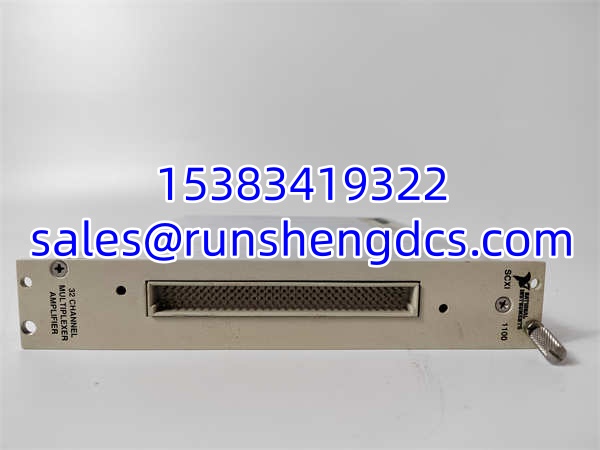
You’re wiring up a vibration monitoring rack for a turbine test cell. Thirty-two accelerometers and strain gauges are dumping millivolt-level signals into your system, and your PCI-6221 DAQ card can only handle ±10V at 16-bit resolution. The SCXI-1100 sits between those sensors and the DAQ card — amplifying the tiny signals with programmable gain, filtering out high-frequency noise with its 4 Hz low-pass option, and multiplexing all 32 channels down to a single analog input on the DAQ device. Without it, you’d need eight separate DAQ cards. With it, you need one.
The SCXI-1100 is NI’s workhorse analog front-end for the legacy SCXI platform. It doesn’t digitize anything itself — it conditions, amplifies, filters, and multiplexes. The actual A/D conversion happens on the downstream DAQ device (PCI, PXI, or USB). That architecture was brilliant for its time: you could scale channel count without buying more DAQ hardware. The trade-off? Multiplexing means you sacrifice per-channel sample rate. All 32 channels share one ADC path, so if your DAQ card does 250 kS/s, each channel gets roughly 7.8 kS/s when all 32 are active. For slow-moving process variables (temperature, pressure, strain), that’s more than enough. For high-speed vibration or transient capture, you’ll hit a wall. NI has officially moved on from SCXI — the platform is in obsolescence status with migration paths to PXIe and C Series.
Troubleshooting Quick Reference
| Fault | Cause | Relevancy | Quick Check | Fix |
|---|---|---|---|---|
| No readings / all channels flat | DAQ device not communicating or SCXI backplane not seated | 75% chance it’s a backplane or DAQ link issue | Verify the 50-pin ribbon cable between SCXI rear connector and DAQ card is fully seated; check that the DAQ card is recognized in MAX | Reseat ribbon cable; power-cycle the SCXI chassis; verify DAQ device appears in Measurement & Automation Explorer |
| Noisy or drifting measurements | Chassis power supply injecting noise (Slots 1 or 2) | 60% chance it’s slot-position noise | Check which SCXI chassis slot the module is installed in — Slots 1 and 2 are known to pick up switching noise from the chassis PSU | Move the SCXI-1100 to Slot 3 or higher; add external shielding if relocation isn’t possible |
| Gain settings not taking effect | Jumper configuration mismatch or software/driver conflict | 55% chance it’s a jumper or driver version issue | Verify physical gain jumpers on the module match the software configuration in MAX; check NI-DAQmx driver version compatibility | Reconfigure jumpers to match software settings; update or roll back NI-DAQmx to a supported version (v9.3 or earlier for full SCXI-1100 support) |
| Thermocouple readings offset | Cold-junction compensation sensor not connected or misconfigured | 50% chance it’s a CJC wiring issue | Verify the SCXI-1300 terminal block is properly attached to the front of the SCXI-1100; check that the mtemp/dtemp jumper is set correctly | Reconnect terminal block; configure the CJC channel string (SCxMody/_cjTemp) in NI-DAQmx; verify thermocouple reference junction temperature is being read |
| Calibration Executive returns IVI error (-1074135039) | Module configured for current measurement (shunt resistors installed) | 45% chance it’s a configuration mismatch | Check if current shunt resistors have been installed on the module — Calibration Executive can only calibrate voltage mode | Remove shunt resistors to restore voltage configuration; run calibration in voltage mode only |
| Intermittent channel dropouts | Loose screw terminals on SCXI-1300 terminal block | 40% chance it’s a mechanical connection issue | Inspect all terminal block screw connections for looseness or corrosion | Re-torque all terminal screws; replace terminal block if contacts are corroded |
NI SCXI-1100
Application Scenarios & Pain Points
Turbine vibration monitoring — high-channel-count strain gauge acquisition: A test engineer at an aerospace facility uses an SCXI-1000 chassis with an SCXI-1100 module to monitor 32 strain gauges on a turbine blade during spin testing. The programmable gain amplifies millivolt-level gauge outputs to the full ±10V range of the downstream PCI-6221 DAQ card, maximizing resolution. Pain point: the multiplexed architecture means all 32 channels share one ADC. At 250 kS/s aggregate, each channel gets ~7.8 kS/s — fine for static strain, but if you need to capture a blade-passing transient at 20 kHz per channel, the won’t cut it. You’d need simultaneous-sampling hardware instead.
Process temperature monitoring — thermocouple arrays with CJC: In a chemical reactor, 32 Type-K thermocouples monitor temperature gradients across the vessel wall. The ‘s on-board cold-junction compensation (via the SCXI-1300 terminal block’s temperature sensor) eliminates the need for external reference junctions. Pain point: the CJC sensor is on the terminal block, not the module itself. If the terminal block is mounted remotely from the module (via extension cable), the CJC reading becomes inaccurate because it’s measuring the wrong temperature. Keep the SCXI-1300 terminal block physically attached to the front connector.
Structural health monitoring — bridge load testing: A civil engineering team deploys an to acquire strain and displacement data from 32 sensors on a bridge during load testing. The 4 Hz low-pass filter eliminates high-frequency traffic vibration noise, leaving only the quasi-static structural response. Pain point: the 4 Hz filter is jumper-selectable, not software-selectable. If you need to change the filter cutoff mid-test, you have to physically pull the module and move jumpers. Plan your filter configuration before the test starts.