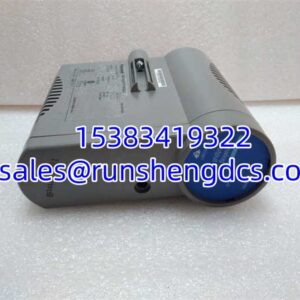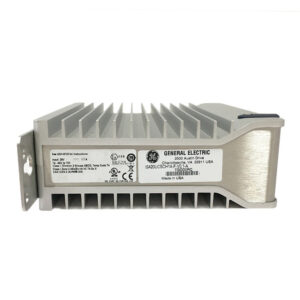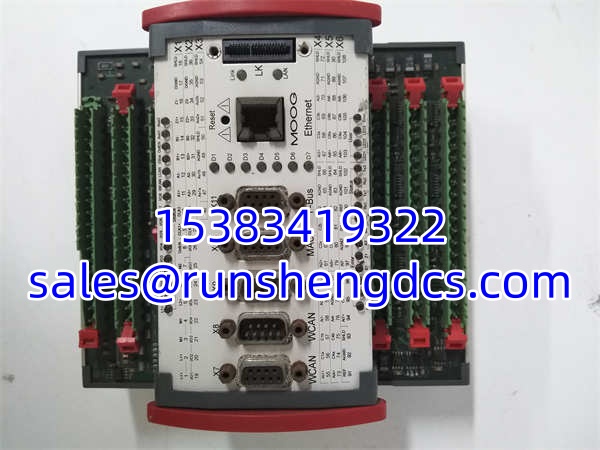
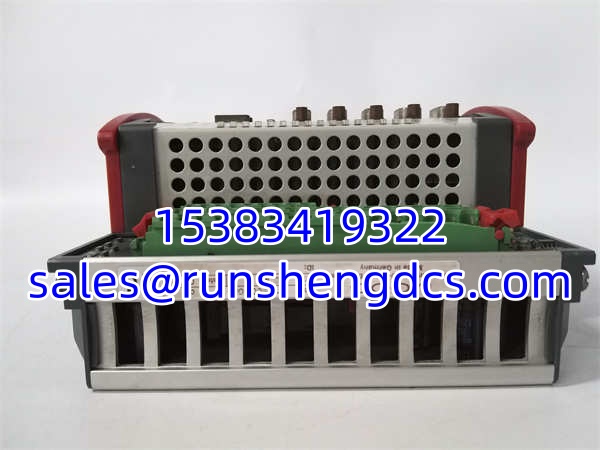

Description
Key Technical Specifications
- Product Model: MOOG D136-001-008
- Manufacturer: MOOG Inc.
- Module Type: Servo Valve Controller / PLC
- Operating Voltage: 24VDC
- Output Frequency: 100 MHz
- Processing Speed: 85 MHz
- Program Capacity: 18 MB
- Data Capacity: 6 MB
- Operating Temp: 0°C to 35°C
- Mounting: Control Room / Panel Mount
- Certifications: CE
Product Introduction
Motion control loops don’t fail because the logic is bad; they fail because the output stage can’t keep up with the servo demand. The MOOG D136-001-008 is a dedicated servo valve controller designed to close that gap, acting as the high-speed brain between your DCS and the hydraulic or electric actuator. It’s not a general-purpose PLC; it’s a specialized motion controller with 100MHz output frequency to handle the rapid PWM signals servo valves require without jitter.
You’re likely looking at this MOOG D136-001-008 because the original OEM support window has closed. With 18MB of program memory and 85MHz processing speed, it handles complex ramp-and-soak profiles and position loops that would choke a standard I/O card. Just be aware: this unit runs hot (0-35°C spec is conservative) and often requires a specific HASP dongle for configuration software. Bottom line — it’s a precision instrument, not a drop-and-forget brick.
QA/QC Transparency SOP
- Intake & Origin Verification: Trace serial on MOOG D136-001-008; reject units with burnt MOSFETs near the output stage or swollen electrolytic caps.
- Live Functional Testing: Power up on 24VDC bench supply; verify 5V/12V internal rails are within ±2% and output frequency matches 100MHz spec under no-load.
- Electrical Parameter Tests: Megger test at 250V DC on all I/O terminals to ground; verify isolation >50 MΩ to rule out moisture-induced leakage.
- Firmware/Config Verification: Connect via proprietary cable; read EEPROM to confirm firmware rev matches D136-001-008 BOM and check for license dongle presence.
- Final QC & Anti-Static Packaging: Visual inspection for connector pin corrosion; seal in anti-static bag with desiccant and label with verified firmware rev.
Field Engineer Gotchas
- Software Dongle Dependency: This isn’t just hardware; the MOOG D136-001-008 often requires a HASP USB key to upload/download logic. War story: Got a “perfect” unit to site, tech couldn’t configure it because the dongle was left in a desk drawer 3 states away. Always verify software license transfer before shipping.
- Thermal Derating: The 0-35°C spec is real. If your panel hits 45°C, this module will throttle or trip. Solution: Add a fan or move it to a cooled zone. Don’t blame the servo; blame the ambient temp.
- Output Stage Failure: Check the output transistors with a multimeter in diode mode before racking. A shorted output will fry your servo valve coil instantly. Blunt warning: Test first, connect later.
- Ground Loop Noise: The 100MHz output is susceptible to ground loops. If your servo is hunting, check your shield grounding. The needs a clean star ground, not a daisy chain.
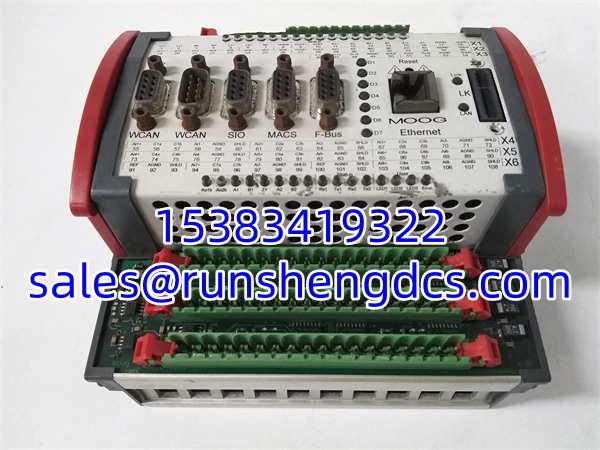
MOOG D136-001-008
Application Scenarios
- Steel Rolling Mill Hydraulics: High-bandwidth AGC (Automatic Gauge Control) loops demand the 100MHz output of the to maintain micron-level thickness tolerance during rolling.
- Injection Molding Machines: Plastic flow control requires precise valve spool positioning; the manages the pressure/flow transition without overshoot.
- Turbine Test Stands: Aerospace actuator testing needs deterministic response; the 85MHz processing speed ensures the test profile matches the simulation exactly.
Case Study: A paper mill’s coating station had recurring “servo fault” alarms every 4 hours. The servo valve tested fine; the DCS output was clean. We pulled the and found the internal 5V rail was sagging to 4.7V under load due to a failing capacitor. Replaced the cap, re-tuned the loop, and uptime went from 4 hours to 18 months. Root cause: power supply fatigue, not logic failure.
FAQ
Is this compatible with the D136-001-007?
Mechanically, yes. Electrically, maybe. The 008 has updated output stage components. Verify your servo valve impedance; the 008 can drive lower impedance loads, but the 007 might overheat on the same load.
Do I need the original software disk?
You need the specific version that matches the firmware on this . Newer software may not recognize older firmware. Ask us for the matching config file; don’t guess.
Can I use a generic 24VDC power supply?
Yes, but it must be regulated to ±5% and have low ripple. Noisy power = noisy servo motion. The doesn’t have internal filtering for garbage power.
What’s the MTBF?
MOOG doesn’t publish it for this legacy part. Field data suggests 8-12 years in climate-controlled panels. In hot/dirty environments, expect 5-7 years. Plan for obsolescence.
Is hot-swapping supported?
Absolutely not. Pulling a while powered will arc the backplane pins and likely kill the slot. Power down, wait 30 seconds for caps to bleed, then swap.
Why is my output frequency drifting?
Check your ambient temp. The crystal oscillator on the is temp-sensitive. If you’re at 34°C and drifting, you’re at the edge of the spec. Cool the panel.
Can I repair this in-house?
Only if you have the schematics and the test jig. The output stage uses custom MOSFETs that aren’t on DigiKey. Send it to a specialist or buy a verified surplus unit.