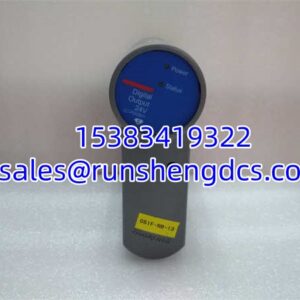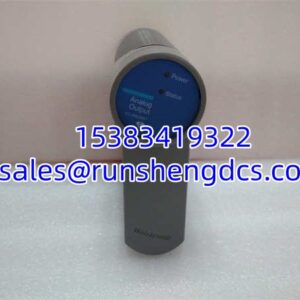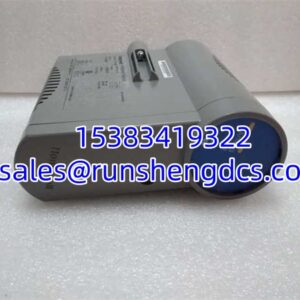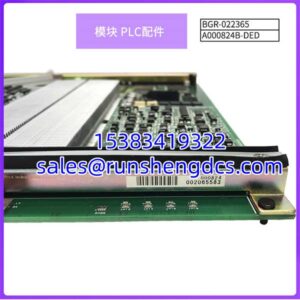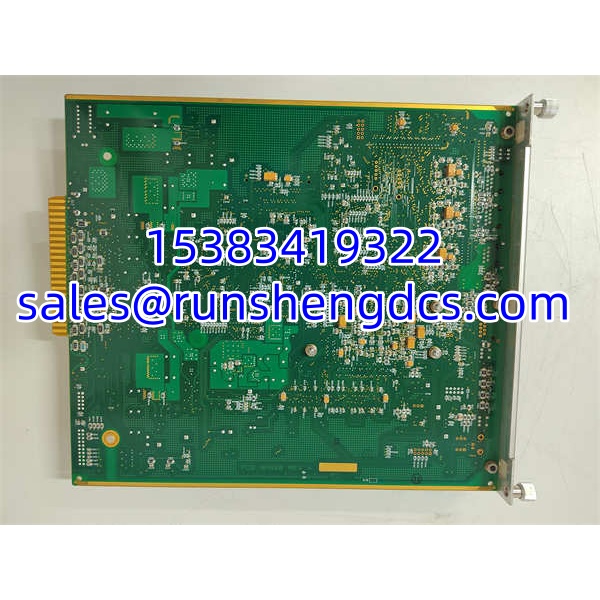

Description
Key Technical Specifications
| Parameter | Detail |
|---|---|
| Manufacturer | Metso (automation now Valmet) |
| Part Number | PDP403 |
| Product Type | Distributed processing / remote I/O module |
| Typical Platform | Metso/Valmet DNA DCS |
| Signal Handling | Analog and/or digital I/O; exact channel mix depends on revision |
| Communication | DNA system bus / fieldbus interface; exact protocol depends on variant |
| Supply Voltage | Typically 24 VDC; confirm on nameplate |
| Mounting | DCS rack, DIN-rail, or field enclosure mounting |
| Typical Applications | Pulp & paper, power, chemical, marine, and process control systems |
| Documentation | Limited public OEM datasheet; confirm against Valmet DNA manuals |
Product Introduction
The PDP403 fits into the Metso/Valmet DNA distributed I/O architecture, where remote or local processing units collect field signals and present them to the DCS controller. In Valmet DNA systems, distributed modules like this are commonly used to reduce wiring complexity, improve diagnostics, and place I/O closer to the process while maintaining centralized control.
From a procurement standpoint, the PDP403 should be treated as legacy hardware. Metso’s automation portfolio is now maintained under Valmet, and replacement decisions should be validated against the installed DNA generation, existing node configuration, and current OEM support guidance. The biggest risk is not the physical module itself, but assuming that any “PDP403” unit will match the original node address, I/O map, firmware level, and communication parameters.
QA/QC Transparency SOP
- Intake & Origin Verification: Record full model, sub-model, hardware revision, serial number, and installed node address. Inspect connectors, power terminals, communication ports, and PCB condition.
- Live Functional Testing: Power from a verified compatible supply. Confirm power LED, status LED, communication link, and controller recognition.
- I/O Channel Verification: Test each analog and digital channel with a calibrated source or load. Verify scaling, direction, and fault response.
- Communication & Firmware Check: Read firmware version, node address, baud rate or network parameters, and stored configuration. Compare with the existing DCS project.
- Final QC & Packaging: Document firmware revision, tested channels, communication status, and any deviations. Pack with anti-static and shock protection.
Field Engineer Gotchas
- Node Address Mismatch: Distributed units usually carry a node address or station ID. Fix: Record the original address before removal. A correct module with the wrong address will not integrate cleanly.
- Firmware/Configuration Dependency: Like other DNA distributed modules, PDP403 behavior depends on system configuration. Fix: Match firmware and I/O mapping to the existing DCS database.
- I/O Map Drift: A surplus unit may power up but report different channel counts or types. Fix: Verify channel-by-channel before closing control loops.
- Communication Protocol Variants: “PDP” may suggest a distributed or fieldbus-related role, but the exact interface must be confirmed. Fix: Do not assume PROFIBUS, ACN I/O, or another protocol without checking the nameplate and OEM documentation.
- Legacy Support Path: Metso automation is now Valmet. Fix: Confirm whether the installed DNA generation still has OEM support or whether a migration path is recommended.
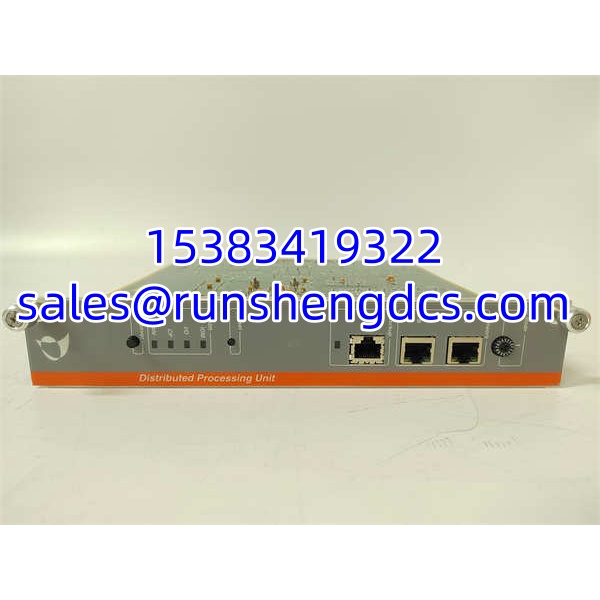
METSO PDP403
Application Scenarios
- Pulp and paper machine sections: Collecting local sensor and actuator signals in wet end, dryer section, or reel area.
- Power plant auxiliary I/O: Remote acquisition of status, analog measurements, and interlock signals.
- Chemical/process plant remote stations: Reducing cabinet wiring by placing distributed I/O closer to field devices.
- Legacy DNA system maintenance: Replacing failed distributed modules during brownfield repairs or pre-migration audits.
FAQ
Q: Is PDP403 a PLC?
A: No. It is best described as a distributed processing or remote I/O module within the Metso/Valmet DNA DCS architecture, not a standalone PLC.
A: No authoritative public datasheet for the exact model was found. Confirm details against the physical nameplate and Valmet DNA documentation.
A: Not automatically. Hardware revision, firmware, node address, and I/O configuration must match the installed system.
Q: What signals does it support?
A: Likely analog and/or digital I/O, but the exact channel count and signal types depend on the specific variant.
Q: What should I check before buying surplus?
A: Full model code, hardware revision, firmware version, node address, communication interface, physical condition, and compatibility with the existing DNA rack or network.
Q: Can Valmet still support this module?
A: Support depends on the installed DNA generation. Confirm directly with Valmet or the current system integrator.