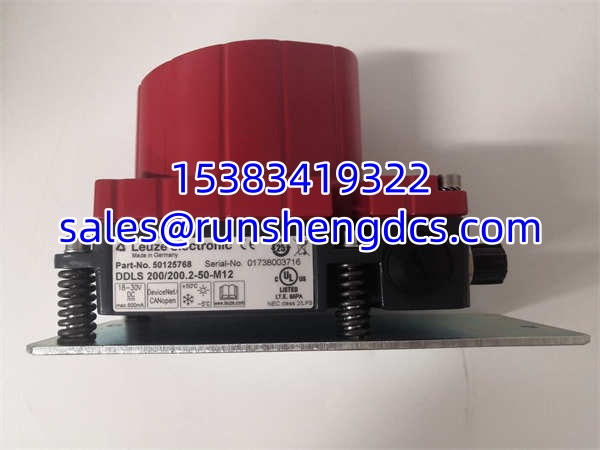

Description
Key Technical Specifications
| Parameter | Specification |
|---|---|
| Product Type | Optical Data Transmitter |
| Model | DDLS 200/200.1-50-M12 |
| Part Number | 50125767 |
| Manufacturer | Leuze electronic |
| Transmission Medium | Infrared LED (contactless, through air) |
| Max Transmission Range | 200 m (parallel optical axis, no reflective surface interference) |
| Max Transfer Rate | 2 Mbit/s |
| Supported Protocols | CANopen, DeviceNet |
| Supply Voltage | 18 … 30 Vdc |
| Current Draw | ≤ 500 mA |
| Digital I/O | 1 digital switching input, 1 digital switching output |
| Connection Type | M12, 5-pin, A-coded (bus in, bus out, power) |
| Housing | Metal, die-cast |
| Dimensions (W × H × D) | 89.25 mm × 196.5 mm × 111.8 mm |
| Weight | ≈ 1,245 g |
| Operating Temp | Verify with OEM datasheet (built-in heater option available on some variants) |
| Protection Rating | IP67 (verify with OEM for exact rating) |
Product Introduction
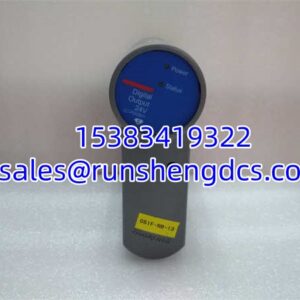
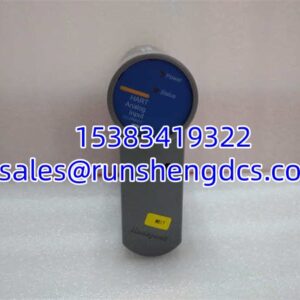
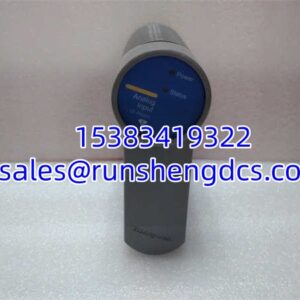
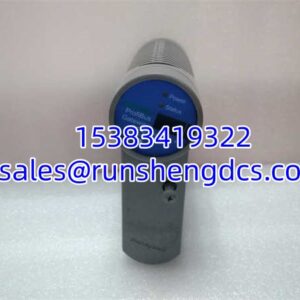
Cable drag chains break. Slip rings wear out. Every plant engineer who has dealt with rotating tables, shuttle systems, or long-travel cranes knows the maintenance headache of physical bus cabling on moving parts. The Leuze DDLS 200/200.1-50-M12 (P/N 50125767) solves this by replacing the cable with an infrared optical link. Two units face each other across an air gap — one transmits, one receives — and the fieldbus data passes through without any mechanical contact.
This specific variant supports CANopen and DeviceNet at up to 2 Mbit/s over a 200 m gap. The M12 connectors make field wiring straightforward: three 5-pin A-coded M12 ports handle bus input, bus output, and power. The metal die-cast housing handles industrial vibration, and the built-in repeater function lets you daisy-chain multiple DDLS 200 units to extend coverage. Bottom line — if your application has a moving segment that needs bus connectivity without cables, this is the hardware that makes it work.
QA/QC Transparency SOP
- Intake & Origin Verification: Confirm the label reads DDLS 200/200.1-50-M12 with P/N 50125767. Inspect the three M12 connector ports for bent pins, corrosion, or cross-threading. Check the metal housing for impact damage or deformation that could misalign the optical lens.
- Live Functional Testing: Apply 24 Vdc (within the 18–30 V range) to the power M12 port. Verify the status LED illuminates and the unit enters operational mode. Pair with a known-good counterpart unit across a short gap (1–2 m) and confirm data passes through the optical link.
- Electrical Parameter Tests: Measure supply current draw with a multimeter in series — it should not exceed 500 mA. Verify the digital switching input responds to a 24 Vdc signal and the digital output switches correctly. Check continuity on all M12 pin assignments against the Leuze wiring diagram.
- Protocol Verification: Connect the unit to a CANopen or DeviceNet master (depending on configuration) and verify the node appears on the network scan. Confirm baud rate configuration matches the network settings. Test data integrity by sending a known payload and verifying the received data matches.
- Final QC & Anti-Static Packaging: Clear any site-specific node addresses or configuration parameters unless the buyer requests retention. Pack in an anti-static bag with foam cushioning around the optical lens face, and ship in a rigid carton to prevent connector damage.
Field Engineer Gotchas
- Optical Axis Alignment Is Everything: These units need a clear, unobstructed line of sight between transmitter and receiver. Even a small misalignment — a few degrees off — will drop the link or cause intermittent data loss. Use the alignment LEDs (or bar graph display if equipped) during commissioning. Don’t just bolt them on and hope for the best.
- Reflective Surfaces Will Kill Your Link: The DDLS 200 uses parallel optical axis transmission. If there are shiny metal surfaces, polished floors, or reflective machine guards near the optical path, stray IR reflections can corrupt the data stream. Verify the installation path is free of reflective interference before declaring the link stable.
- CANopen vs. DeviceNet — Know Your Protocol: The 50125767 supports both CANopen and DeviceNet, but the unit must be configured for one or the other. A unit configured for CANopen will not talk to a DeviceNet master. Check the configuration before installation — swapping protocols requires a reconfiguration via the setup tool.
- 200 m Range Assumes Ideal Conditions: The 200 m spec assumes clean air, proper alignment, and no environmental interference. In a foundry with airborne particulate, or a washdown area with condensation, your effective range will be shorter. Size your installation with at least a 30% margin below the rated max range.
- M12 A-Coding — Don’t Mix It Up: The connectors are 5-pin A-coded M12. If someone previously swapped in a B-coded or D-coded cable assembly, the pinout won’t match and you’ll get no communication (or worse, a short). Verify the cable coding matches the port coding before applying power.
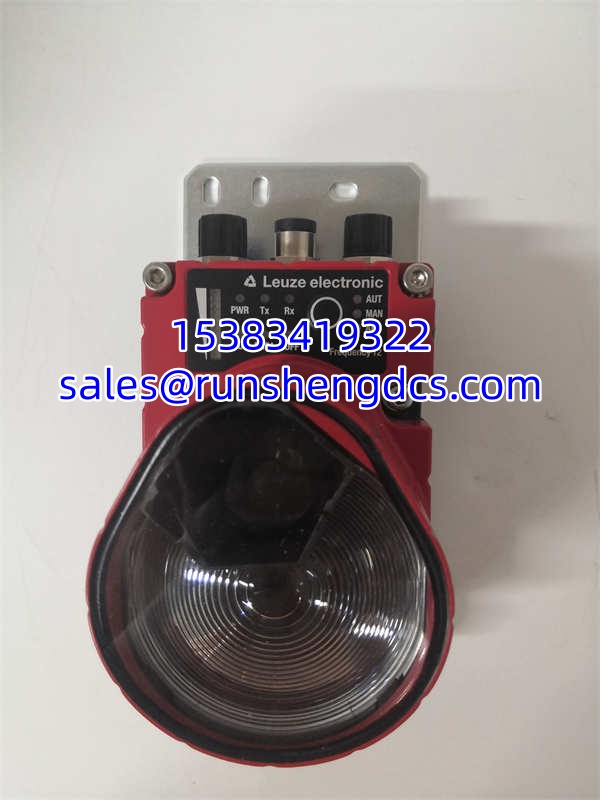
DDLS200200.1-50-M12 50125767
Application Scenarios
- Rotary Indexing Tables: A packaging machine with a 12-station rotary table needs CANopen I/O on each station. The DDLS 200 bridges the bus across the rotating interface without slip rings, transmitting valve manifold status and sensor data to the stationary controller.
- Overhead Crane Trolley Communication: A long-travel crane trolley carries a DeviceNet I/O block for hoist limit switches and load cells. The DDLS 200 pair transmits the DeviceNet data across the gap between the trolley and the runway-mounted bus segment, replacing a cable reel that previously failed every six months.
- Automated Storage and Retrieval Systems (ASRS): Shuttle cars moving on rails in a warehouse need real-time position and status data. The DDLS 200 optical link provides continuous CANopen communication along the full travel length without cable wear.
Field Case (anonymized): An automotive assembly plant’s skid conveyor system used a drag chain to carry PROFIBUS cabling to a rotating weld fixture. The chain failed twice in three months — cable fatigue from constant flexing. The maintenance team replaced the drag chain and cable with a pair of DDLS 200 units (configured for the plant’s CANopen segment). The optical link ran for over two years without a single communication fault. The only maintenance was cleaning dust off the optical lens faces during scheduled downtime. The drag chain budget went to zero.
FAQ
Q: Can I use this unit with PROFIBUS DP?
A: No. The 50125767 (DDLS 200/200.1-50-M12) is configured for CANopen and DeviceNet. If you need PROFIBUS DP optical transmission, you need a different DDLS 200 variant — specifically one with the PROFIBUS DP / RS-485 interface option (different part number, typically with terminal block connections instead of M12).
Q: Do I need two units, or does one unit handle both transmit and receive?
A: You need a pair — one transmitter and one receiver — facing each other across the air gap. Some DDLS 200 configurations support bidirectional communication where each unit both sends and receives, but you still need two units to form a complete link.
Q: What’s the maximum baud rate I can run?
A: The DDLS 200 series supports up to 2 Mbit/s. For CANopen, typical baud rates are 125 kbit/s, 250 kbit/s, 500 kbit/s, or 1 Mbit/s. For DeviceNet, 125 kbit/s, 250 kbit/s, or 500 kbit/s. The 2 Mbit/s ceiling applies to RS-485 variants. Verify your network baud rate is within the supported range for your specific protocol.
Q: Will this work in an outdoor installation?
A: The metal die-cast housing provides good environmental protection, but direct sunlight contains infrared radiation that can interfere with the optical link. If installing outdoors, shield the optical path from direct sun exposure or use a sun hood. Also verify the operating temperature range covers your local climate extremes.
Q: Can I daisy-chain multiple DDLS 200 units?
A: Yes. The built-in repeater function allows you to cascade multiple DDLS 200 units to extend the optical link around corners or across longer distances. Each unit in the chain needs its own power supply connection.
Q: Is the 50125767 still manufactured by Leuze?
A: The DDLS 200 series is a mature product line. Leuze continues to support it, but newer installations may specify the DDLS 500 series (100 Mbit/s, Ethernet-based) for higher bandwidth requirements. Surplus and aftermarket stock of the DDLS 200 remains available for maintenance and replacement purposes.