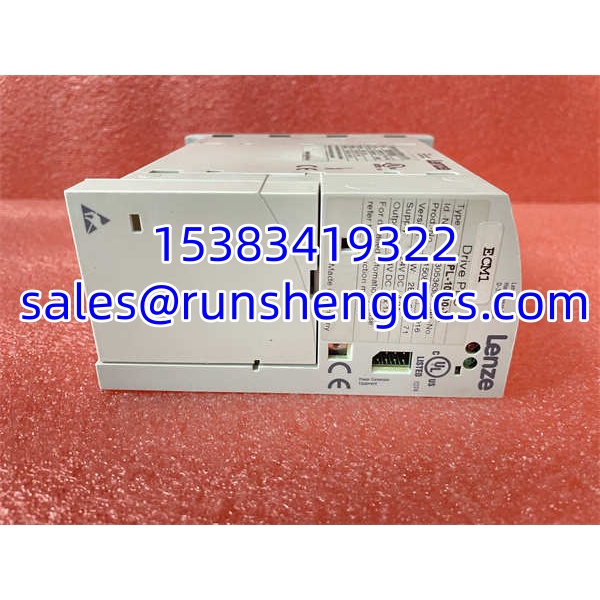

Description
Key Technical Specifications
| Parameter | Detail |
|---|---|
| Manufacturer | Lenze |
| Part Number | EPL-10200-XX |
| ID Number | 13053630 |
| Production Number | 01508442 |
| Product Type | EtherCAT coupler / controller interface module |
| Supply Voltage | 24 VDC / 4.2 A |
| Outputs | 24 VDC, 4 × 1 A |
| Communication | EtherCAT fieldbus |
| Mounting | DIN-rail / modular I/O segment mounting |
| Typical Applications | Motion control, packaging machines, conveyors, drive networks |
| Origin | Made in Germany |
Product Introduction
EtherCAT head stations are easy to misidentify because many Lenze modules look similar from the front. The EPL-10200-XX is one of those modules that shows up in surplus channels with limited documentation, so the first step is always verifying whether it is acting as a pure EtherCAT coupler or as a small motion controller with EtherCAT connectivity.
Based on available listings, this unit carries ID number 13053630 and production number 01508442, with a 24 VDC / 4.2 A supply rating and four 24 VDC / 1 A outputs. That output configuration suggests it can directly feed small actuators, sensors, or auxiliary circuits in addition to managing EtherCAT communication. In Lenze systems, modules of this type typically sit at the start of an I/O segment or drive network, handling process-data exchange between the controller and downstream EtherCAT terminals.
The main procurement risk here is revision mismatch. Lenze EtherCAT modules often depend on matching firmware, GSD/ESI files, and terminal compatibility. A unit that physically fits may still require the correct engineering tool and configuration before it becomes operational.
QA/QC Transparency SOP
- Intake & Origin Verification: Record model, ID number, production number, HW/SW revision, and serial number. Inspect EtherCAT ports, terminal connectors, DIN-rail latch, and PCB for corrosion or impact damage.
- Live Functional Testing: Power from a regulated 24 VDC supply. Confirm LED status for power, EtherCAT link, run state, and error. Verify that the module enumerates on an EtherCAT test network.
- Electrical Parameter Tests: Measure supply current, output voltage on the 4 × 1 A channels, and insulation between supply and field circuits. Confirm no short on output channels.
- Firmware/Config Verification: Read hardware and software revision. Check whether configuration data is present or whether the module requires a fresh download. Back up any existing parameters.
- Final QC & Anti-Static Packaging: Pack in ESD-safe material with shock protection. Include a test report covering firmware revision, output test results, and EtherCAT communication status.
Field Engineer Gotchas
- Coupler vs Controller Ambiguity: “EPL-10200-XX” may appear as either a coupler or a small controller depending on context. Fix: Verify the exact function using the Lenze engineering tool and the module’s identity data before integration.
- Firmware/ESI Mismatch: EtherCAT modules require matching ESI/GSD files. Fix: Confirm the correct device description file for HW/SW revision. I have seen modules show “online” but fail process-data exchange because the ESI did not match the installed firmware.
- 24 VDC Output Loading: The 4 × 1 A outputs are not unlimited. Fix: Calculate total load before connecting solenoids, relays, or sensors. Exceeding the rating can trip internal protection.
- Terminal Segment Compatibility: Not all Lenze terminal types may be supported by every coupler revision. Fix: Check the allowed terminal list for this specific hardware version.
- Surplus Configuration Risk: A used module may retain old network parameters. Fix: Reset or reconfigure before inserting it into a live machine. Never assume a surplus unit is factory-clean.
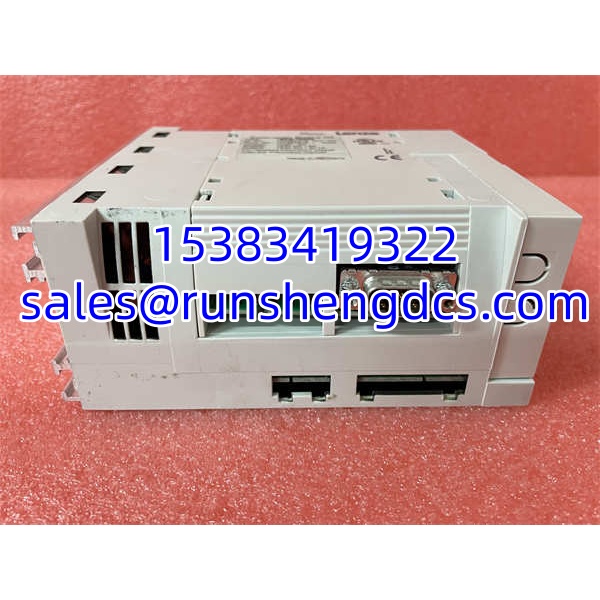
LENZE EPL-10200-XX
Application Scenarios
- Packaging machinery EtherCAT backbone: Acting as the head station for distributed I/O, photo-eye signals, and actuator control.
- Conveyor system integration: Providing 24 VDC outputs for local sensors while maintaining EtherCAT communication to the main PLC.
- Lenze drive network interface: Bridging EtherCAT commands to downstream drives and I/O terminals.
- Legacy machine refurbishment: Replacing a failed EtherCAT coupler where OEM lead times are long and the terminal segment must remain unchanged.
FAQ
Q: Is EPL-10200-XX a PLC?
A: It is best described as an EtherCAT coupler or motion-control interface module rather than a general-purpose PLC. Its exact role depends on firmware and system configuration.
Q: What does “XX” mean?
A: The “XX” suffix likely indicates a variant or configuration code. Confirm the exact meaning from the physical nameplate or Lenze documentation.
Q: Can I use it with non-Lenze EtherCAT devices?
A: EtherCAT is an open standard, but terminal compatibility depends on the coupler’s supported device list. Verify with the Lenze engineering tool.
Q: Does it support hot-swap?
A: EtherCAT networks often support module replacement, but only follow site procedures and OEM guidance. Do not assume hot-swap without confirmation.
Q: What engineering software is needed?
A: Lenze EtherCAT modules are typically configured through Lenze engineering tools such as FAST or the applicable Lenze automation environment. Confirm the correct tool for this revision.
Q: Is 13053630 the same as EPL-10200-XX?
A: Yes, 13053630 appears as the ID number for EPL-10200-XX in available listings. Always verify HW/SW revision as well.
Q: What should I check before buying?
A: HW revision, SW revision, ID number, production number, physical condition, EtherCAT port integrity, and availability of the correct ESI/configuration files.