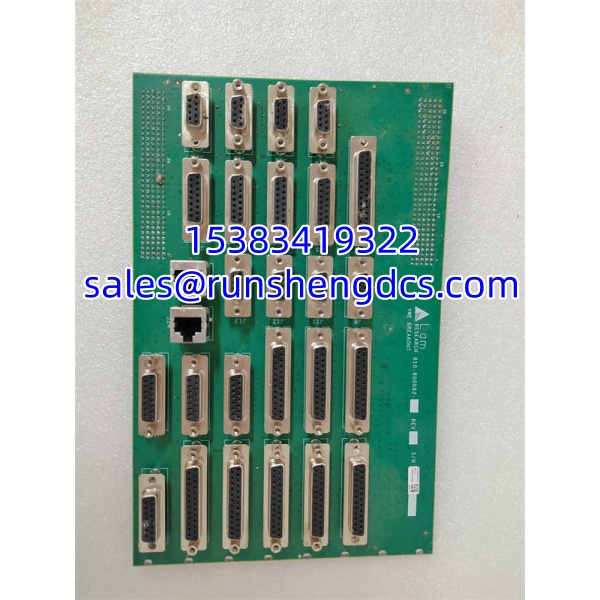

Description
Key Technical Specifications
| Parameter | Value / Notes |
|---|---|
| Manufacturer | LAM / LAM Research |
| Part Number | 810-800082-043 |
| Product Type | PCB / VME breakout or connection board |
| Interface Family | VME-related interface board |
| Connector / Pin Count | 64-pin, per one supplier listing |
| Dimensions | 222 mm × 112 mm × 10.2 mm, per one supplier listing |
| Voltage Range | 9–36 VDC, per one supplier listing |
| Operating Temperature | −40 °C to 85 °C, per one supplier listing |
| Application Class | Semiconductor manufacturing equipment control / interface |
| Replacement Rule | Match exact part number, revision, pinout, mechanical form factor, and host equipment compatibility |
Product Introduction
Semiconductor tool control boards rarely fail with a clean alarm. More often, you see intermittent VME communication errors, missing I/O, backplane contact issues, or process faults that only appear under thermal or vibration stress. The LAM 810-800082-043 is a LAM Research PCB commonly described as a VME breakout / VME connection board, so it is not a generic PLC card.
It belongs to the control and interface layer inside LAM Research semiconductor equipment, where it helps connect VME modules to other system boards, I/O, or subsystems. The practical value is keeping an existing tool running with the correct revision and mechanical fit. Bottom line — this part is only useful if the host equipment, VME backplane, revision level, and connector pinout all match.
QA/QC Transparency SOP
- Intake & Origin Verification
Check the board for 810-800082-043, revision marking, manufacturer markings, and any LAM Research labels. Reject boards with missing labels, reworked part numbers, unclear revisions, or mismatched silkscreen identifiers. - Visual & Mechanical Inspection
Inspect connectors, VME edge / backplane contacts, solder joints, mounting holes, and component bodies. Look for cracked boards, burnt areas, lifted pads, corroded pins, broken connectors, or signs of liquid damage. - Electrical Parameter Tests
Perform continuity, insulation, and power-rail checks where safe. Do not apply high-voltage megger tests to sensitive VME signal pins, backplane contacts, or low-voltage logic areas unless the OEM procedure explicitly allows it. - Functional / Interface Verification
If the host equipment or test fixture is available, verify that the board communicates correctly with the VME backplane or associated modules. Confirm that expected signals, addresses, or I/O paths behave normally. - Final QC & Anti-Static Packaging
Record the exact part number, revision, physical condition, connector condition, and test status. Package in ESD-safe materials, protect connectors and board edges, and include a note to verify revision and equipment compatibility before powering the system.
Field Engineer Gotchas
Revision mismatch can brick the install
Risk: Installing a board with the same base number but a different revision.
Fix: Match 810-800082-043 and the revision exactly against the removed board and equipment documentation.
Blunt warning: In semiconductor tool boards, revision is not optional paperwork.
VME pinout is not universal
Risk: Assuming any VME breakout board will mate correctly with the backplane or host module.
Fix: Verify connector type, pin count, keying, and signal assignment before installation.
War story: A VME interface board looked mechanically correct, but the tool threw communication faults after power-up because the replacement board’s pin assignment did not match the host module’s expectations.
Backplane contact damage during swap
Risk: Bent pins, contaminated contacts, or uneven insertion can damage the board or backplane.
Fix: Power down, verify alignment, inspect the backplane connector, and seat the board evenly before locking hardware.
Bottom line — a good board can fail because of a bad slot.
ESD and handling risk
Risk: Bare-hand handling, static, or dropping the board can damage sensitive logic or interface circuits.
Fix: Use ESD-safe packaging, wrist straps, and non-conductive work surfaces.
Surplus listing confusion
Risk: Suppliers may describe the same part as a “PCB,” “VME breakout board,” “VME connection board,” or “control board.”
Fix: Require a clear photo of the full board label, revision, and connectors before purchase.
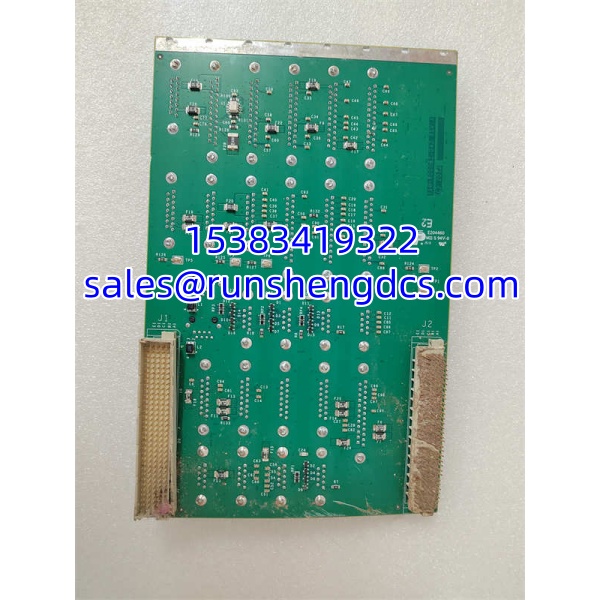
LAM 810-800082-043
Application Scenarios
- LAM Research semiconductor manufacturing tools using VME-based control or interface hardware.
- Legacy process equipment where a VME breakout or connection board links controller modules to I/O or subsystems.
- Tool maintenance and repair when an existing 810-800082-043 board shows intermittent faults, connector damage, or communication errors.
- Semiconductor fab spare-part inventory for older LAM Research platforms that cannot be migrated quickly.
- Equipment refurbishment where the original board must be matched by part number and revision.
Anonymized Field Case
A semiconductor tool kept reporting intermittent VME communication faults after a previous board swap. The maintenance team first suspected the host controller, then the backplane. After pulling the replacement board, they found one VME connector pin slightly bent and light contamination on the mating edge. The board itself was not necessarily defective, but the poor contact caused intermittent signal loss under vibration. After cleaning the connector, straightening the pin, and installing a verified 810-800082-043 board with the correct revision, the communication faults cleared. The lesson: on VME interface boards, mechanical contact quality matters as much as the board’s internal electronics.
FAQ
Is 810-800082-043 a PLC module?
No. It is a LAM Research PCB, commonly described as a VME breakout or connection board for semiconductor equipment. It is not a standard PLC I/O module.
What does this board actually do?
It is used to connect or break out VME-related signals between modules, backplanes, or other equipment subsystems inside LAM Research semiconductor tools.
Can I replace it with any VME board that looks similar?
No. The replacement must match the exact part number, revision, connector type, pinout, mechanical dimensions, and host equipment compatibility.
Are the dimensions and pin count confirmed?
One supplier listing shows 222 mm × 112 mm × 10.2 mm and 64 pins, but those figures should be verified against the actual board and OEM documentation before purchase.
Is this board safe to test with a megger?
Not automatically. Do not apply high-voltage insulation tests to VME pins, backplane contacts, or low-voltage logic areas unless the LAM Research procedure explicitly permits it.
How do I know if a surplus board is usable?
Check the part number, revision, connector condition, solder joints, board surface, and test documentation. Visual inspection alone is not enough for VME interface boards.
Where should I verify exact specs?
Use the LAM Research equipment manual, the board’s own revision label, or official LAM Research technical support. Third-party surplus listings are useful for identification, but they are not a substitute for OEM documentation.