
Description
Key Technical Specifications
| Parameter | Value |
|---|---|
| Part Number | 810-800082-043 |
| Manufacturer | Lam Research |
| Product Type | VME connection / breakout board |
| System Family | Lam Research control system |
| Interface | VME bus interface |
| Connector | 64-pin |
| Dimensions | ~222 mm × 112 mm × 10.2 mm |
| Voltage Range | 9–36 VDC |
| Operating Temperature | -40°C to +85°C |
| Application | Semiconductor equipment control and signal routing |
| Compatibility | Lam Research tool-specific; verify against equipment BOM |
| Condition | Typically available as surplus, refurbished, or tested used |
Product Introduction
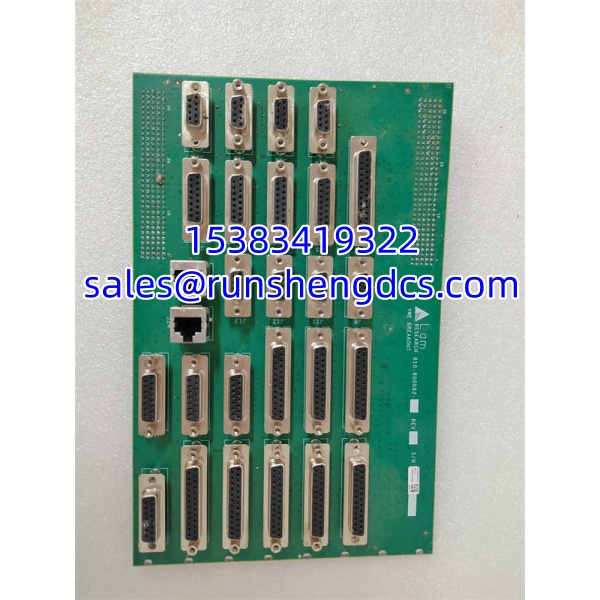
The 810-800082-043 is a Lam Research control-system PCB commonly listed as a VME connection or breakout board. In Lam tool architectures, these boards sit between VME-based controller modules and field-side wiring, helping route communication, status, and control signals across the equipment backplane and subsystem interfaces.
Because Lam Research tools use highly customized control hardware, this board is not a generic industrial VME card. It is designed for a specific Lam platform and revision. That makes it valuable as a spare during tool maintenance, but it also means compatibility must be confirmed by part number, revision, and parent assembly. If the board shows burn marks, corroded VME pins, or damaged edge connectors, it should not be installed without bench verification.
QA/QC Transparency SOP
- Intake & Origin Verification — Confirm part number 810-800082-043, revision, and Lam Research labeling. Reject units with cracked PCBs, damaged VME edge connectors, burnt components, or missing revision markings.
- Visual Inspection — Check for corrosion, lifted traces, swollen capacitors, rework marks, and connector pin damage. Verify the 64-pin interface is straight and free of oxidation.
- Electrical Continuity Tests — Measure continuity across key VME pins, power rails, and signal paths. Check for shorts between adjacent pins and between power and ground.
- Functional Verification — Install in the correct Lam Research VME chassis or compatible test fixture. Confirm the board is recognized by the controller and that expected signals pass through without faults.
- Final QC & Packaging — Record revision, test results, and source assembly. Seal in ESD packaging with desiccant. Label as new surplus, refurbished, or tested working.
Field Engineer Gotchas
- Revision mismatch. Lam Research PCBs often have revision-dependent wiring or firmware. A board with the correct base number but wrong revision may not function.
- Not a universal VME card. This is a Lam-specific interface/breakout board. Do not assume it will work in a generic VME rack without the correct Lam chassis and backplane mapping.
- Parent assembly dependency. The board’s function depends on the tool and the module it connects to. Always cross-check the equipment BOM or maintenance manual.
- Edge connector damage. VME boards are sensitive to bent or corroded backplane pins. Inspect the connector before forcing insertion.
- Voltage range caution. Distributor data lists 9–36 VDC, but the actual operating voltage is set by the host Lam system. Do not apply external power without confirming the schematic.
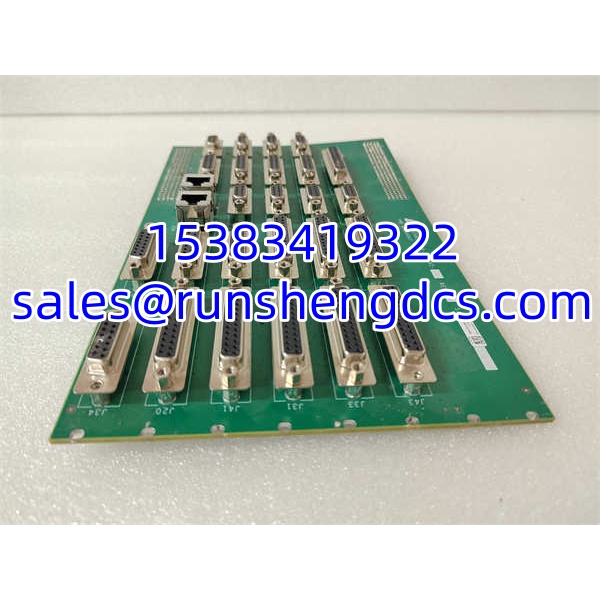
LAM 810-800082-043
Application Scenarios
- Lam etch or deposition tool control maintenance. Used when a VME interface fault causes communication errors between the controller and process modules.
- Spare rotation for legacy Lam platforms. Helps reduce downtime when the original board fails and OEM lead times are long.
- Troubleshooting intermittent VME bus faults. A failing breakout board can cause unstable signals, false alarms, or module recognition errors.
- Case note: A fab reported intermittent controller communication faults on a legacy Lam tool. The VME module appeared healthy, but the interface board showed oxidation on several pins. After replacing the 810-800082-043 and cleaning the backplane connector, communication stabilized. The root cause was contact degradation, not the VME CPU.
FAQ
Is 810-800082-043 a CPU or controller?
No. It is a VME connection/breakout PCB used in Lam Research control systems, not a standalone processor.
Can I use any VME board as a substitute?
No. Lam Research control boards are tool-specific. Substituting a generic VME card will not work and may damage the system.
What tools is it compatible with?
Compatibility depends on the Lam Research platform and system revision. Confirm against the equipment BOM, service manual, or OEM spare-parts list.
Is this part still available from Lam Research?
Availability depends on the tool lifecycle. Many Lam legacy PCBs are sourced through surplus or certified refurbishment channels.
Why does the board fail to communicate after installation?
Common causes include wrong revision, damaged edge connector, backplane pin issues, incorrect seating, or a fault in the parent VME module.
Can this board be repaired?
PCB-level repair is possible in some cases, but for semiconductor equipment it is usually safer to replace with a tested unit and verify function in the host tool.