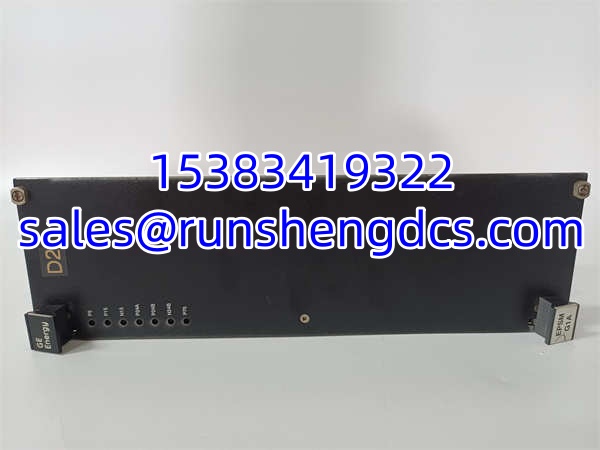

Description
Key Technical Specifications
- Input Voltage: 125 VDC (from Exciter Power Distribution Module, EPDM)
- Output Voltages: +5 VDC, ±15 VDC, +24 VDC (P24A/P24B, N24B), isolated +70 VDC (P70)
- Internal Topology: Buck regulator stages 125VDC down to ~50VDC intermediate bus; push-pull inverter generates isolated multi-rail outputs
- Isolation: Transformer-based high-voltage isolation between input source and control system outputs
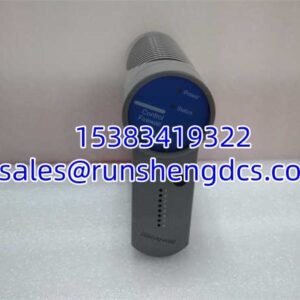
- Status Indicators: 7 front-panel LEDs — P5, P15, N15, P24A, P24B, N24B, P70 (each corresponding to an output rail)
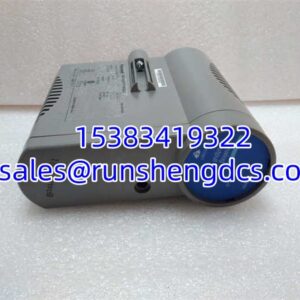
- Key Components: Frame-mounted transformer, Bicron B9309 0912 large inductor, secondary inductor (L2), five heatsink-mounted transistors, four additional surface-mounted heatsink elements
- Mounting: Plugs into Exciter Power Backplane (EPBP) via connectors P1/P2; secured with top and bottom captive screws
- Application Group: EPSM Group 1 (EPSMG1) — used for exciter control (not regulator control, which uses EPSMG2)
- Compatible Systems: GE EX2100 Excitation Control, Speedtronic Mark VI / Mark VIe turbine control platforms
- Operating Temperature: Industrial-grade; verify specific rating against hardware revision label (typical Mark VIe range: -30°C to +65°C)
- Protection: Overcurrent and overvoltage protection on output rails
- Replacement Compatibility: Direct drop-in with IS200EPSMG1AEC (same form factor and pinout; verify firmware/revision compatibility)
Product Introduction
When an exciter cabinet loses its +24VDC rail, the field breaker doesn’t just trip — it trips blind. No cooling fans, no relay drive, no field voltage feedback. The IS200EPSMG1AED is the module that prevents that scenario. It takes the plant’s 125VDC station battery supply and steps it down through a buck regulator into a 50VDC intermediate bus, then a push-pull inverter with an isolation transformer generates every voltage the EX2100 exciter controller needs. Five transistors with heatsinks, a Bicron inductor, and a frame-mounted transformer — this isn’t a switch-mode supply you’d find in a server rack. It’s built to sit in a turbine hall and not flinch.
Why keep one on the shelf? Because the IS200EPSMG1AED is discontinued. GE has moved on to newer hardware revisions, and the surplus market is where most plants source replacements now. Each Mark VIe exciter controller (M1, M2, and C in redundant configurations) runs off three independent EPSMG1 modules. If one fails, the other two keep the exciter alive — but you’re running on borrowed time. A second failure means a forced shutdown. The front-panel LEDs (P5, P15, N15, P24A, P24B, N24B, P70) give you immediate visibility into which rail is down, so you know exactly what you’re replacing before you crack the cabinet door.
Troubleshooting Quick Reference
| Fault | Probable Cause | Relevancy | Quick Check | Fix |
|---|---|---|---|---|
| One or more output LEDs dark | Failed output rail (transistor or inductor) | 70% | Visually inspect front-panel LEDs; compare against known-good module | Replace module; verify replacement rail voltages with multimeter before inserting |
| Module won’t power up (all LEDs off) | No 125VDC input from EPDM | 60% | Measure 125VDC at EPDM output and at module input terminals | Check EPDM fuses; verify station battery supply; inspect P1/P2 connector seating |
| +24VDC rail missing (P24A/P24B/N24B off) | Transistor or heatsink component failure | 50% | With module removed, visually inspect five heatsink-mounted transistors for burn marks | Replace module — field repair of internal power components is not recommended |
| +70VDC isolated rail missing (P70 off) | Isolation transformer or secondary circuit fault | 30% | Measure for +70VDC at P70 terminal with module powered | Replace module; this rail drives contact wetting — loss can cause false relay indications |
| Intermittent LED flickering | Loose backplane connection or connector corrosion | 20% | Reseat module; inspect P1/P2 connector pins for oxidation | Clean connectors; reseat firmly; if problem persists, module internal fault likely |
| Multiple rails out of spec | Buck regulator stage failure | 15% | Measure intermediate bus voltage (~50VDC) if test points are accessible | Replace module — buck stage failure typically indicates a cascading internal fault |
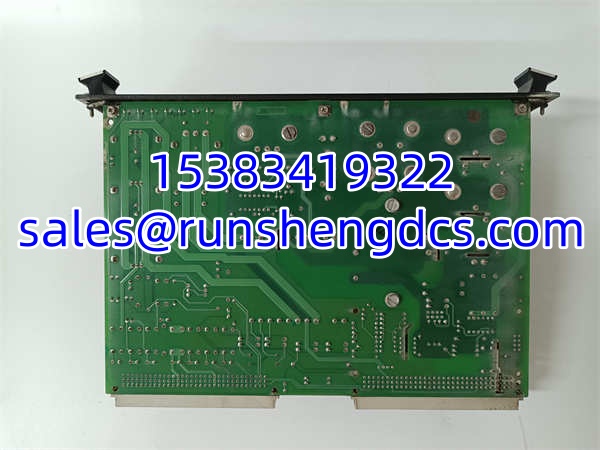
GE IS200EPSMG1AED
Application Scenarios & Pain Points
Combined-cycle gas turbine — exciter cabinet in a high-ambient environment. The EPSMG1 sits inside an EX2100 cabinet next to a 200 MW frame turbine. Ambient temperatures inside the cabinet regularly hit 50°C during summer peaking operation. The five heatsink-mounted transistors are the weak point — thermal cycling over 10+ years causes solder joint fatigue. When one transistor opens, its associated rail dies. The TMR-like redundancy of three EPSMG1 modules per controller keeps the exciter running, but the maintenance window clock is ticking.
Hydro generator excitation retrofit. An older hydro plant upgraded to EX2100 control but kept its original 125VDC station battery system. The IS200EPSMG1AED bridges the gap between legacy DC infrastructure and modern digital exciter control. The isolated +70VDC rail is critical here — it provides contact wetting voltage for field breaker auxiliary contacts. Without it, the breaker status feedback becomes unreliable, and the protection scheme can’t confirm breaker position.
Offshore platform gas turbine — salt air and vibration. The Mark VIe cabinet is pressurized, but vibration from the turbine train works on every connector. The P1/P2 backplane connectors on the EPSMG1 are a known failure point in high-vibration environments. A loose connector means intermittent loss of one or more output rails, which can cause the exciter controller to fault on undervoltage.