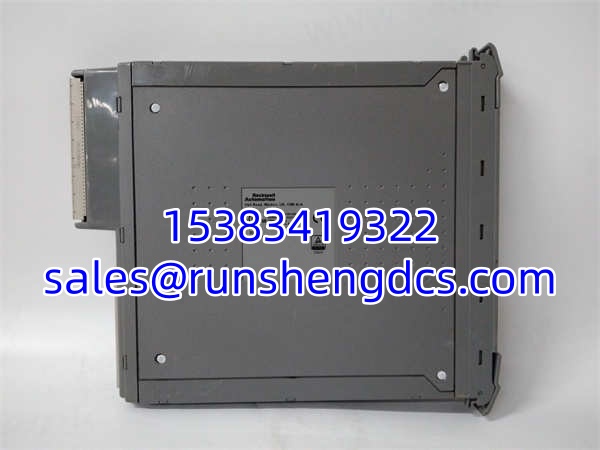
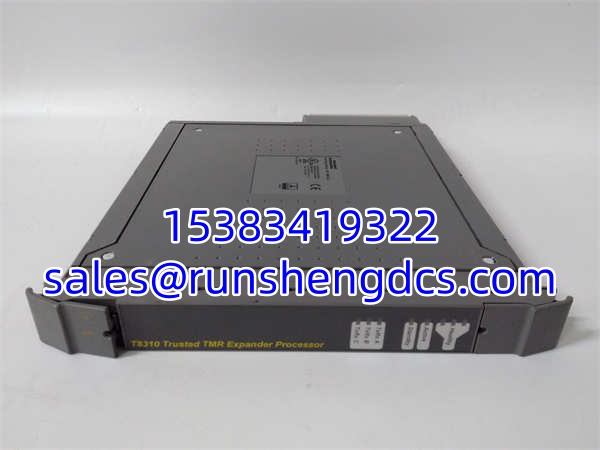

Description
Key Technical Specifications
| Parameter | Specification |
|---|---|
| Redundancy Architecture | Triple Modular Redundancy (TMR) |
| Fault Tolerance | 3-2-0 Operation (Hardware Implemented) |
| Safety Integrity Level | SIL 4 (IEC 61508) |
| Fault Response Time | ≤ 1 millisecond |
| Communication Interfaces | RS-232, RS-485, Ethernet |
| Supported Protocols | Modbus |
| Power Supply | 24V DC |
| Power Consumption | 50W (Typical) |
| Operating Temperature | -40°C to +85°C |
| Dimensions (WxHxD) | 300 mm × 200 mm × 100 mm |
| Weight | 5 kg |
Product Introduction
When a single point of failure can trigger an emergency shutdown or a catastrophic safety incident, standard PLCs simply aren’t enough. The ICS TRIPLEX T8310 was built for this exact reality, using a hardware-level Triple Modular Redundancy (TMR) architecture to ensure continuous operation even when components fail. It runs three independent processors in parallel, constantly voting on outputs to mask faults before they ever reach the field devices.
This module operates on a 3-2-0 fault tolerance logic, meaning it can sustain two sequential failures and still maintain safe operation, all while achieving a fault response time of under 1 millisecond. Rated for SIL 4 applications, it’s a proven workhorse for refinery ESD systems and turbine controls. Bottom line — it’s a bulletproof safety brain for brownfield systems, but treat it as finite surplus inventory. For new builds, evaluate current-generation safety controllers.
QA/QC Transparency SOP
- Intake & Origin Verification: We trace serial numbers to verify the module is a genuine ICS TRIPLEX part, not a counterfeit or mislabeled clone. Visual inspection checks for thermal damage on the TMR voting logic chips and bent pins on the backplane connector.
- Live Functional Testing: Module is installed in a verified TRUSTED ICS test rack. We inject simulated faults into individual channels to confirm the 3-2-0 logic correctly isolates the failure without tripping the system output.
- Electrical Parameter Tests: Fluke 87V multimeter verifies 24V DC rail stability under load. Insulation resistance is meggered at 500V DC across power and I/O terminals to rule out moisture degradation from long-term storage.
- Firmware/Config Verification: Bootloader and firmware revisions are read via the diagnostic port. We compare against known-good golden images for the T8310/T8310C to prevent silent incompatibilities with existing TMR racks.
- Final QC & Anti-Static Packaging: Units are bagged in 3M static-shielding bags with desiccant. External labels include test date, firmware rev, and inspector ID. No “refurbished” stickers hiding connector wear.
Field Engineer Gotchas
- TMR Voting Logic Mismatch: Don’t assume all T8310 modules have identical voting logic firmware. Risk: Mixing revisions in the same TMR rack can cause phantom faults or failed voting cycles. Fix: Verify the exact firmware revision matches the existing rack before installation. War story: Replaced a “bad” T8310 with a newer rev, and the system went into safe state because the voting algorithm had been updated.
- 3-2-0 Degradation Blind Spot: The system can tolerate two failures, but operators often miss the first fault alarm. Risk: Running in 3-2-0 mode for months without repair, then losing the third channel and triggering an unplanned trip. Fix: Treat any TMR channel fault as a critical priority. Verify with OEM datasheet before installation.
- Backplane Connector Pin Damage: The high-density backplane connector is fragile. Risk: Bent pins during insertion cause intermittent voting errors that are nearly impossible to diagnose. Fix: Use a backplane alignment tool. Never force the module. I’ve seen entire TMR racks fail because of one bent ground pin.
- ESD Sensitivity on TMR Chips: The triple-redundant processors are highly sensitive to electrostatic discharge. Risk: Static zap during handling kills one channel silently; the module passes power-on self-test but fails under fault injection. Fix: Wrist strap mandatory. Ground the rack chassis before touching the module.
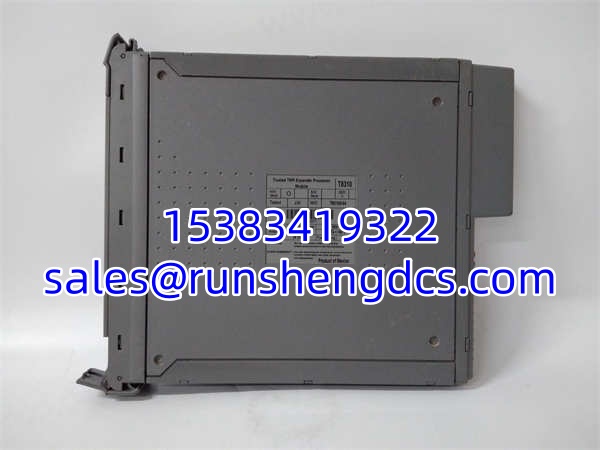
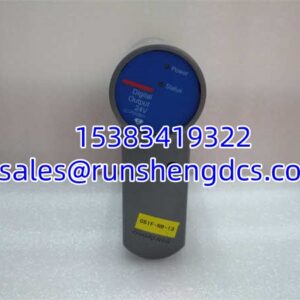
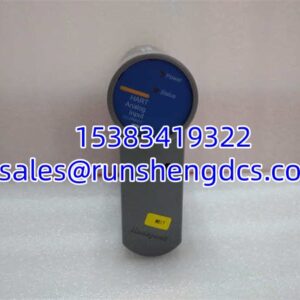
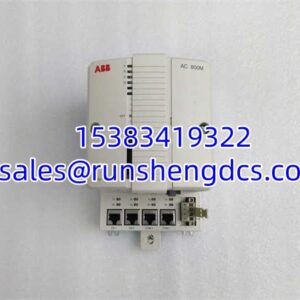
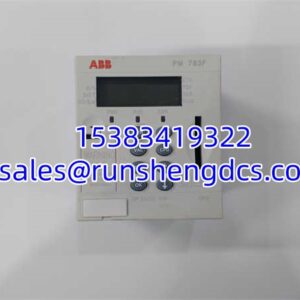
ICS TRIPLEX T8310
Application Scenarios
- Refinery Emergency Shutdown (ESD) Systems: Requires SIL 4 compliance and zero-tolerance for spurious trips; the 3-2-0 architecture ensures safety even during maintenance.
- Gas Turbine Control Systems: High-speed fault detection (<1ms) is critical to prevent mechanical damage; TMR voting masks sensor failures without tripping the turbine.
- Chemical Reactor Safety Interlocks: Harsh environments with high EMI; the hardware-implemented fault tolerance (HIFT) provides deterministic response that software-based redundancy can’t match.
Case Study: A petrochemical plant faced repeated nuisance trips on a compressor ESD system due to a failing temperature transmitter. The legacy dual-redundant system couldn’t distinguish the bad sensor from a real fault. We upgraded to a T8310-based TMR system. The 3-2-0 logic automatically voted out the faulty transmitter without tripping the compressor, and generated a maintenance alarm. Result: Zero unplanned shutdowns over 2 years, while maintaining SIL 4 safety integrity. The key was the hardware voting, not just the redundancy.
FAQ
Q: Can I mix T8310 and T8310C modules in the same TMR rack?
A: No. The “C” variant has different internal firmware and voting logic. Mixing them will cause voting failures. Always match the exact model number and firmware revision.
Q: Does this support hot-swapping?
A: Yes, the is designed for online hot replacement. The TMR architecture allows you to remove a failed module without tripping the system. However, always follow the OEM hot-swap procedure to avoid transient faults.
A: ICS TRIPLEX (now Rockwell) has migrated to newer Trusted TMR platforms. For new projects, evaluate the current-generation safety controllers. For existing systems, this module is your lifeline until the next outage window.
Q: How do I verify the TMR voting health?
A: Use the front panel LEDs and the TRUSTED ICS diagnostic software. The LEDs show the status of each channel and the overall voting state. Any deviation from “3/3 Healthy” requires immediate investigation.
Q: Is the 50W power draw typical for all configurations?
A: 50W is the typical maximum. Actual draw depends on I/O loading and communication traffic. Verify your power supply has adequate headroom, especially in multi-module racks.
Q: Can I use this for non-safety control logic?
A: Technically yes, but it’s overkill and expensive. The is designed for SIL 4 safety. Using it for standard process control wastes its fault-tolerance capabilities and increases TCO unnecessarily.
Q: Why is the price higher than a standard PLC CPU?
A: You’re paying for SIL 4 certification, hardware-level fault tolerance, and obsolescence insurance. Standard PLCs can’t match the 3-2-0 architecture or the <1ms fault response. The TCO includes avoided safety incidents, not just hardware.