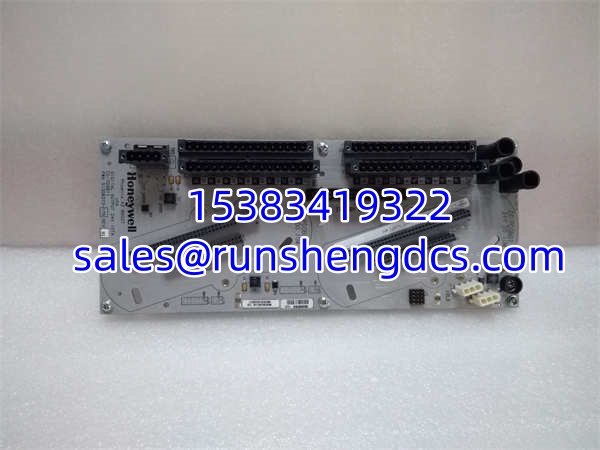

Description
Key Technical Specifications
| Parameter | Detail |
|---|---|
| Product model | CC-TDOB11 |
| Manufacturer | Honeywell |
| Product type | Redundant 24V DO IOTA (Input/Output Terminal Assembly) |
| System platform | Honeywell Experion PKS C300 / C-Series I/O |
| Signal level | 24V DC digital output |
| Channel capacity | 32-point DO (when paired with CC-PDOB01) |
| Redundancy | Yes, redundant IOTA configuration |
| Associated IOP | CC-PDOB01 24V DO module (51405043-175) |
| Mounting | C300 I/O rack / IOTA carrier |
| Power | Supplied from IOTA carrier 24V DC bus |
| Field termination | Removable terminal blocks (two-level typical for C-Series IOTA) |
| Condition | Surplus/refurbished availability common |
Product Introduction
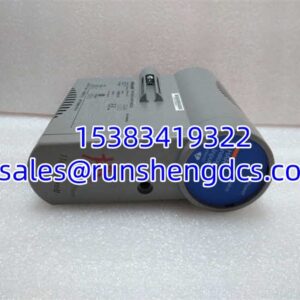
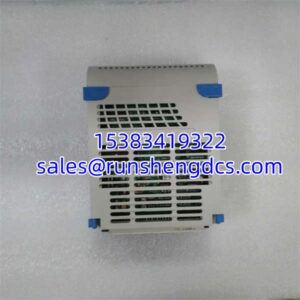
A redundant DO terminal board is only as good as its partner module. The CC-TDOB11 is the field wiring interface for the CC-PDOB01 24V digital output module in a redundant C300 I/O configuration. It does not process logic, run control strategies, or communicate on FTE by itself. It routes 24V DC outputs from the controller to solenoids, relays, trip circuits, and indicator lamps — and it does so with redundant I/O link paths built into the IOTA architecture.
In the C300 rack, the IOTA handles field termination, signal conditioning, and I/O link connectivity. The CC-PDOB01 plugs into the CC-TDOB11, and the pair presents 32 digital output channels to the controller. Redundancy is implemented at the IOTA level, so both primary and secondary DO modules can share the same field wiring without external cross-wiring. Bottom line — if your rack uses CC-PDOB01 in a redundant arrangement, the CC-TDOB11 is the correct terminal board. For non-redundant DO, CC-TDOB01 is the typical counterpart.
QA/QC Transparency SOP
- Intake & Origin Verification: Confirm model CC-TDOB11, board revision, serial number, and physical condition. Reject units with cracked connectors, corroded terminals, or missing labels.
- Live Functional Testing: Install in a C300 test rack with a known-good CC-PDOB01. Verify controller recognition, I/O link communication, and channel-level output response under load.
- Electrical Parameter Tests: Check 24V DC bus continuity, terminal block integrity, insulation resistance, and output path resistance. Look for open circuits, shorted output paths, or damaged fuse holders.
- Firmware/Config Verification: Confirm the paired CC- firmware and revision match the plant configuration. The IOTA itself is passive, but mismatched IOP firmware can cause recognition faults.
- Final QC & Anti-Static Packaging: Seal in ESD bags with desiccant. Include photos, revision data, and a test summary. No unit ships without verified rack-level acceptance.
Field Engineer Gotchas
- Wrong IOTA for the application: CC-TDOB11 is for redundant DO. CC-TDOB01 is for non-redundant DO. Mixing them can prevent the controller from recognizing the IOP or break redundancy. Check the rack configuration before ordering.
- IOTA is not the DO module: The CC- is a terminal board. The actual digital output switching is done by the CC-. If outputs are dead, check the IOP first, not just the IOTA.
- Fuse and load compatibility: DO IOTAs and associated IOPs use fuses for output protection. Verify fuse ratings and load current before energizing. A shorted solenoid can take out a fuse and look like a failed board.
- Redundancy wiring errors: In redundant configurations, both IOPs must be properly seated and synchronized. A loose I/O link cable or mis-seated IOP can cause one side to fault while the other still appears healthy.
- Revision mismatches: Board revisions and IOP firmware must be compatible with the installed system release. Verify against the plant bill of materials before swapping cards during an outage.
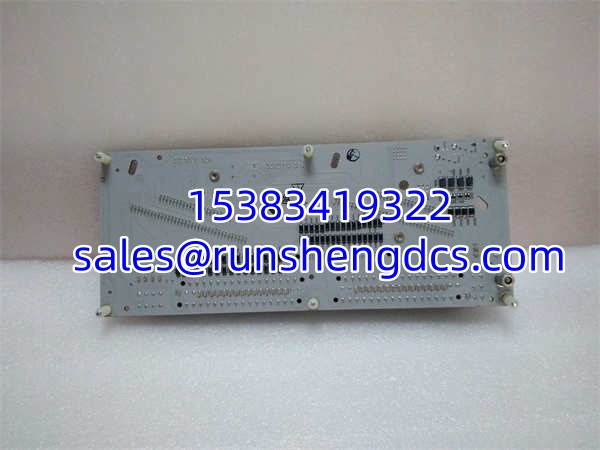
Honeywell CC-TDOB11
Application Scenarios
- Redundant solenoid valve control in refinery units: Drives critical on/off valves where loss of a single DO module must not interrupt actuation.
- Emergency shutdown output staging: Provides redundant 24V outputs to trip relays and safety circuits in process plants.
- Redundant pump and compressor permissive logic: Controls start/stop permissives, seal oil valves, and auxiliary equipment interlocks.
- High-availability batch plant discharge control: Manages discharge valves and transfer pumps where output continuity affects batch integrity.
FAQ
- Is CC- a controller or CPU?
No. It is a redundant 24V digital output terminal board (IOTA). The controller processor is a separate module. - Which DO module pairs with CC-?
Typically the CC- 24V DO module (51405043-175). - Can I use CC- for non-redundant DO?
It is designed for redundant DO. For non-redundant 24V DO, CC-TDOB01 is the standard IOTA. - Does CC- support hot-swap?
I/O supports hot insertion in many cases, but always follow Honeywell procedures and confirm redundancy status before removing or inserting modules. - How many outputs does it support?
Up to 32 digital output points when paired with CC-. - Is CC- still supported?
It is widely available as surplus and in active plants. For new projects, confirm current Honeywell support and preferred replacement parts with OEM documentation. - Can I replace CC-TDOB01 with CC-?
Not without verifying the rack configuration. Redundant and non-redundant IOTAs are not direct drop-in substitutes unless the system is configured for redundancy.