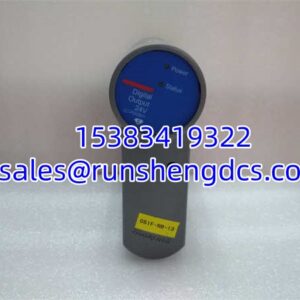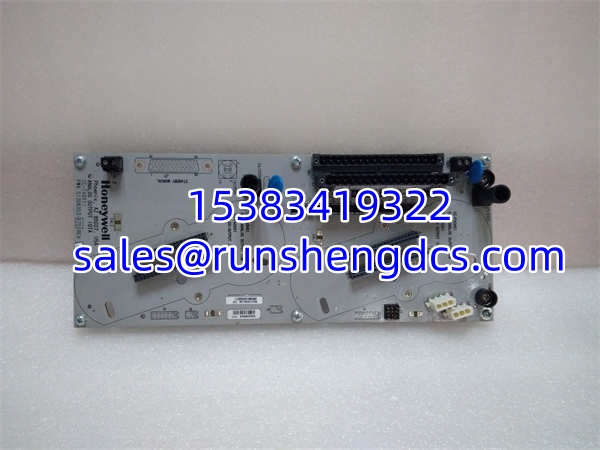

Description
Key Technical Specifications
| Parameter | Value |
|---|---|
| Product Model | CC-TAOX11 |
| Manufacturer | Honeywell |
| Product Type | Redundant AO IOTA (Analog Output Terminal Adapter) |
| System Compatibility | Experion PKS / C300 I/O subsystem |
| Channel Capacity | 16 analog output channels |
| Redundancy | Redundant IOTA configuration |
| Module Format | 12-inch I/O module |
| Associated AO Modules | CC-PAOX01, CC-PAOH01 |
| Certification | CE |
| Primary Function | Field wiring termination and module interface |
| Condition | Surplus / refurbished availability typical |
| Data Confidence | Verified from distributor listings; confirm with OEM manual |
Product Introduction
Replacing the wrong IOTA after a cabinet retrofit is a classic procurement mistake. The Honeywell CC-TAOX11 exists to prevent that confusion on the analog output side of an Experion PKS or C300 rack. It is the redundant AO IOTA that provides the field-wiring interface for Honeywell analog output modules, keeping signal routing, labeling, and maintenance access consistent across the I/O cabinet.
The Honeywell CC-TAOX11 does not perform analog output conversion by itself. Its job is mechanical and electrical termination: it accepts the AO module, carries field wiring, and supports redundant module pairing where the system requires it. That matters because AO loops to control valves, positioners, and actuators cannot tolerate loose terminals, mislabeled pairs, or non-redundant baseboards in critical service. For spares planning, the Honeywell CC-TAOX11 is usually paired with CC-PAOX01 or CC-PAOH01 AO modules, depending on whether HART communication is needed.
QA/QC transparency SOP
- Intake & Origin Verification: Confirm part number, revision, and physical condition. Cross-check against known Honeywell IOTA naming rules and reject any unit with damaged connectors, burnt traces, or missing labels.
- Live Functional Testing: Seat the IOTA in a compatible rack with a known-good AO module. Verify module recognition, terminal continuity, and channel mapping through the controller.
- Electrical Parameter Tests: Check terminal-to-terminal continuity, insulation resistance, and ground isolation. Confirm no shorted pairs or open field terminals.
- Firmware/Config Verification: Record installed AO module firmware and rack slot configuration. IOTAs do not carry firmware, but the paired AO module does, so document it.
- Final QC & Anti-Static Packaging: Label channels, photograph condition, and pack in ESD-safe materials with a test summary.
Field Engineer Gotchas
- IOTA vs AO module confusion: The CC-TAOX11 is the terminal adapter, not the AO module. Ordering it alone will not restore analog output capability if the AO module is missing.
- Redundancy mismatch: Do not mix redundant and non-redundant IOTAs in the same redundant AO pair. Use CC- only where the design calls for a redundant AO IOTA.
- Wrong AO partner: CC- is associated with 16-channel AO modules such as CC-PAOX01 and CC-PAOH01. Verify the exact module before wiring.
- Terminal labeling drift: After cabinet rework, field tags often get swapped. Trace each loop with a mA source before closing the cabinet.
- Mechanical seating: Honeywell IOTAs must seat cleanly into the backplane and module connector. A half-seated board can cause intermittent channel faults.
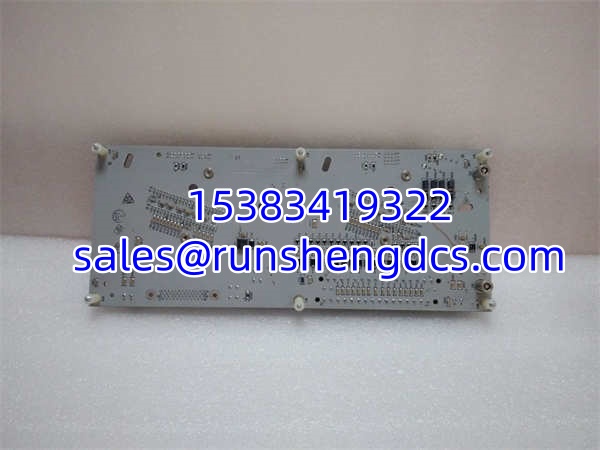
Honeywell CC-TAOX11
Application Scenarios
- Control valve output loops: Provides redundant termination for 4-20 mA outputs to pressure, flow, and temperature control valves in continuous process units.
- Redundant AO pairs in critical service: Used where a failed AO module must not interrupt valve positioning, especially on reactor, column, or compressor control loops.
- MRO spares standardization: Keeps one IOTA type on the shelf for 16-channel redundant AO slots, reducing cabinet variation.
- System migration or cabinet rebuild: Maintains consistent wiring when replacing aged I/O racks with newer Experion/C300 hardware.
FAQ
- Is CC- an analog output module?
No. It is the redundant AO IOTA. The actual analog output function comes from the installed AO module. - Which AO modules pair with CC-?
Typically CC-PAOX01 and CC-PAOH01. Confirm channel count and HART requirements before ordering. - Can I use CC- for non-redundant AO channels?
It can physically terminate AO wiring, but its primary role is redundant AO I/O. Use the IOTA type specified in the rack design. - Does this board have firmware?
No. The IOTA is a terminal adapter. Firmware resides on the AO module and controller. - Is it still available new?
Most supply comes through surplus, unused, or refurbished channels. Always verify condition, revision, and return terms. - Will it work with CC-TAOX01 applications?
Not directly. CC-TAOX01 is the non-redundant 16-channel AO IOTA. CC- is the redundant version. - What should I check before installation?
Verify rack type, AO module compatibility, redundancy requirement, terminal labeling, and mechanical seating.