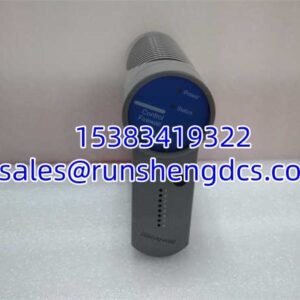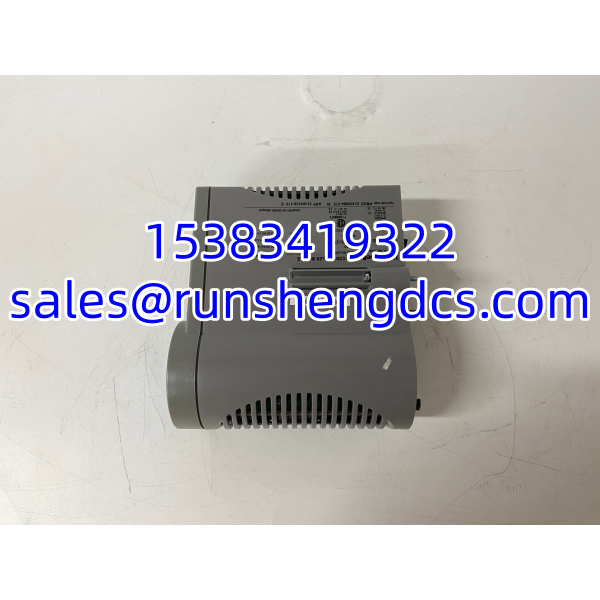
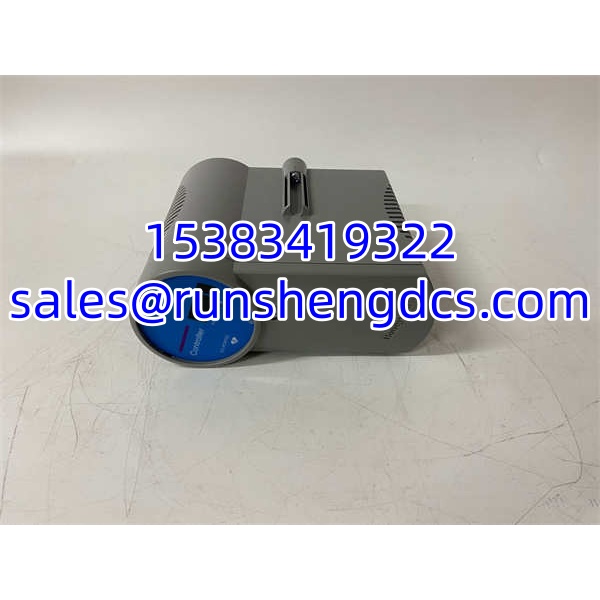

Description
Key Technical Specifications
| Parameter | Detail |
|---|---|
| Product model | CC-PCNT02 |
| Part number | 51454551-275 (common reference) |
| Manufacturer | Honeywell |
| Product type | Pulse counter / frequency input module |
| System platform | Honeywell Experion PKS C300 controller I/O |
| Input type | Opto-isolated pulse/frequency inputs |
| Typical field devices | Flowmeters, batch counters, turbine pickups, encoders, reed/open-collector outputs |
| Mounting | C300 I/O rack / IOTA-style module slot |
| Communication to controller | C300 backplane / I/O link (module does not act as a standalone network gateway) |
| Operating temperature | Typical industrial range; verify exact rating from label |
| Power | Supplied from C300 rack/backplane |
| Condition | Surplus/refurbished availability common |
Product Introduction
Replacing a failed pulse input card during a batch run is never fun. The CC-PCNT02 shows up in exactly those spots where a C300 controller needs clean pulse data from flowmeters, batch counters, turbine pickups, or encoder-style sensors.
It sits as a front-end I/O module in the Honeywell Experion PKS C300 architecture, converting field pulses into controller-readable values. The opto-isolated inputs help block ground loops and field transients, which is where many generic counters start throwing false counts. It is not a universal analog card or a communication gateway; it is a dedicated pulse/frequency interface for -based process racks. For long-term projects, check whether CC-PCNT05 is now the preferred replacement, since Honeywell has announced migration from CC-PCNT02 to CC-PCNT05.
QA/QC Transparency SOP
- Intake & Origin Verification: Verify P/N 51454551-275, board revision, serial number, and physical condition. Reject units with burnt components, corroded connectors, or missing labels.
- Live Functional Testing: Install in a test rack, confirm controller recognition, and inject known pulse/frequency signals using a calibrated pulse generator. Verify count stability and drop-out behavior.
- Electrical Parameter Tests: Check backplane power draw, input isolation, continuity on field terminals, and insulation resistance where applicable. Look for shorted input stages or damaged opto-isolators.
- Firmware/Config Verification: Read module identity and firmware revision. Confirm it matches the project configuration. Back up readout data before shipping.
- Final QC & Anti-Static Packaging: Seal in ESD bags with desiccant. Include test summary, revision data, and photos. No module ships without a verified ID match.
Field Engineer Gotchas
- Firmware / revision mismatch: A CC-PCNT02 with an older or unsupported revision can fail to initialize in a newer rack. Solution: match the revision to the approved project bill of materials. I have seen a “good” surplus card sit idle for two days because the controller refused to bind to it.
- It is not a universal analog or comm card: Do not wire 4-20 mA flow transmitters directly into pulse terminals expecting a scaled flow value. This module expects pulse/frequency outputs. If your meter only has 4-20 mA, you need an AI module or a pulse-output transmitter.
- Floating grounds and noisy pickups: Turbine meters and magnetic pickups can inject transients. Use shielded cable, proper grounding, and verify opto-isolation. A single bad ground can create phantom counts.
- Scaling lives in the controller, not just the card: The module captures pulses; the strategy usually handles scaling, totalizing, and alarm logic. If counts look wrong, check both field wiring and the controller scaling factors.
- Migration risk: CC-PCNT02 is a legacy I/O module. For new expansions, confirm whether CC-PCNT05 or another current module is required.
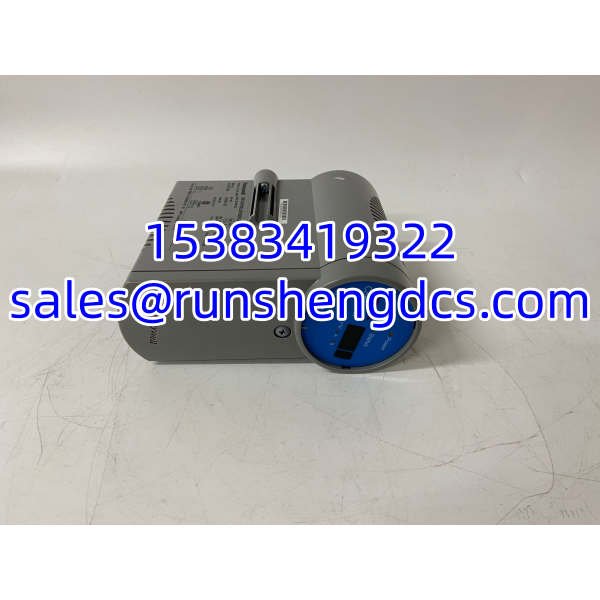
Honeywell CC-PCNT02
Application Scenarios
- Custody-transfer and process flow metering: Integrates pulse-output flowmeters into a controller for batch totals, rate monitoring, and alarm supervision.
- Batch counting in food, beverage, and chemical lines: Counts bottle, drum, or valve-cycle pulses to trigger batch end, transfer, or cleaning sequences.
- Turbine speed or rotary equipment pulse monitoring: Accepts magnetic pickup or encoder pulses for local indication and controller-based alarms.
- Energy meter pulse acquisition: Reads pulse outputs from steam, water, or fuel meters for plant energy accounting.
FAQ
- Is the CC-PCNT02 the same as the controller CPU?
No. It is an I/O module for pulse/frequency inputs. The controller CPU is a separate module. - Can I use CC- for 4-20 mA flowmeters?
Not directly. It accepts pulse or frequency signals. For 4-20 mA, use a analog input module or a transmitter with a pulse output. - Does it support hot-swap in a rack?
I/O modules generally support hot insertion, but always follow Honeywell procedures and verify the specific module status before removing or inserting cards. - Will CC- still be supported long term?
Honeywell has announced migration from CC- to CC-PCNT05. For new projects or critical spares, confirm current support and replacement guidance with Honeywell. - Can I drop any CC- into my rack?
Not automatically. Match the part number, revision, slot type, and controller firmware. A mismatched revision can cause recognition or communication faults. - What is the maximum pulse frequency?
That value is not reliably published in public sources for this exact module. Verify from the Honeywell I/O manual or the module nameplate before design. - Is this module redundant?
The module itself is not a redundant controller. Redundancy depends on the controller architecture, I/O configuration, and application design.