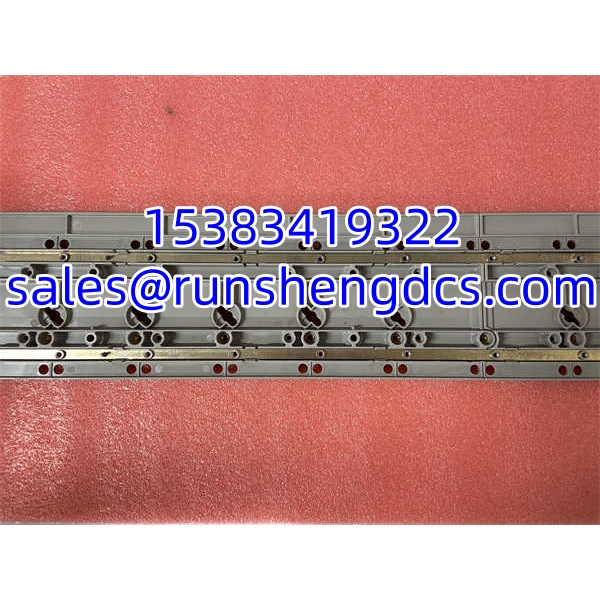

Description
Key Technical Specifications
| Parameter | Detail |
|---|---|
| Manufacturer | Honeywell |
| Model | CC-MCAR02 |
| Product Type | Mounting power rail / DIN-style IOTA rail |
| Platform | Honeywell Experion PKS C300 |
| Compatible Hardware | C-Series IOTA modules, PMIO/C-Series I/O assemblies |
| Primary Function | Mechanical mounting and 24 VDC bus power distribution |
| Typical Voltage | 24 VDC via cabinet power bus |
| Mounting | Cabinet rail mounting |
| Redundancy Role | Supports redundant IOTA pairs when installed per C300 design |
| Documentation | Verify with OEM datasheet; public sources do not publish a full electrical spec sheet |
Product Introduction
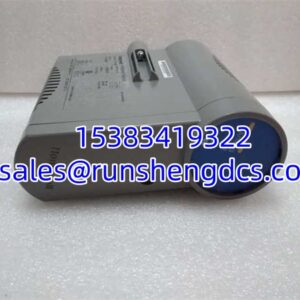
Swapping a C300 I/O module without checking the rail is how small outages start. The CC-MCAR02 is not a controller or I/O card. It is the mounting power rail that holds C-Series IOTA assemblies and carries the 24 VDC bus inside the C300 cabinet. Get the rail, power bus, or mechanical fit wrong, and you can end up with intermittent I/O faults even though every module looks healthy.
Bottom line — it is a mechanical and power-distribution backbone, not a logic device. The CC-MCAR02 sits in the C300 hardware chain alongside CC-PCNT01/CC-PCNT02 controllers, CC-PWRR01 power supplies, CC-TCNT01/CC-TCF901 backplanes, and C-Series IOTA modules. Public listings confirm it as a C300 mounting power rail, but Honeywell does not publish a detailed standalone datasheet in open sources, so treat the physical label and approved spare-part list as the final authority.
QA/QC Transparency SOP
- Intake & Origin Verification: Verify part number CC-MCAR02, label condition, revision markings, and supplier lot. Reject units with cracked rails, stripped threads, or missing bus hardware.
- Live Functional Testing: Install on a test rack with known-good IOTA modules. Verify 24 VDC bus presence, module seating, and LED status under no-load and loaded conditions.
- Electrical Parameter Tests: Check bus-bar continuity, rail-to-chassis insulation, terminal tightness, and voltage drop across the rail. Flag corrosion, loose fasteners, or oxidized bus contacts.
- Firmware/Config Verification: This part has no firmware. Confirm compatibility by matching the cabinet drawing, IOTA type, and approved spare list.
- Final QC & Anti-Static Packaging: Photograph label, record serial/revision, verify hardware kit completeness, and pack with edge protection. This is a mechanical/power rail, but nearby electronics still need ESD-safe handling.
Field Engineer Gotchas
- Rail revision mismatch. CC-MCAR01 and CC-MCAR02 are both mounting power rails, but they may not be drop-in identical. Check the cabinet drawing and bus-bar geometry before swapping.
- Power bus not seated. A loose 24 VDC bus connection can cause intermittent I/O faults that look like bad modules. Torque bus hardware to OEM spec and recheck after thermal cycling.
- IOTA alignment errors. Forcing an IOTA onto the rail can damage connectors. If it does not seat cleanly, stop. Bent pins or misaligned bus contacts create hard-to-diagnose field failures.
- Redundant IOTA wiring mistakes. Adding a second IOTA for redundancy only works if the rail, power bus, and IOLINK cabling match the design. Do not assume a spare rail supports the same redundant configuration.
- Grounding and cabinet bonding. Poor cabinet grounding can introduce noise into analog IOTA channels. Verify rail bonding and cabinet ground before blaming the module.
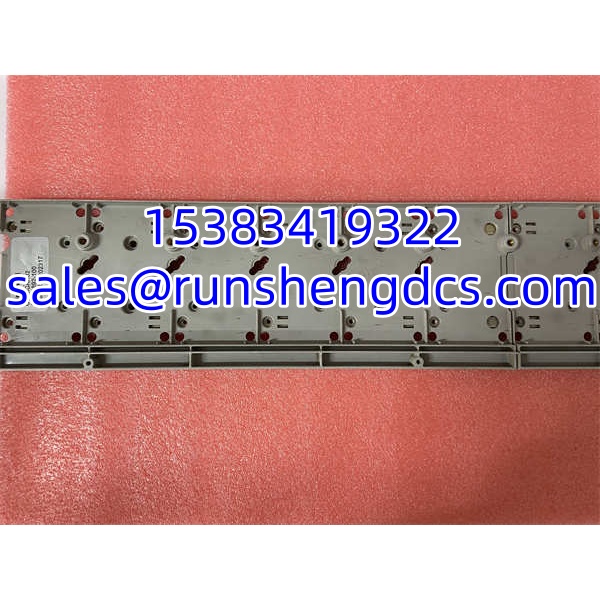
Honeywell CC-MCAR02
Application Scenarios
- Adding C-Series IOTA modules for new analog/digital I/O requires a compatible mounting power rail with correct 24 VDC bus capacity.
- Redundant I/O rebuild: Replacing damaged rails during a turnaround where redundant IOTA pairs must remain mechanically and electrically consistent.
- Legacy cabinet refurbishment: Upgrading an older cabinet where bus bars, rail fasteners, or IOTA mounting points have degraded.
- Spare-parts standardization: Locking down approved rails for sites running mixed CC-MCAR01/CC-MCAR02 hardware.
Case note: A refinery replaced a faulty DO IOTA after repeated channel dropouts. The real issue was a loose 24 VDC bus connection on the mounting rail. After reseating the bus hardware and verifying voltage drop across the rail, the IOTA stabilized without replacement.
FAQ
No. It is a mounting power rail for C-Series IOTA assemblies in cabinets.
Not automatically. Both are mounting power rails, but mechanical and bus differences may exist. Confirm with the cabinet drawing and Honeywell documentation.
Does this part have firmware?
No. It is a mechanical and power-distribution component.
What voltage does it carry?
Typically 24 VDC from the cabinet power bus. Verify exact ratings on the installed hardware.
Will it work with PMIO and C-Series IOTA?
Yes, within the C-Series hardware architecture. Compatibility still depends on cabinet design and IOTA type.
Is new OEM stock available?
Availability varies by supplier. Many units on the secondary market are surplus, unused, or removed from service. Always verify condition.
How do I confirm it is genuine?
Check the Honeywell label, part number, revision, bus-bar construction, and fitment on a rack. Cross-reference with the plant spare-parts list.