
Description
Key Technical Specifications
| Parameter | Value |
|---|---|
| Part Number | 51305072-200 |
| Revision | CLCN-A |
| Brand | Honeywell |
| Product Type | LCN Network Interface / Coax Communication Card |
| System Family | TDC 3000 / TPS DCS |
| Network Role | Local Control Network (LCN) node interface |
| Related Parts | 51305072-100 CLCN-A/B LCN I/O card |
| Typical Connectors | Coaxial LCN interface (verify BNC/coax type on unit) |
| Availability | Surplus, refurbished, or unused old stock |
| Documentation | No verified public OEM datasheet located |
Product Introduction
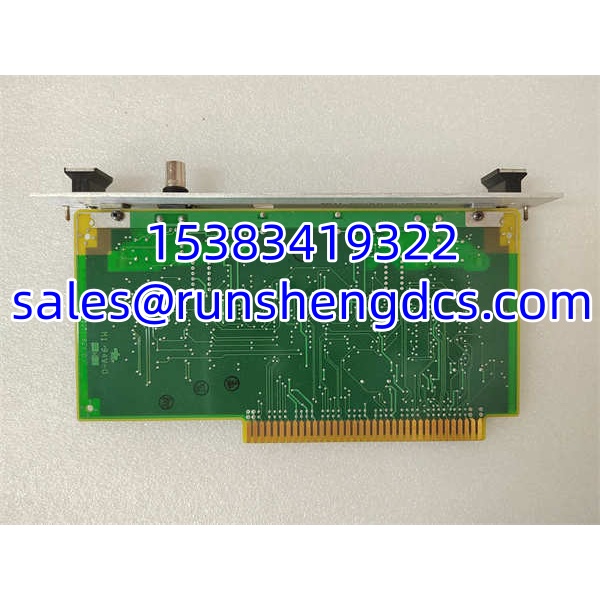
In a Honeywell TDC 3000 or TPS system, the LCN is the backbone that ties together operator stations, history modules, application modules, and network gateways. The Honeywell 51305072-200 CLCN-A is a legacy LCN interface card associated with that coaxial network layer. It is not a field I/O card in the normal sense; it is a communication interface that helps an LCN node connect to the Local Control Network.
The “CLCN-A” marking indicates a specific LCN coax interface revision. It appears in surplus listings alongside the related 51305072-100 CLCN-A/B, which is described as an LCN I/O/communication card. Because official Honeywell documentation for the -200 revision is not publicly confirmed, this module should only be used as a like-for-like replacement when the failed card carries the same part number, revision, connector layout, and slot compatibility.
QA/QC Transparency SOP
- Intake & Origin Verification: Confirm the label reads 51305072-200 CLCN-A. Record serial number, board revision, and any sub-codes. Inspect for burnt components, corroded coax connectors, bent pins, or replaced labels.
- Visual & Mechanical Inspection: Verify coax connector type, card edge condition, mounting brackets, and slot keying. Ensure it matches the original TDC 3000/TPS chassis or node cabinet.
- Live Functional Testing: Install into a compatible LCN node or verified test fixture. Confirm power-up, node recognition, and LCN communication status indicators.
- Network Communication Verification: Check coax termination, node address settings, and LCN link stability. Confirm the card does not cause network faults, address conflicts, or intermittent node dropouts.
- Final QC & Anti-Static Packaging: Label with test date, revision, and communication test status. Pack in ESD-safe materials with coax connector protection and a summary of verified functions.
Field Engineer Gotchas
Revision mismatch. CLCN-A is not a generic label. A CLCN-B, unmarked card, or a 51305072-100 may not be a direct drop-in replacement. Solution: match the exact 51305072-200 CLCN-A marking before swapping.
Wrong slot or node type. LCN cards are not universal across all TDC 3000/TPS cabinets. Installing this card in the wrong node can prevent communication or damage the backplane. Solution: photograph the original slot location and card orientation before removal.
Coax termination errors. LCN coax segments depend on correct termination and impedance. A loose connector or missing terminator can cause intermittent communication faults. Solution: verify coax connectors, terminators, and segment integrity after replacement.
Silent communication faults. The card may power up but fail to maintain stable LCN traffic. Solution: confirm node status from the operator station or engineering tool, not just from local LEDs.
Surplus labeling risk. Third-party listings sometimes group 51305072-100 and 51305072-200 together. Solution: require photos of the actual nameplate showing 51305072-200 CLCN-A.
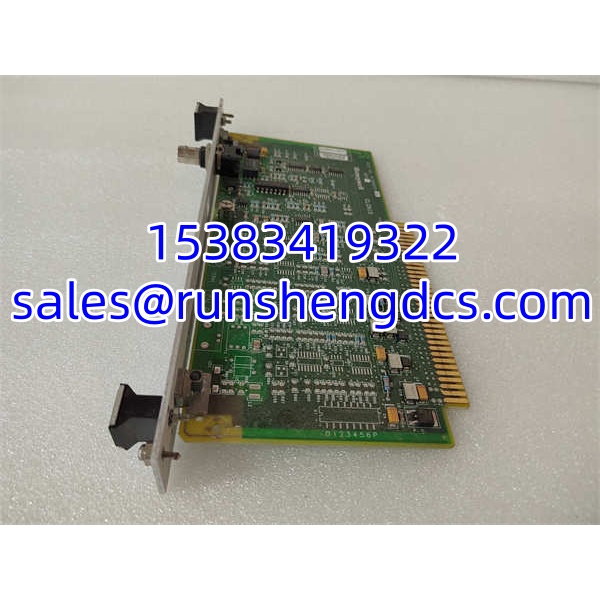
Honeywell 51305072-200 CLCN-A
Application Scenarios
TDC 3000/TPS LCN node repair. When an LCN node loses network communication, the CLCN interface card is a common suspect. A verified 51305072-200 CLCN-A can restore LCN connectivity without replacing the entire node.
Legacy DCS obsolescence support. Many plants still run TDC 3000 or TPS systems while planning migration to Experion PKS or another platform. Keeping tested LCN interface cards in stock helps avoid extended downtime during unplanned failures.
LCN segment troubleshooting. If a node disappears from the LCN but power and configuration appear normal, the coax interface card may have degraded. Replacing it with a known-good CLCN-A card can isolate whether the fault is hardware or network-related.
Case note: A plant replaced a failed LCN card with a surplus unit labeled only as “51305072.” The node powered up, but the LCN status remained abnormal. The replacement turned out to be a 51305072-100 variant with different revision markings. Once a verified 51305072-200 CLCN-A from the same node type was installed, the node rejoined the LCN without further configuration changes.
FAQ
Is Honeywell 51305072-200 CLCN-A still in production?
It is a legacy TDC 3000/TPS module. Supply is typically surplus, refurbished, or unused old stock.
What does this card do?
It is an LCN coaxial network interface card used in Honeywell TDC 3000/TPS DCS systems.
Can I use 51305072-100 instead?
Not automatically. The 51305072-100 CLCN-A/B is related, but revision and hardware differences may prevent direct substitution.
Does it connect to field instruments?
No. This is an LCN communication interface, not a field I/O card.
How do I verify it before installation?
Check the part number and CLCN-A revision, confirm slot compatibility, verify coax connectors, and test LCN communication after installation.
Is there an official datasheet?
No verified public OEM datasheet was located for the exact 51305072-200 CLCN-A.
Can it be used in Experion PKS?
Not directly. It belongs to the TDC 3000/TPS LCN hardware family. Experion PKS uses different controllers and network modules.