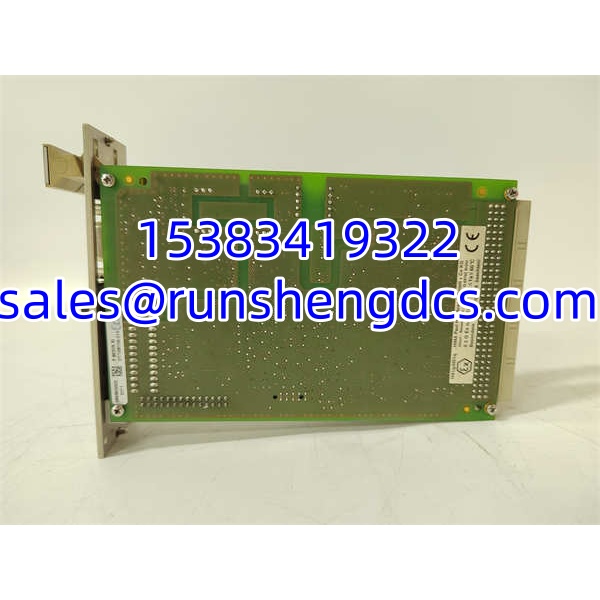

Description
Key Technical Specifications
| Parameter | Value / Note |
|---|---|
| Function | Central module for PES H51q safety systems |
| Processor | Dual synchronized Intel 386EX, 32-bit, 25 MHz |
| OS memory | 1 MB Flash-EPROM |
| User program memory | 1 MB Flash-EPROM |
| Data memory | 1 MB SRAM |
| Communication | 2× electrically isolated RS-485 serial interfaces |
| Safety watchdog output | 24 V, short-circuit protected, max 0.5 A |
| Rack space | 8 SU |
| Supply voltage | 5 V DC / 2 A |
| Diagnostic display | 4-character alphanumeric display + LED indicators |
| Bus station setting | DIP switch S1, RS-485 station 1–31 |
| Required OS | BS41q/51q V7.0-8 (05.31) or later for Ethernet via F8627X |
Product Introduction
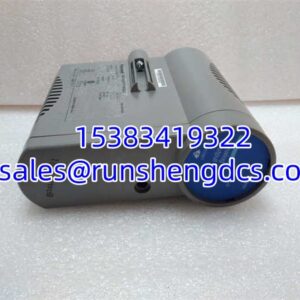
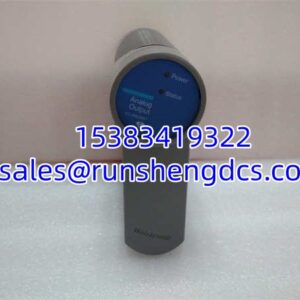
Swapping a H51q central module without checking firmware and DIP switches is how a planned maintenance window turns into an unplanned outage. The HIMA F8650X 984865065 is not a generic PLC CPU; it is the central processing and interface module for HIMA PES H51q / H51q-MS / H51q-HS / H51q-HRS safety controllers. It handles safety program execution, diagnostics, RS-485 communication, and watchdog monitoring inside a certified SIS architecture.
Its value is predictability. Dual synchronized 386EX processors at 25 MHz, 1 MB Flash-EPROM for OS and user program, and 1 MB SRAM are modest by modern IT standards, but they are proven in long-life safety systems where deterministic behavior matters more than raw throughput. The 24 V / 0.5 A short-circuit-protected watchdog output provides a hardware-level safety path independent of network health. Bottom line — this module belongs in existing H51q racks, not as a blind upgrade target.
QA/QC Transparency SOP
- Intake & Origin Verification — Record model F8650X, order code 984865065, hardware revision, and serial number. Inspect for corrosion, bent DIN connectors, burned components, or replaced labels. Reject units with no traceable plant history.
- Live Functional Testing – Seat in a compatible H51q rack with known-good backplane and power supply. Power up and confirm diagnostic display initialization, LED status, and watchdog output. Verify RS-485 communication with PADT/ELOP II where authorized.
- Electrical Parameter Tests — Measure 5 V rail current draw under idle and communication load. Confirm watchdog 24 V output within tolerance under 0.1 A and 0.5 A load. Check short-circuit protection response. Verify isolation between RS-485 ports and chassis.
- Firmware/Config Verification — Read hardware revision and OS version via diagnostics. Confirm compatibility with BS41q/51q V7.0-8 or the customer’s installed system version. Back up identity data. Do not flash firmware without written authorization.
- Final QC & Anti-Static Packaging — Seal in ESD bag with desiccant. Attach test report covering display check, RS-485 communication, watchdog output, supply current, and revision readout. Label as “Verify compatibility with existing H51q project before installation.”
Field Engineer Gotchas
- Firmware/OS version mismatch — Risk: module boots but refuses to download or run the safety program. Solution: confirm BS41q/51q version matches the existing project. War story: a refinery replaced an F8650X during a shutdown; the rack accepted it, but the safety application would not validate until the OS revision was matched.
- DIP switch station address error — Risk: RS-485 communication timeout or address conflict. Solution: read S1 switch settings from the failed module before removal and replicate exactly. The S1-8 switch also sets baud rate (9600/57600 bps); get it wrong and the link never comes up.
- Hot-swap without procedure — Risk: spurious watchdog trip or rack fault. Solution: follow the plant’s H51q module replacement procedure. Some HIMA racks allow controlled replacement, but that is not a blanket permission to yank a live central module.
- Watchdog load misapplication — Risk: overloaded watchdog output fails to hold external relays. Solution: treat the 24 V / 0.5 A watchdog as a monitored safety signal, not a general-purpose power feed. Verify coil current on every connected relay.
- Battery-backed memory decay — Risk: lost configuration or extended startup diagnostics. Solution: check buffer battery condition on older H51q modules. A weak battery can cause intermittent faults long after the module is reseated.
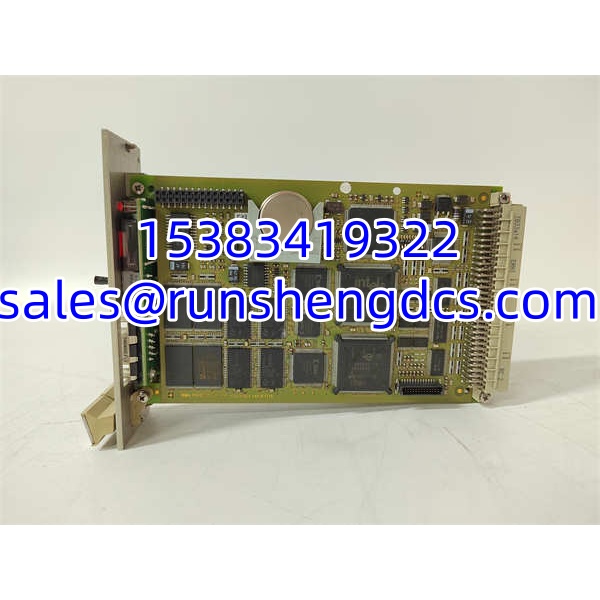
HIMA F8650X 984865065
Application Scenarios
- Legacy H51q ESD system maintenance — Replacing a failed central module in an existing PES H51q-HS rack where the safety logic, I/O topology, and RS-485 network are already commissioned.
- RS-485-based safety communication node — Serving as the central processor for a small H51q-MS system communicating with local I/O and a PADT engineering workstation.
- Brownfield SIS sparing strategy — Holding a tested F8650X as a cold spare for a plant running H51q hardware that cannot be migrated without a full revalidation.
- Watchdog-monitored trip circuit — Using the 24 V / 0.5 A watchdog output to supervise external safety relays where loss of CPU health must force a safe state.
FAQ
1. Is the F8650X 984865065 a CPU or a communication card?
It is a central module with both processing and communication functions for the H51q safety system. It runs the safety program and provides RS-485 interfaces.
2. Can I drop this into any HIMA rack?
No. It belongs in HIMA PES H51q / H51q-MS / H51q-HS / H51q-HRS systems. It is not a HIMax X-CPU replacement, and it is not interchangeable with F35/F30 or AC 800M hardware.
3. What firmware does it need?
It requires a compatible BS41q/51q OS version. For Ethernet communication via F8627X, V7.0-8 (05.31) or later is referenced. Always verify against the installed project.
4. Does it support Ethernet natively?
The itself provides RS-485. Ethernet typically requires an F8627X communication module and a supported OS version.
5. Is it SIL 3 certified?
Public documentation associates the H51q family with SIL 3 per IEC 61508. The exact certificate, application constraints, and PFD/PFH values must come from the official HIMA safety manual.
6. Can I hot-swap it?
Some HIMA systems allow controlled module replacement, but a central processor is not a routine hot-swap item. Follow the plant procedure and HIMA documentation. A wrong move can trip the process.
7. Should I buy this as surplus?
Only if you can confirm revision, OS compatibility, RS-485 settings, and test history. For a live SIS, an unverified central module is a commissioning risk, not a cost saving.