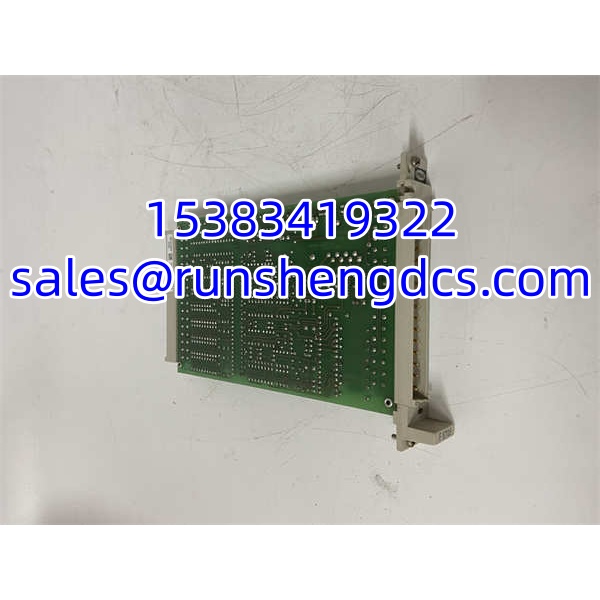

Description
Key Technical Specifications
| Parameter | Value |
|---|---|
| Product Type | Analog output module |
| Model | F6705 |
| Manufacturer | HIMA |
| Number of Channels | 8 analog output channels |
| Output Signal Types | Current (e.g., 4–20 mA) and voltage (e.g., 0–10 V), configurable |
| Conversion | Digital-to-analog (D/A) with high-precision output |
| Safety Rating | Suitable for SIL 3 safety applications (IEC 61508) |
| Compatible Systems | HIMA HIMax, H41q, H51q safety controller families |
| Installation | Plugs into HIMA safety I/O rack / subrack |
| Diagnostics | Module-level fault detection and status reporting |
| Protection | Overload and short-circuit protection on output channels |
| Operating Environment | Industrial-grade, suitable for harsh process environments |
| Lifecycle Status | Legacy; confirm availability and replacement guidance with HIMA |
Product Introduction
The HIMA F6705 is an 8-channel analog output module designed for HIMA safety instrumented systems. It receives digital output commands from the HIMA safety controller and converts them into precise analog signals — typically 4–20 mA or 0–10 V — to control field devices such as control valves, damper actuators, speed references, and analog regulators.
This is not a general-purpose analog output card. It is a safety-rated I/O module intended for use within HIMA’s SIS architecture (HIMax, H41q, or H51q platforms), where output integrity directly affects process safety. The module provides channel-level diagnostics and fault detection, allowing the safety controller to identify output failures and take appropriate safe-state action.
Because the F6705 is a legacy module, it is most commonly encountered as a replacement spare in brownfield installations. Any new design should confirm current HIMA lifecycle recommendations and evaluate whether a newer F-series analog output module is specified.
QA/QC Transparency SOP
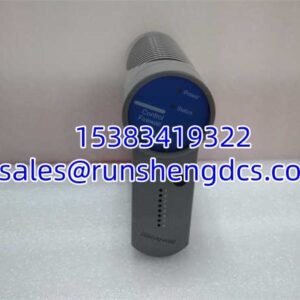
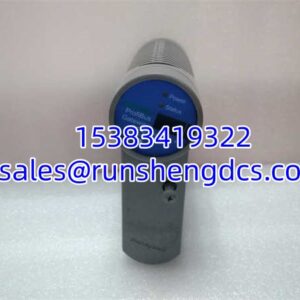
- Intake & Origin Verification: Photograph the module label (F6705), serial number, hardware revision, and connector condition. Reject units with bent pins, cracked housings, or unclear markings.
- Visual & Mechanical Inspection: Check the backplane connector, module rails, and terminal block for corrosion, burn marks, or loose contacts.
- Power-Up & Diagnostics: Install the module into a compatible HIMA rack. Power up the system and verify that the module is recognized by the HIMA controller with no fault indicators.
- Channel Output Verification: Command each of the 8 channels to known output values (e.g., 4 mA, 12 mA, 20 mA). Measure actual output with a calibrated multimeter or loop calibrator. Confirm accuracy within expected tolerance.
- Safety Function Check: Verify that the module responds correctly to controller-initiated safe-state commands (e.g., hold last value, go to 0 mA, or go to predefined safe value).
- Final QC & Anti-Static Packaging: Seal in ESD-safe packaging with desiccant. Include photos, test notes, channel measurement records, and revision data for traceability.
Field Engineer Gotchas
- Not a standalone module: The F6705 requires a compatible HIMA safety controller and rack. It cannot operate independently.
- Legacy lifecycle: The F6705 is a legacy module. For new installations or long-term spare planning, confirm HIMA’s current replacement recommendation.
- Output range must match field devices: Verify whether the module and its configuration support 4–20 mA, 0–10 V, or other ranges. Mismatched ranges cause incorrect valve positions or actuator behavior.
- Safe-state configuration is critical: In SIS applications, the output behavior on fault (fail-low, fail-high, hold last value) must be verified during commissioning. This is a safety function, not an optional setting.
- Channel diagnostics matter: A single failed channel may trigger a module fault. Do not assume the entire module is bad without testing individual channels.
- Wiring and shielding: Analog output wiring should use shielded cable with proper grounding to avoid noise-induced signal errors, especially over long cable runs.
- Distributor descriptions vary: Some third-party listings describe the generically as a “communication module” or “CPU module.” It is specifically an 8-channel analog output I/O module.
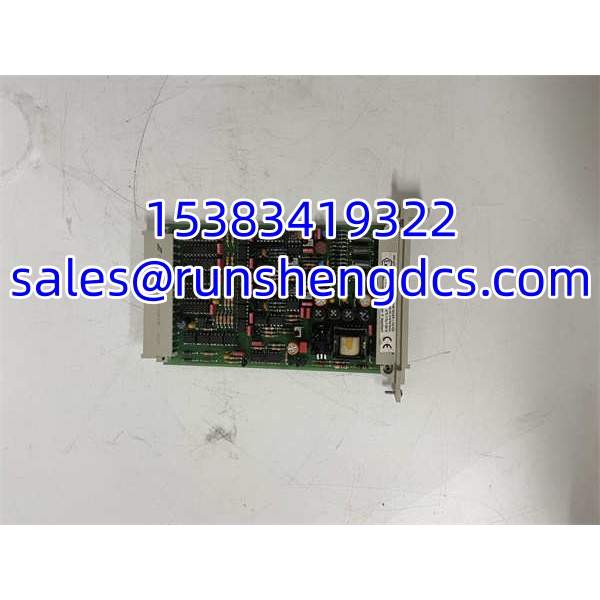
HIMA F6705
Application Scenarios
- ESD valve control in a refinery: The HIMA safety controller uses the to drive analog control valves on critical process lines. On a trip condition, the controller commands the valves to a predefined safe position via the analog outputs.
- BMS damper actuation in a furnace: The provides 4–20 mA signals to combustion air damper actuators. The safety controller modulates airflow during normal operation and drives dampers to safe positions on flame failure.
- Brownfield spare replacement: A chemical plant replaces a failed module during a scheduled shutdown. After installation, each channel is calibrated and the safe-state output is verified before returning the unit to service.
FAQ
It is an 8-channel analog output module that converts digital controller commands into analog signals (e.g., 4–20 mA, 0–10 V) for field devices.
No. It is an analog output I/O module. Some third-party listings describe it incorrectly as a CPU or communication module.
Which HIMA systems is it compatible with?
The is used with HIMA safety controller families such as HIMax, H41q, and H51q. Confirm exact compatibility against the installed system documentation.
Is it safety-rated?
Yes. It is designed for use in SIL 3 safety applications under IEC 61508.
Can it be hot-swapped?
HIMA safety I/O modules may support hot-swapping under specific conditions, but site procedures and redundancy status must be verified before removal. Always follow HIMA and plant safety protocols.
It is a legacy module. Availability varies by distributor. Confirm current lifecycle status and replacement options with HIMA or an authorized partner.
How do I verify authenticity?
Check the module label for the HIMA brand and model, inspect the connector and housing condition, and test the module in a compatible HIMA rack with channel output verification.