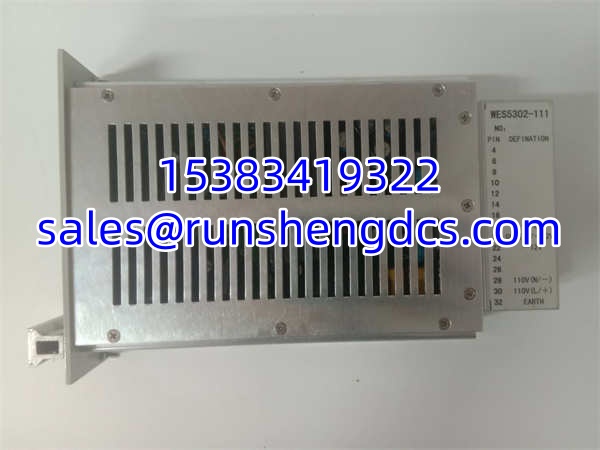

Description
Key Technical Specifications
- Manufacturer: GE (General Electric)
- Product Type: Reflective Memory / Digital I/O Module
- Operating Voltage: 24V DC
- Data Transfer: High-speed, low-latency bandwidth
- System Compatibility: Distributed Control Systems (DCS)
- Installation Method: Control Room Rack Mount
- Environmental Temp: -20°C to +60°C
- Relative Humidity: 0% to 95% (non-condensing)
- Product Weight: Approx. 1.1 kg to 2.7 kg (depending on exact revision)
- Certifications: UL, CE
Product Introduction
When managing a distributed control system, keeping multiple processors perfectly synchronized without introducing massive network latency is a constant engineering headache. The GE WES5302-111 acts as the central nervous system for these complex architectures. Functioning as a high-speed reflective memory module, the GE WES5302-111 allows multiple devices to share data in real-time, maintaining strict synchronization across the entire network. It essentially creates a shared memory space across physically separate nodes, eliminating the bottleneck of traditional packet-based messaging.
Bottom line—this module exists to guarantee deterministic data delivery in mission-critical environments. The GE WES5302-111 is specifically designed for fault-tolerant communication, making it a staple in aerospace, defense, and heavy industrial automation. By providing low-latency, high-bandwidth data transfer, the GE WES5302-111 ensures that if one node updates a variable, every other connected node sees that update almost instantaneously. You aren’t just buying a spare part; you are securing the deterministic timing your control logic relies on.
Troubleshooting Quick Reference
- Fault: Nodes failing to synchronize or data dropping
- Cause: Reflective memory loop broken or cable degradation (80% probability)
- Relevancy: ✅ High
- Quick Check: Verify physical fiber/copper connections between WES5302-111 modules. Check status LEDs for link integrity.
- Fix: Reseat the module. Inspect the fiber optic cables for micro-bends or dirt on the connectors. Swap cables to isolate the fault.
- Fault: Module fails to power up / No status LEDs
- Cause: Backplane power failure or internal fuse blow
- Relevancy: ⚠️ Medium
- Quick Check: Measure 24V DC at the module input terminals. Verify backplane power supply health.
- Fix: If input voltage is correct but the board is dead, the internal power regulation has likely failed. Replace the module.
- Fault: Intermittent communication timeouts
- Cause: EMI interference or loose backplane connection
- Relevancy: ⚠️ Medium
- Quick Check: Ensure the module is fully seated and torqued to the backplane. Check for high-voltage cables running parallel to the memory bus.
- Fix: Reseat the card. Reroute noisy power cables away from the reflective memory network.
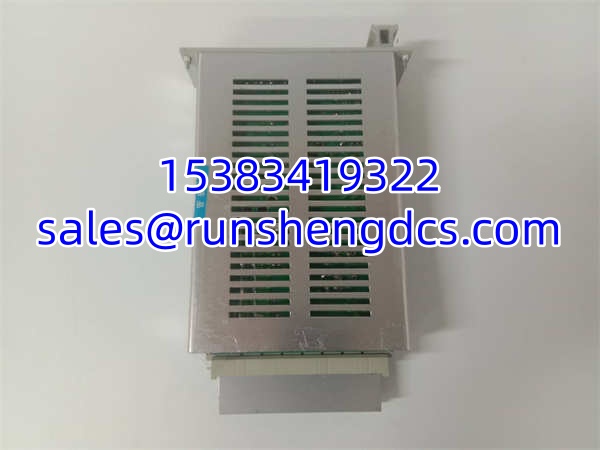
GE WES5302-111
Application Scenarios & Pain Points
- Aerospace & Defense Testing: Multi-node simulation rigs require microsecond-level synchronization. The WES5302-111 provides the deterministic reflective memory needed to keep hardware-in-the-loop (HIL) tests perfectly aligned.
- Power Generation Turbines: Gas turbine control systems rely on distributed I/O. This module ensures that trip signals and sensor data propagate across redundant controllers instantly, preventing catastrophic mechanical failures.
- Industrial Process Control: Large manufacturing plants use this to link geographically separated PLC racks into a single, cohesive control network without relying on unpredictable Ethernet traffic.