
Description
Key Technical Specifications
| Parameter | Specification |
|---|---|
| Product Type | 6U VMEbus Single-Board Computer |
| Manufacturer | GE Fanuc / GE Intelligent Platforms |
| Family | VMIVME-7807 / VME-7807RC |
| Part Number | VME-7807RC-410000 / 350-930078074-410000 |
| Processor | Intel Pentium M, typically 1.1 / 1.4 / 1.8 GHz |
| L2 Cache | 1 MB at 1.1 GHz; 2 MB at 1.4 / 1.8 GHz |
| System Bus | 400 MHz via Intel 855GME chipset |
| Memory | Up to 1.5 GB DDR SDRAM, optional ECC |
| Storage | Up to 2 GB bootable CompactFlash via auxiliary IDE |
| Ethernet | Dual 10/100/1000 Mbps (Intel 82546EB) + 1× 10/100 Mbps (Intel 82551ER) |
| Serial Ports | 4× 16550-compatible, RS-232/422 configurable |
| USB | 4× USB 2.0 ports |
| Expansion | 1× 5 V PCI-X/PMC slot (IEEE 1386.1) |
| VME Interface | Tundra Universe II, VME64/A32/A24/D32/MBLT64/BLT32 |
| Video | SVGA front panel; DVI via rear I/O module |
| Timers | 2× 16-bit + 2× 32-bit programmable timers; watchdog timer |
| Operating System | Windows XP/2000, VxWorks, QNX, Linux |
| Power | Typically +5 V DC; exact current depends on configuration |
| Form Factor | 6U VME Eurocard |
| Cooling | Air-cooled or conduction-cooled depending on variant |
| Typical Condition | New surplus, unused surplus, or refurbished |
Product Introduction
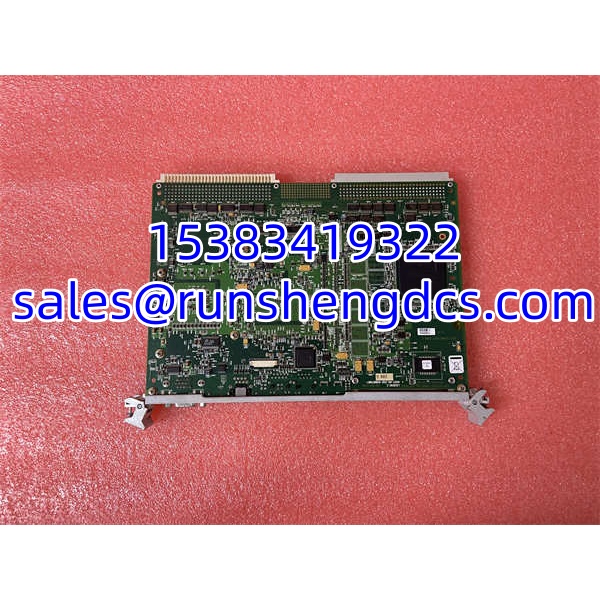
The VME-7807RC is one of those boards that keeps aging VME racks alive when the original controller has gone obsolete. Instead of rewiring an entire backplane, this SBC drops into a standard 6U VME slot and brings Pentium M-class processing, dual Gigabit Ethernet, serial ports, USB, and a PMC expansion site to a platform that may have been installed decades ago.
The -410000 configuration code is the important detail here. It tells you which processor speed, memory size, Ethernet routing, CompactFlash option, and rear I/O arrangement the board was built with. That matters because two VME-7807RC boards can look identical on the front panel but behave differently once powered — especially if one was built with conduction cooling, VITA 31.1 rear Ethernet, or a different serial-port map. Bottom line — treat this as a legacy VME controller replacement, not a generic industrial PC. Verify the build code, BIOS configuration, and rear I/O module before committing it to a live rack.
QA/QC Transparency SOP
- Part Number and Build Code Verification
Confirm VME-7807RC-410000 and 350-930078074-410000 on the label. Record board revision, serial number, and any option stickers. The -410000 suffix must match the installed options. - Visual and Mechanical Inspection
Check for bent VME pins, damaged P1/P2/P0 connectors, cracked PMC slot, corrosion, or previous rework. Verify ejector handles and front-panel connectors are intact. - Live Functional Testing
Install in a compatible 6U VME chassis. Power up and enter BIOS to confirm processor speed, installed memory, CompactFlash detection, and boot order. Verify front-panel LEDs and watchdog behavior. - Interface Validation
Test both Gigabit Ethernet ports and the 10/100 Mbps port. Validate all four serial ports, USB ports, and PMC slot if populated. Confirm VMEbus enumeration and interrupt mapping. - Final Packaging and Documentation
Record BIOS settings, MAC addresses, firmware/BIOS revision, and test results. Pack in ESD-safe packaging with a configuration sheet so the receiving engineer knows exactly what -410000 means on that specific unit.
Field Engineer Gotchas
- -410000 is not a generic “VME-7807RC”
Risk: Assuming all boards are identical can lead to wrong Ethernet routing, missing CompactFlash, or incompatible cooling.
Solution: Match the exact suffix and verify BIOS-reported options before installation. - Air-cooled vs conduction-cooled variants
Risk: Some builds require conduction-cooled chassis with thermal interface material. Installing one in a standard air-cooled crate can cause overheating.
Solution: Confirm the cooling method from the label and installation guide. - Rear I/O depends on the RTM
Risk: Serial ports, DVI, SATA, and rear Ethernet may require a VMIACC rear transition module. Without it, several interfaces will be inaccessible.
Solution: Identify the correct RTM before rack integration. - CompactFlash is not guaranteed
Risk: Some configurations include onboard CompactFlash; others do not. A board without CF may fail to boot if the BIOS expects it.
Solution: Check BIOS storage devices and confirm CF presence before imaging the drive. - Legacy OS licensing risk
Risk: Windows XP/2000, VxWorks, or QNX images may carry license or driver dependencies tied to the original hardware build.
Solution: Preserve the original disk image and document driver versions before re-imaging.
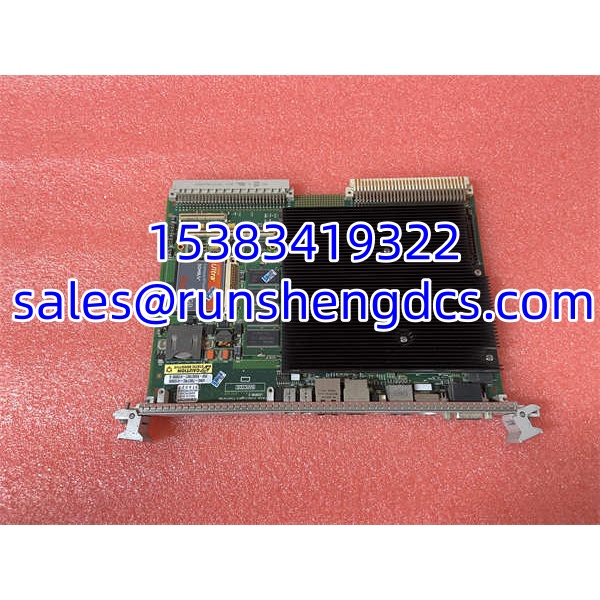
GE VME-7807RC VME-7807RC-410000 350-930078074-410000 G
Application Scenarios
- Legacy VME rack controller replacement
When an original VME CPU board fails, the can restore controller functionality while preserving existing VME I/O modules and backplane wiring. - HMI and data concentrator for test systems
ATE, aerospace test racks, and industrial test cells often use VME chassis for precision instrumentation. The SBC can host HMI software, data logging, and Ethernet gateway functions. - Serial gateway for older PLCs and instruments
With four configurable serial ports, the board can bridge RS-232/422 devices into Ethernet-based monitoring systems without adding external converters. - PMC-based interface host
The PMC slot allows integration of specialized interface modules, such as fieldbus adapters, frame grabbers, or custom FPGA carriers.
FAQ
They belong to the same product family. VMIVME-7807/ is the platform name; -410000 is the configuration code. Exact features depend on the build.
What processor does it use?
Intel Pentium M, typically available in 1.1 GHz, 1.4 GHz, or 1.8 GHz options. Cache size depends on clock speed.
Can it boot from CompactFlash?
Yes, if the configuration includes CompactFlash. It can be set as the boot device in BIOS.
Does it support Windows XP?
Yes. It also supports Windows 2000, VxWorks, QNX, and Linux, depending on drivers and licensing.
Do I need a rear transition module?
For full access to rear serial ports, DVI, SATA, and some Ethernet options, a compatible RTM such as VMIACC-0586/0590 series is typically required.
Can I use it in any VME chassis?
It fits standard 6U VME slots, but cooling method, power limits, and rear I/O access must be verified. Conduction-cooled variants cannot be used in ordinary air-cooled crates.
Is this a PLC or safety controller?
No. It is a VME single-board computer. It can host control software, but it is not a certified safety PLC by itself.