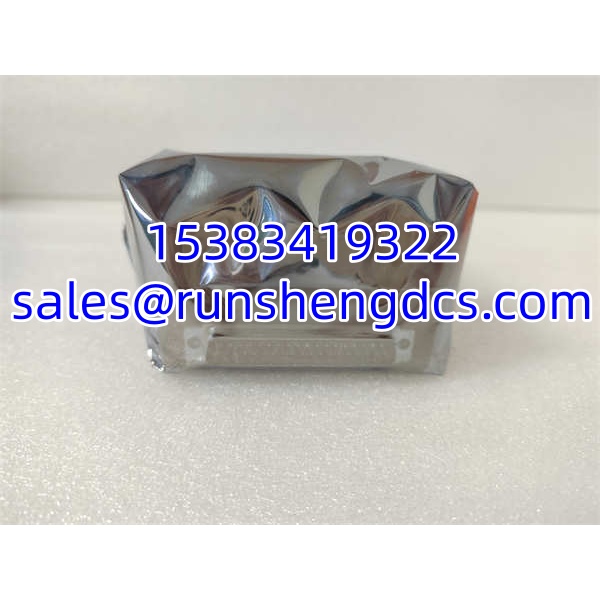

Description
Key Technical Specifications
| Parameter | Detail |
|---|---|
| Manufacturer | General Electric (GE) |
| Part Number | IS220PDOAH1A / 3364940CSP2 |
| Product Type | Discrete Output Pack (PDOA) |
| Control System | GE Speedtronic Mark VIe |
| Relay Channels | Up to 12 |
| Ethernet Ports | 2 × RJ45, 10/100 Mbps |
| Power Input | 3-pin DC connector, typically 28 VDC |
| Response Time | ~6 ms Ethernet command to output |
| Terminal Board Compatibility | TRLY and SRLY type boards; not for DIN-rail DRLY boards |
| Redundancy Modes | Simplex, Dual, TMR |
| Diagnostics | LED status indicators; infrared local diagnostic port |
| Memory | Flash and RAM (processor board) |
Product Introduction
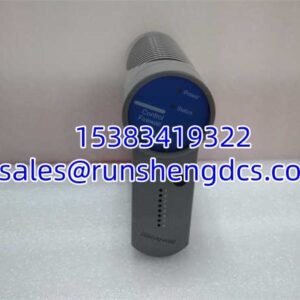
Replacing a failed turbine output pack under time pressure is never fun — especially when the wrong revision or terminal board pairing turns a 30-minute swap into a multi-hour commissioning headache. The IS220PDOAH1A is built specifically to avoid that kind of ambiguity inside the Mark VIe architecture.
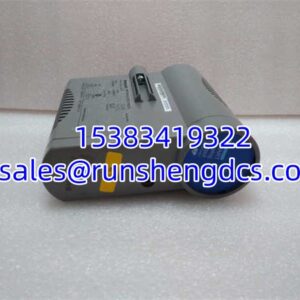
This is a Mark VIe discrete output pack that sits between the IONet Ethernet network and relay terminal boards, handling up to 12 discrete outputs with coil/relay feedback monitoring. It carries the standard Mark VIe distributed I/O processor board plus a PDOA-specific acquisition board, so it boots, self-tests, and validates board/terminal identity before enabling outputs. The ~6 ms command-to-output response is adequate for turbine trip, permissive, alarm, and auxiliary relay duties, and the dual Ethernet ports support Simplex through TMR configurations. For surplus or refurbished stock, the real value is straightforward drop-in replacement — provided the firmware revision and terminal board type match.
QA/QC Transparency SOP
- Intake & Origin Verification: Record full part number, serial, PCB revision, and supplier lot. Check for physical damage, corrosion, burned components, or replaced connectors.
- Live Functional Testing: Power the pack on a verified Mark VIe-compatible test rack or equivalent 28 VDC supply. Confirm Ethernet link, DHCP/IONet communication, LED diagnostics, and commanded relay output operation across all channels.
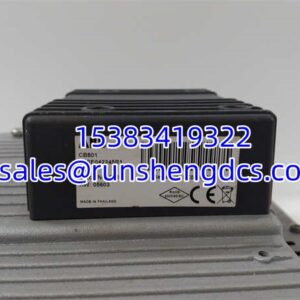
- Electrical Parameter Tests: Verify input voltage tolerance, power draw, connector continuity, and insulation/hi-pot where appropriate. Check DC-37 output connector pin integrity and seating force.
- Firmware/Config Verification: Read processor board firmware, board ID, and acquisition board identity. Confirm compatibility with TRLY/SRLY terminal types. Back up firmware readout before shipment.
- Final QC & Anti-Static Packaging: Seal in ESD bag with desiccant. Include test summary, firmware revision, and condition grade. Do not ship without documented pass/fail results.
Field Engineer Gotchas
- Firmware Revision Mismatch: A PDOA pack with a newer or older revision than the controller project can fail identity checks or refuse to enable outputs. Fix: Match firmware to the existing ToolboxST project and controller revision. I have seen a “healthy” pack sit in fault simply because the board ID did not match the loaded application.
- Wrong Terminal Board Pairing: The PDOAH1A works with TRLY/SRLY terminal boards, not DIN-rail DRLY types. Fix: Verify the terminal board part number before pulling the old pack. Swapping packs is useless if the base board is incompatible.
- DC-37 Connector Stress: The pack plugs directly into the terminal board. Forcing it at an angle can damage the DC-37 interface. Fix: Align the mounting studs and bracket first; the mechanical alignment should carry the load, not the connector pins.
- Power-Up Sequence Misread: The pack has soft-start and does not always require power removal before inserting the power connector, but live insertion should still follow site safety rules. Fix: Confirm output-enable permissives and verify that all outputs remain de-energized during initialization.
- TMR Voting Confusion: In TMR mode, three PDOA packs must agree through the controller’s voting logic. One bad pack can mask itself as a “minority fault” while still degrading redundancy. Fix: Check all three packs’ health status, firmware, and terminal feedback before declaring the system fully redundant.
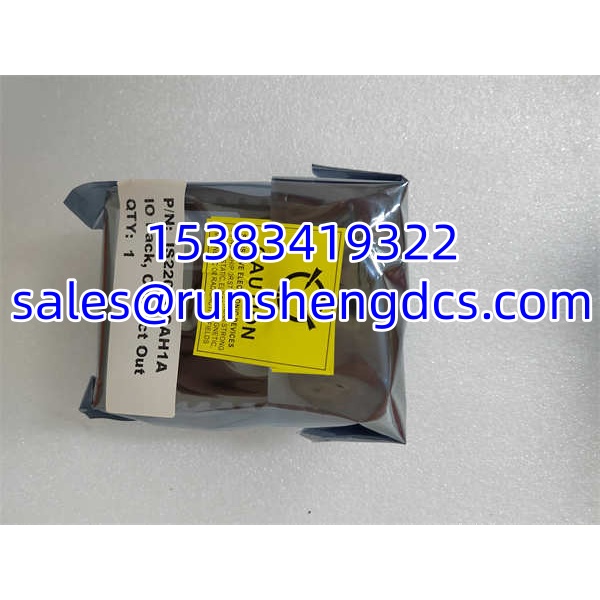
GE IS220PDOAH1A 3364940CSP2
Application Scenarios
- Gas turbine auxiliary relay control: Lube oil pump permissives, fuel valve interlocks, and vent solenoid commands where 12 discrete outputs cover a full skid.
- Steam turbine protection auxiliaries: Non-safety-critical alarm relays, seal oil monitors, and drain valve status outputs tied into the Mark VIe I/O network.
- Balance-of-plant relay interfacing: Cooling water, forced draft fan permissives, and compressor auxiliary trips where TMR or Dual redundancy is required.
- Retrofit replacement: Swapping failed PDOA packs in existing Mark VIe panels without rewiring the terminal board, assuming firmware and board type match.
FAQ
Q: Is the IS220PDOAH1A hot-swappable?
A: Mark VIe I/O packs are generally designed for online replacement, but always follow site procedures and OEM guidance. Verify output permissives before swapping.
Q: Can I use it with DRLY DIN-rail terminal boards?
A: No. The PDOAH1A supports TRLY and SRLY type boards, not DRLY DIN-rail versions.
Q: Does it support TMR?
A: Yes. TMR uses three PDOA packs, each with its own Ethernet connection. Simplex and Dual modes are also supported.
Q: What is the actual output response time?
A: Approximately 6 ms from Ethernet command to output. That is typical for turbine auxiliary relay control, not high-speed motion control.
Q: Will 3364940CSP2 drop in for IS220PDOAH1A?
A: The CSP2 suffix is normally a manufacturing/revision identifier tied to the IS220PDOAH1A pack. Confirm the exact revision and firmware with the supplier before accepting it as a like-for-like replacement.
Q: Can I mix relay types on one terminal board?
A: Not arbitrarily. The terminal board type determines whether magnetic or solid-state relay outputs are used, and the PDOA pack reads that identity during startup.
Q: Is this suitable for SIL-rated trips?
A: Do not assume. SIL suitability depends on the full Mark VIe architecture, terminal boards, voting mode, and site certification. Treat this pack as a discrete output component unless your safety case explicitly covers it.