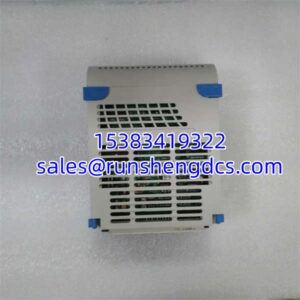

Description
Key Technical Specifications
| Parameter | Value |
|---|---|
| Product Type | Analog I/O Pack (PAIC) |
| Series | Mark VIe Speedtronic |
| Part Number | IS220PAICH2A / 336A4940CSP11 |
| Analog Inputs | 10 channels |
| Input Range | Ch 1–8: 5 V / 10 V / 4–20 mA; Ch 9–10: 1 mA / 4–20 mA |
| Analog Outputs | 2 × 0–20 mA; Output 1 supports 0–200 mA hardware option |
| Output Resolution | 12-bit DAC per channel |
| Controller Interface | Dual RJ-45 Ethernet (I/O Ethernet) |
| Field Connector | DC-37 to terminal board |
| Power Supply | 24 VDC, 3-pin connector |
| Operating Temp | −30 °C to +65 °C (verify with OEM datasheet) |
| Configuration | ToolboxST |
Product Introduction
Replacing a failed analog pack during a turbine outage is the kind of swap that turns a two-hour window into a twelve-hour headache if the wrong board shows up. The IS220PAICH2A sits in the Mark VIe I/O rack as a PAIC (Analog I/O Pack), converting dual I/O Ethernet traffic into ten analog inputs and two analog outputs through a DC-37 terminal board.
It is used where gas/steam turbines, compressors, or balance-of-plant skids need reliable analog measurement and control without extra gateway hardware. Ten configurable inputs cover voltage and 4–20 mA loops; two 0–20 mA outputs drive recorders, actuators, or external controllers. Dual Ethernet ports give it network redundancy, and the 24 VDC soft-start supply limits inrush during hot insertion. Bottom line — it is a workhorse Mark VIe analog interface, not a general-purpose PLC card.
QA/QC Transparency SOP
- Intake & Origin Verification — Verify GE part number, assembly label, and board revision against purchase order. Photograph labels and serials; reject units with corrosion, burnt components, or mismatched 336A4940CSP11 markings.
- Live Functional Testing — Mount on a compatible Mark VIe terminal board in a test rack. Power at 24 VDC, verify Ethernet link on ENET1/ENET2, confirm ToolboxST recognition, and exercise all 10 AI and 2 AO channels with calibrated sources.
- Electrical Parameter Tests — Check supply current draw, output loop drive, input impedance, and insulation/continuity on the DC-37 connector. Flag any channel drift outside typical instrument tolerances.
- Firmware/Config Verification — Read board identity, firmware, and configuration via ToolboxST. Archive the readout; note that field systems must match the controller’s expected revision.
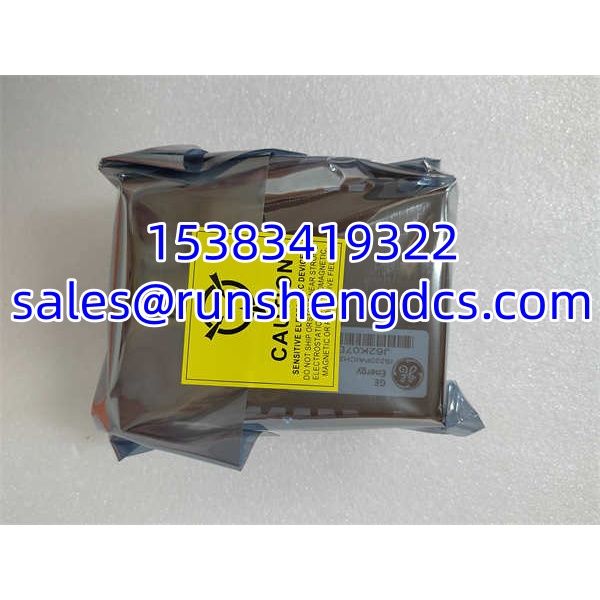
- Final QC & Anti-Static Packaging — Seal in ESD bags with desiccant. Include test summary, revision label, and lot photos. No “tested OK” stickers without channel-level data.
Field Engineer Gotchas
- Firmware Revision Mismatch — A newer or older PAICH2A can fail to join the I/O Ethernet ring or cause controller faults. Fix: Match the revision to the existing rack or update via ToolboxST under a controlled outage. Warning: Do not drop this into a live TMR rack without checking the controller fault log first.
- Terminal Board Compatibility — The DC-37 connector must mate with the correct Mark VIe terminal board (single or TMR variant). Fix: Verify the terminal board part number before removal. War story: A team forced a DC-37 onto the wrong base and bent pins — that turned a 45-minute swap into a week-long lead-time problem.
- Current Loop Wiring Errors — The PAICH2A senses loop current across resistors on the terminal board, not inside the pack. Fix: Confirm loop power, shunt resistors, and wiring polarity at the terminal board. Warning: Open-loop wiring reads as zero or fault, and the pack itself will not “fix” a bad field loop.
- Output 1 vs Output 2 Hardware Difference — Output 1 may carry the 0–200 mA option hardware. Fix: Do not assume both outputs are identical. Warning: Driving a 200 mA load from Output 2 will not work.
- ESD and Hot-Insertion Risk — The module supports soft-start power application, but Ethernet and DC-37 pins are still sensitive. Fix: Use a wrist strap, power the rack properly, and avoid touching connector pins.
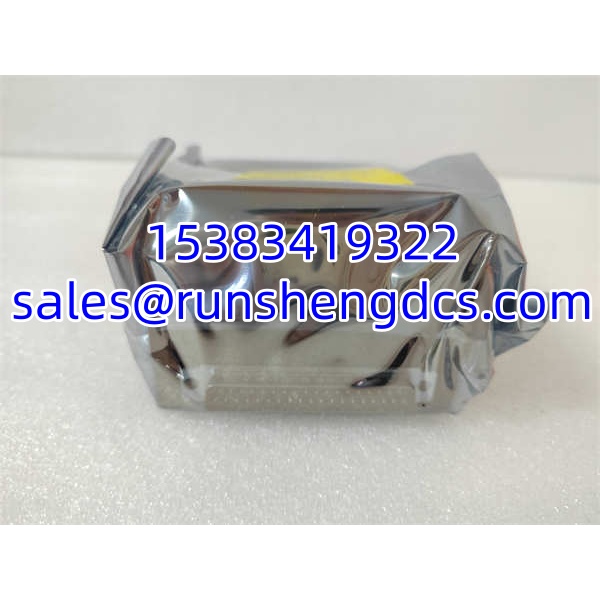
GE IS220PAICH2A 336A4940CSP11
Application Scenarios
- Gas turbine auxiliary analog monitoring — Lube oil pressure, fuel gas temperature, and vibration transmitters feed the 4–20 mA inputs while two outputs drive local recorders or DCS handoff signals.
- Steam turbine control room retrofit — Replaces aged analog packs where legacy 4–20 mA instruments must stay in service but the controller has moved to Mark VIe Ethernet I/O.
- Compressor station analog handoff — Provides dual Ethernet redundancy for suction/discharge pressure and temperature loops feeding a turbine controller.
- Balance-of-plant analog consolidation — Ten inputs allow several field transmitters to terminate at one Mark VIe pack instead of adding remote I/O nodes.
FAQ
Q: Is the IS220PAICH2A a CPU or controller?
A: No. It is an analog I/O pack that connects to a Mark VIe controller over I/O Ethernet.
Q: Can it handle 4–20 mA inputs and outputs at the same time?
A: Yes. It supports up to ten analog inputs and two 0–20 mA analog outputs simultaneously.
Q: Does it support TMR configurations?
A: The pack itself is a single I/O module, but it can be used with TMR-capable terminal boards that provide three DC-37 connectors. TMR behavior depends on the terminal board and controller configuration.
Q: Will any Mark VIe terminal board work?
A: No. It requires the correct PAIC-compatible terminal board. Verify the terminal board part number before installation.
Q: Can I hot-swap this module?
A: Mark VIe I/O packs are designed for modular replacement, and the 24 VDC input includes soft-start. Still, follow site safety rules and controller procedures before removing a live pack.
Q: What software configures it?
A: ToolboxST is used for configuration and diagnostics.
Q: Is 336A4940CSP11 the same as IS220PAICH2A?
A: 336A4940CSP11 is the associated assembly/part identifier used with the IS220PAICH2A pack. Always confirm both numbers on the label before purchasing surplus stock.