
Description
Key Technical Specifications
- Product Model: IS200VTCCH1CBB
- Manufacturer: GE / General Electric
- Product Type: Thermocouple Input Board
- Control System: Mark VI
- Input Capacity: 24 Channels
- Supported TC Types: E, J, K, S, T
- Signal Range: -8 mV to +45 mV
- Terminal Board: TBTC or DTTC
- Redundancy Support: TMR (with TBTCH1B) or Simplex (with TBTCH1C)
- Key Components: Xilinx Spartan FPGA, DSP, Dual-Port SRAM
- Status Indicators: Run / Fail / Status LEDs
Product Introduction
Gas turbine exhaust spreads are unforgiving. If your thermocouple readings drift or fail, you’re flying blind on turbine health. The GE IS200VTCCH1CBB is the workhorse analog input board in the Mark VI ecosystem, designed to swallow up to 24 thermocouple signals and convert them into reliable digital data. It doesn’t just read temperature; it conditions, scales, and validates the signal before it ever hits the controller, filtering out the electrical noise that plagues turbine bays.
This board is part of the first group of VTCC cards, specifically designated for gas turbine control applications. It pairs with either TBTC or DTTC terminal boards, but here’s the catch: your redundancy setup dictates which terminal board you need. Use the TBTCH1B for Triple Modular Redundancy (TMR) or TBTCH1C for Simplex. Get this wrong, and you’re not getting the fault tolerance you paid for. Bottom line — it’s a critical sensor interface, and treating it like a generic analog card is a mistake.
QA/QC Transparency SOP
We don’t trust “pull-tested” claims. Every GE IS200VTCCH1CBB goes through a rigorous bench protocol:
- Intake & Origin Verification: We inspect the PCB for cold solder joints, verify the GE silkscreen, and check for physical damage to the FPGA or DSP.
- Live Functional Testing: The board is seated in a Mark VI test rack with a TBTC terminal. We inject precise millivolt signals across all 24 channels and verify the controller reads the exact temperature.
- Electrical Parameter Tests: We check the -8mV to +45mV signal range and verify isolation between channels. A Fluke 115 is used to ensure no leakage paths exist.
- Firmware/Config Verification: We read the board’s configuration to ensure it’s set for the correct TC type and that the FPGA passes its self-diagnostics.
- Final QC & Anti-Static Packaging: Only boards that pass all tests are sealed in anti-static bags with a printed test report.
Field Engineer Gotchas
- Terminal Board Mismatch: This is the #1 killer. The GE IS200VTCCH1CBB works with both TBTC and DTTC, but the redundancy depends on the TBTC suffix. TBTCH1B = TMR, TBTCH1C = Simplex. I’ve seen plants install TMR cards with Simplex terminal boards, thinking they were redundant. They weren’t. Verify your suffix.
- TC Type Configuration: The board supports E, J, K, S, and T types, but it’s not auto-sensing. If your DCS config says “K” but you wired “J” thermocouples, you’ll get garbage data. Always double-check the TC type in the Mark VI toolbox before commissioning.
- Open Thermocouple Detection: The GE IS200VTCCH1CBB can detect open TCs, but only if the signal is within the valid range. A shorted TC might look like a valid low temperature. Use the diagnostic tools in the Mark VI software to distinguish between a real low temp and a fault.
- ESD Sensitivity: This board has a Xilinx Spartan FPGA and a DSP. They are ESD magnets. Never touch the PCB traces. I’ve seen a tech fry a $3,000 board just by sliding it across a carpeted floor without a wrist strap.
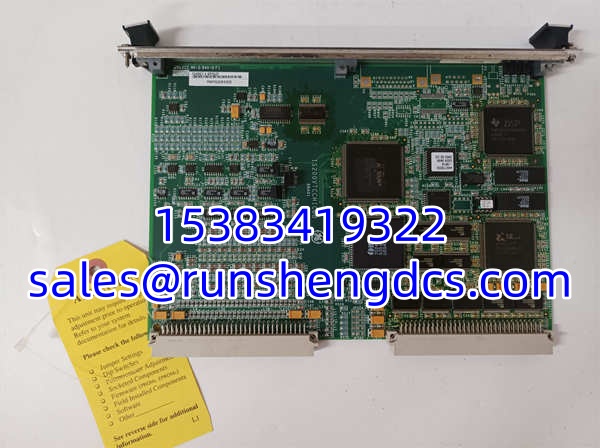
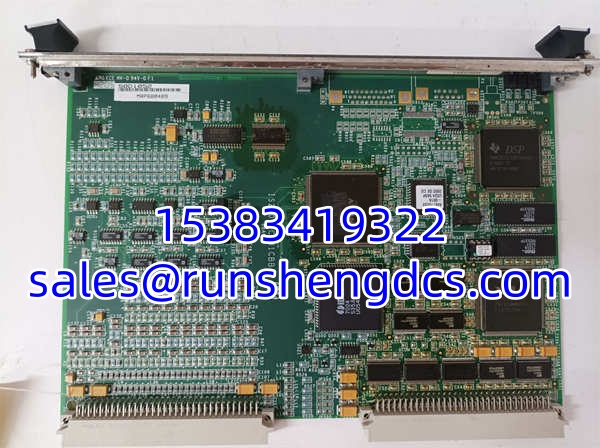
GE MRP680489 IS200VTCCH1CBB
Application Scenarios
- Gas Turbine Exhaust Monitoring: The primary use case. The GE IS200VTCCH1CBB reads 24+ exhaust thermocouples to calculate spread and detect hot spots. In TMR configuration, it ensures that a single failed TC doesn’t trip the turbine unnecessarily.
- Combustion Dynamics Analysis: High-frequency TC data from the GE feeds into combustion monitoring algorithms. The board’s fast signal conditioning helps detect pressure pulsations that indicate impending combustion instability.
- Bearing & Lube Oil Temperature: Beyond exhaust, these boards monitor critical bearing metal temps and lube oil supply/return. The -8mV to +45mV range covers most industrial TC applications, making the GE a versatile spare for the entire turbine package.
Real-World Case Study: A combined-cycle plant had a persistent “TC Fail” alarm on one exhaust channel. The field tech replaced the thermocouple. Then the junction box. Then the cable. Finally, they swapped the GE . The alarm cleared. Post-mortem revealed a failed input protection diode on the original board, caused by a lightning-induced surge on the unshielded TC cable. The board did its job by failing safely, but the root cause was improper shielding.
FAQ
- Can I use this for RTDs?
No. The GE is strictly for thermocouples. RTDs require a different input board (like the IS200VRDOH1A or similar). Don’t try to force it. - Yes. MRP680489 is the GE material/part number. is the functional model number. They refer to the exact same board.
- Do I need a DTTC or TBTC terminal board?
Both work, but TBTC is more common for Mark VI. DTTC is a DIN-rail style terminal. Check your existing installation or design docs. The GE is compatible with both. - What does the “H1CBB” suffix mean?
It indicates the hardware revision and application group. “H1” is the base revision, “C” indicates gas turbine application (Group 1), and “BB” is a sub-revision. Always match at least the “C” suffix for compatibility. - Can I hot-swap this board?
Mark VI supports hot-swapping, but never hot-swap a TC input board while the turbine is running. The sudden signal loss can cause a false spread alarm and trip. Put the points in “Simulation” mode first. - How do I know if it’s TMR or Simplex?
Check the terminal board suffix. TBTCH1B = TMR. TBTCH1C = Simplex. The GE itself is the same; the redundancy is determined by the terminal board and system configuration.