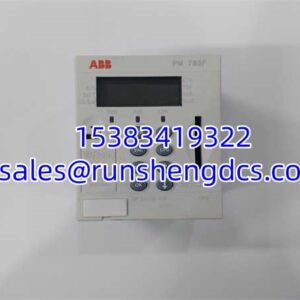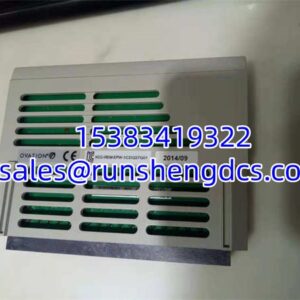

Description
Key Technical Specifications
- Power Requirements: 24V DC ±10% (supplied by EPSM module), ~1.2A typical during fault detection
- Ground Fault Sensitivity: 5mA detection threshold
- Detection Range: AC side and DC side of exciter field circuit
- Redundancy Configuration: 1 module for simplex systems; 3 modules (Controller, Master 1, Master 2) for TMR redundant systems
- Communication Interface: Fiber-optic link to DSPX module; TCCB backplane interface (Mark VIe native)
- Cooperating Modules: Works with EXAM (attenuator module) for voltage measurement across sensing resistors
- LED Indicators: Power LED, Activity LED, Master Selection LED
- Operating Temperature: -20°C to +70°C (derate above 55°C ambient)
- Dimensions: 142 × 100 × 32 mm (6U double-height EPBP form factor)
- Weight: ~0.48 kg
- Mounting: Excitation power backplane rack, adjacent to EPSM module
- Standards Compliance: ANSI C37.90 (surge withstand capability)
Product Introduction
Your generator’s excitation circuit is floating — no direct ground reference. That’s by design. But the moment insulation degrades and a ground fault develops, you’ve got a ticking clock before a second fault causes a catastrophic short through the rotor. The IS200EGDMH1AFF (EGDM) is what stands between a scheduled maintenance window and an unscheduled turbine trip. Mounted on the excitation power backplane next to the EPSM, it continuously monitors insulation resistance on both the AC and DC sides of the exciter field, working in tandem with the EXAM attenuator module to pinpoint leakage before it becomes a shutdown event.
With a 5mA detection threshold, this board typically gives you 72+ hours of advance warning on degrading insulation — enough time to plan a repair during the next outage rather than eating a forced outage at 2 AM. In redundant configurations, three EGDM modules vote in TMR fashion, so a single module failure doesn’t blind your ground detection. The fiber-optic link to the DSPX module keeps high-voltage transients out of the control logic. Hot-swappable, too — just make sure your cabinet meets ANSI C37.90 surge ratings before you pull one live.
Troubleshooting Quick Reference
- Ground fault alarm with no visible fault: 60% chance it’s moisture or condensation in the exciter slip ring assembly, not a hard ground. Check slip ring compartment humidity first. If dry, measure insulation resistance with a megger (de-energized only).
- EGDM module not communicating with DSPX: Fiber-optic link is the prime suspect. Inspect the fiber connector for contamination or damage; clean with isopropyl alcohol and a lint-free swab. Verify the fiber isn’t bent below its minimum bend radius.
- Master Selection LED not illuminating in redundant system: P2 connector programming pins may be misconfigured. Each of the three EGDM modules (C, M1, M2) has a unique pin strap setting on P2 — verify against the EX2100 hardware manual.
- False ground alarms during grid disturbances: The adaptive filtering should suppress transient spikes, but severe grid faults can still trigger nuisance alarms. Check if the alarm coincides with a recorded grid event; if so, it’s likely a false positive.
- Module fails to power up after hot-swap: Verify the EPSM module is delivering a clean 24V DC. Measure at the EGDM power terminals — anything below 21.6V or above 26.4V will prevent proper operation. Also confirm the module is fully seated in the backplane connector.
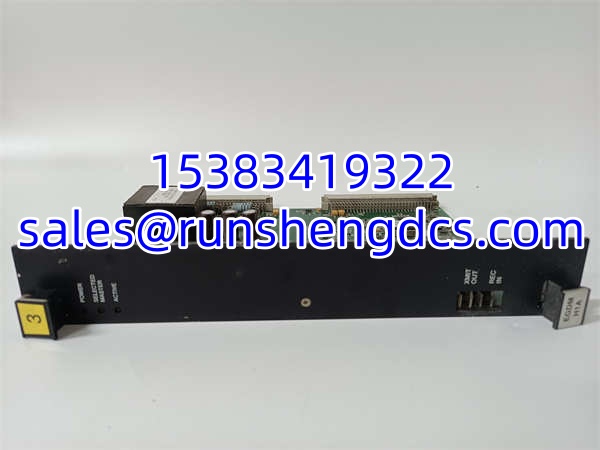
GE IS200EGDMH1AFF
Application Scenarios & Pain Points
- Combined-Cycle Power Plants: High-humidity environments accelerate insulation degradation in generator exciter circuits. The EGDM’s 5mA sensitivity catches early-stage moisture ingress before it progresses to a hard ground fault that would force a turbine trip during peak demand.
- Hydroelectric Generators: Water ingress around slip rings is a chronic issue. The EGDM provides continuous monitoring that allows maintenance teams to schedule slip ring refurbishment during planned outages rather than reacting to catastrophic failures.
- Offshore Platform Generators: Salt-laden air corrodes insulation over time. In a TMR-configured EX2100 system, the three EGDM modules provide the redundancy needed to maintain ground detection even if one module fails in the harsh offshore environment.