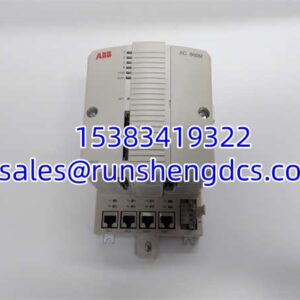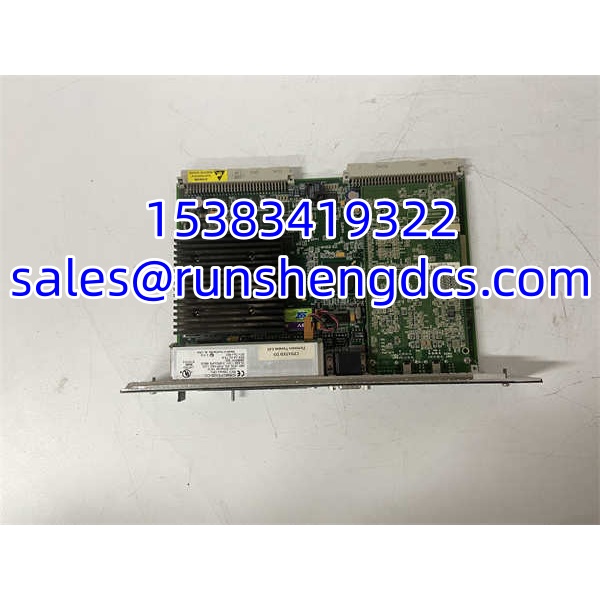

Description
Key Technical Specifications
| Parameter | Specification |
|---|---|
| Manufacturer | GE Fanuc / GE Intelligent Platforms (Emerson) |
| Model | IC698CPE020-CC |
| Series | PACSystems RX7i |
| Processor | Intel Pentium III, 700 MHz |
| User RAM | 10 MB (battery-backed) |
| User Flash | 10 MB (non-volatile) |
| Discrete I/O Capacity | Up to 32 Kbits (%I and %Q) |
| Analog I/O Capacity | Up to 32 Kwords (%AI and %AQ) |
| Program Blocks | Up to 512 blocks, max 128 KB each |
| Ethernet Ports | 2 × 10/100 Mbps RJ-45 (embedded switch, single IP) |
| Serial Ports | 3 isolated: RS-232, RS-485, RS-232 Station Manager |
| Supported Protocols | Modbus TCP server/client, Modbus RTU slave, EGD, SRTP, SNP |
| Web/FTP Connections | Up to 16 combined |
| Backplane Current (5 VDC) | 3.2 A max |
| Installation Slot | Slot 1 of RX7i chassis (e.g., IC698CHS100) |
| Architecture | VME64 |
| Programming Software | Machine Edition Logic Developer (CIMPLICITY) |
Product Introduction
The IC698CPE020-CC is the workhorse CPU of the GE PACSystems RX7i platform — a 700 MHz Pentium III processor that sits in Slot 1 of the RX7i VME64 chassis and drives the entire control strategy. With 10 MB of battery-backed RAM and 10 MB of flash, it handles up to 512 program blocks and manages both discrete and analog I/O across the backplane and remote networks.
Dual embedded Ethernet ports (acting as a single-IP switch) handle Modbus TCP, Ethernet Global Data (EGD), and SRTP communications, while three isolated serial ports cover Modbus RTU, SNP, and firmware upgrades via the dedicated Station Manager port. This is a mature, well-understood platform in power generation, oil and gas, and heavy manufacturing — but it is also aging. Battery health, firmware compatibility, and the “-CC” revision match are the three things that determine whether a replacement unit comes online cleanly or becomes a multi-hour commissioning headache.
QA/QC Transparency SOP
- Intake & Origin Verification — Record full model IC698CPE020-CC, hardware revision, serial number, firmware version, and MAC addresses. Inspect for bent VME connectors, corrosion, or prior rework on the PCB.
- Battery & Memory Check — Verify the CMOS battery voltage (IC698ACC701 type). A weak battery means RAM contents are at risk and the calendar clock may be lost. Test RAM and flash integrity during boot.
- Power-Up & Self-Test — Install in a verified RX7i chassis Slot 1. Apply power and confirm the EOK LED sequence — flashing during initialization, steady when ready. Check for fault LEDs or boot errors.
- Communication Verification — Confirm both Ethernet ports link at 10/100 Mbps. Test serial port responsiveness (RS-232/RS-485). Verify the module is discoverable by Machine Edition and that the firmware revision is readable.
- Backplane & I/O Test — Verify VME backplane communication by reading I/O module status. Confirm the CPU can scan the rack and communicate with adjacent modules.
- Final QC & Anti-Static Packaging — Photograph nameplate (including revision and firmware), LED panel, connector faces, and test readings. Pack in anti-static shielding with rigid VME connector protection. Include a test summary and traceability record.
Field Engineer Gotchas
- “-CC” revision matters — The suffix denotes a specific hardware/firmware revision. A replacement with a mismatched revision may require a firmware upgrade or may not be compatible with the existing Machine Edition project version. Always confirm against the installed CPU.
- Battery is the silent killer — The IC698ACC701 lithium battery maintains RAM and the calendar clock. If the battery is dead and power is cycled, the program and data in RAM are lost. Flash retains the program, but RAM-stored values and the clock are gone.
- Slot 1 only — The CPU must be installed in Slot 1 of the RX7i chassis. Installing it in any other slot will not work.
- Dual Ethernet = single IP — The two RJ-45 ports are an embedded switch sharing one IP address. Do not assign separate IPs to each port — this is a common configuration error.
- Station Manager port is not a general-purpose serial port — The third serial port (RS-232) is dedicated to the Ethernet Station Manager function. Using it for Modbus RTU or general serial I/O will not work as expected.
- Firmware upgrade path — Upgrading firmware on a CPE020 to support redundancy features (CRE series compatibility) requires setting the ECC jumper correctly. Refer to the upgrade kit instructions and GFK-2308.
- 90-70 module compatibility is not universal — While RX7i supports many 90-70 VME modules, Ethernet and communication modules from the 90-70 series (e.g., IC697CMM741/742) are not supported in RX7i racks.
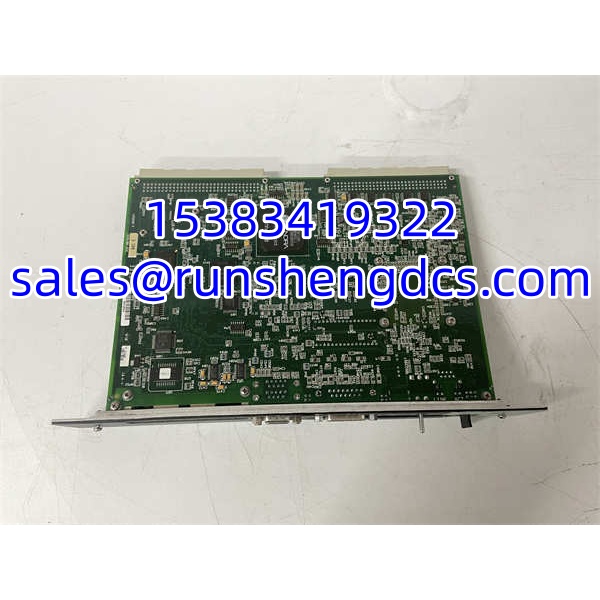
GE IC698CPE020-CC
Application Scenarios
- Power generation turbine control — Serving as the primary CPU in an RX7i rack managing gas or steam turbine control logic, with EGD exchanges to HMIs and historians.
- Oil & gas pipeline RTU/PLC hybrid — Using Modbus TCP and Modbus RTU simultaneously to communicate with field devices and upstream SCADA systems.
- Legacy RX7i replacement during outage — Swapping a failed CPE020-CC with a pre-tested unit, matching firmware revision and restoring from flash backup to minimize downtime.
- Machine Edition project migration — Upgrading or replacing a CPU as part of a broader control system migration, where firmware and software version alignment is critical.
FAQ
Is IC698CPE020-CC the same as IC698CPE020?
The base hardware is the same 700 MHz Pentium III RX7i CPU. The “-CC” suffix indicates a specific hardware/firmware revision. Confirm compatibility against the installed unit before replacement.
What slot does it install in?
Slot 1 of the RX7i chassis (e.g., IC698CHS100 17-slot VME rack).
Does it support redundancy?
The CPE020 is a non-redundant CPU. For hot-standby redundancy, the IC698CRE020/CRE030/CRE040 series is required.
What programming software is needed?
GE Machine Edition Logic Developer (formerly CIMPLICITY Machine Edition). Version 4.0 or higher is required; check the specific project version against the CPU firmware.
Can I upgrade the firmware?
Yes. Firmware upgrades are performed via the dedicated RS-232 Station Manager port using the Winloader utility.
What happens if the battery dies?
RAM contents (program, data, calendar clock) are lost when power is removed. Flash retains the program, so it can be reloaded, but runtime data and the clock must be restored.
Is this module still supported?
The RX7i platform is now under Emerson Automation following the GE Intelligent Platforms transition. Support and spare parts availability should be confirmed directly with Emerson or authorized distributors.