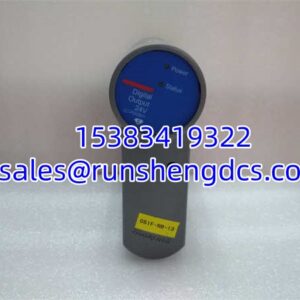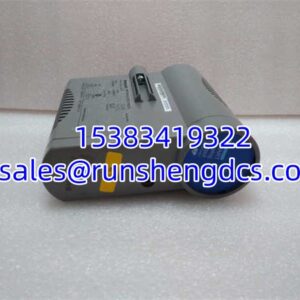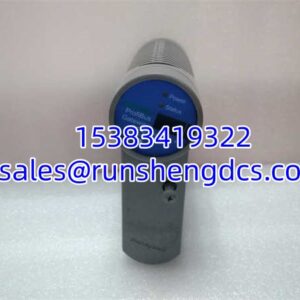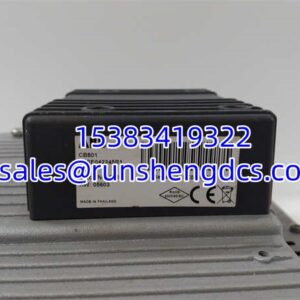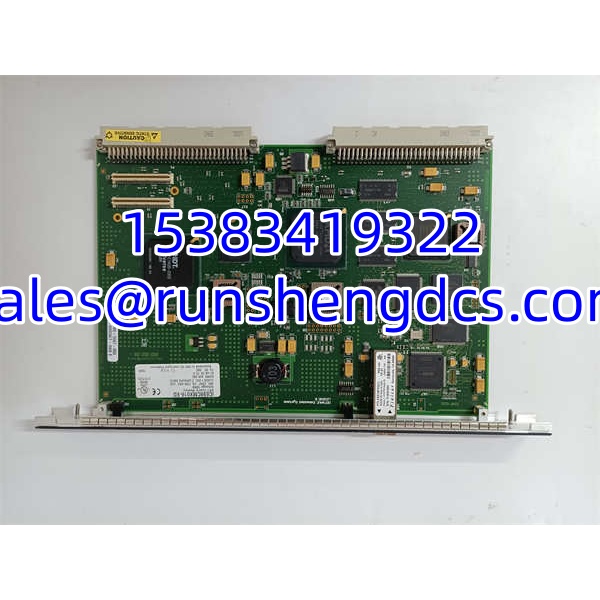
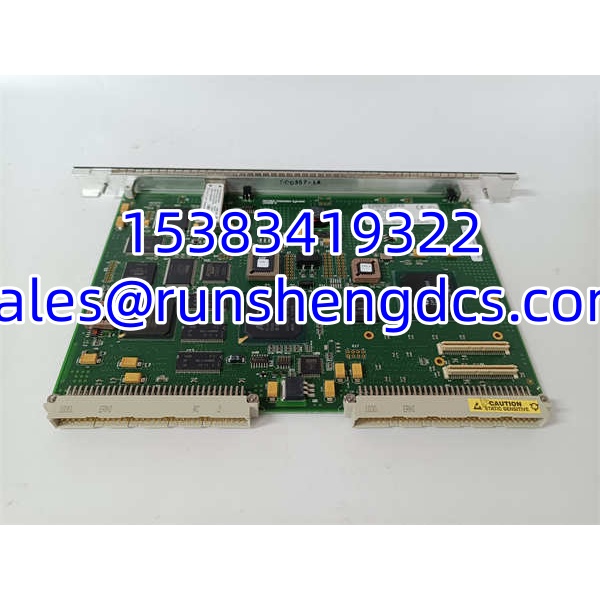

Description
Key Technical Specifications
| Parameter | Specification |
|---|---|
| Manufacturer | GE Fanuc / GE Intelligent Platforms (Emerson) |
| Model Number | IC698CMX016-ED |
| Product Family | PACSystems RX7i — Control Memory Xchange |
| Module Type | Reflective-memory / CMX communication module |
| Typical Rack | RX7i CPU / expansion rack, single-slot installation |
| Memory | 16 MB SDRAM with parity |
| Network Topology | Fiber-optic ring; daisy-chain up to 256 nodes |
| Data Rate | 2.12 Gbaud optical link |
| Throughput | ~43 MB/s (4-byte packets) to ~174 MB/s (64-byte packets) |
| Fiber Connector | LC-type, multimode fiber typical; TX/RX ports |
| Max Fiber Distance | ~300 m multimode typical; longer distance requires single-mode confirmation |
| Redundancy | Redundant transmission / ring mode supported |
| Power | 5 VDC from RX7i backplane; ~1.8 A typical |
| LEDs | OK, CONFIG, OWN DATA, SIGNAL DETECT |
| Software | Proficy Machine Edition / Logic Developer PLC 4.5+ |
| Compatibility | VMIC 5565-series reflective-memory family; VMIVME-5567 requires verification |
Product Introduction
The IC698CMX016-ED is a Control Memory Xchange module for the GE PACSystems RX7i platform. It implements reflective-memory networking: when a node writes data into its local reflective-memory space, the same data is automatically forwarded around the fiber-optic ring and written into the corresponding memory addresses of all other nodes. This happens in hardware, without TCP/IP handshaking, packet reassembly, or CPU-level protocol processing.
In practice, this module is used where multiple controllers, test systems, or motion/energy platforms must see the same process state within microseconds. The “-ED” suffix indicates a specific revision or configuration variant. Listings that also reference VMIVME-5567-000 or 350-005567-000 should be treated as cross-family references, not automatic equivalents. The VMIVME-5567 is a VME-bus reflective-memory node, while IC698CMX016 is an RX7i rack module; they may share the same reflective-memory protocol family, but mechanical fit, bus interface, memory map, and firmware behavior must be confirmed before replacement.
QA/QC Transparency SOP
- Identity & Revision Verification — Record IC698CMX016-ED, PCB revision, serial number, and any cross-listed VMIVME/350 part numbers. Confirm it is an RX7i CMX module, not a VME, PCI, or cPCI board.
- Backplane Power Test — Install in an RX7i test rack. Verify 5 VDC backplane acceptance, module enumeration, and stable current draw near the 1.8 A typical range.
- Optical Link Verification — Check TX/RX LC ports, optical power, and SIGNAL DETECT LED behavior. Reject modules with damaged ferrules, weak transmit power, or persistent link loss.
- Reflective-Memory Ring Test — Join the module to a known-good reflective-memory ring. Verify node ID recognition, OWN DATA activity, CONFIG status, and deterministic data replication.
- Memory & Parity Check — Run read/write tests across the 16 MB reflective-memory space. Flag parity errors, address faults, or non-deterministic write propagation.
- Final QC & Anti-Static Packaging — Apply ESD bag, moisture barrier, and revision label. Ship with test summary, LED photos, optical test notes, and ring-test results.
Field Engineer Gotchas
- RX7i CMX vs. VME Node — IC698CMX016 mounts in an RX7i rack. VMIVME-5567 is a VME-bus board. They are not mechanically interchangeable even if both belong to the VMIC reflective-memory family.
- Suffix Control (-ED / -AA / -BA) — Revision suffixes can affect firmware, memory map, LED behavior, or ring compatibility. Solution: match the original suffix or confirm with the site engineer.
- Ring Break = Full Network Loss — A single open fiber, dirty LC connector, or failed node can collapse the entire ring. Solution: check TX/RX pairing, fiber polarity, and optical power before replacing the module.
- Node ID Conflicts — Duplicate or missing node IDs cause ring initialization failures. Solution: verify node addressing in Machine Edition and confirm physical ring order.
- Memory Map Mismatch — Reflective memory only works if all nodes agree on address ranges, data sizes, and byte ordering. Solution: lock the memory map in configuration documentation.
- CPU Slot Requirement — Some RX7i installations require the CMX module in a specific slot. Solution: confirm the installed rack drawing before reseating.
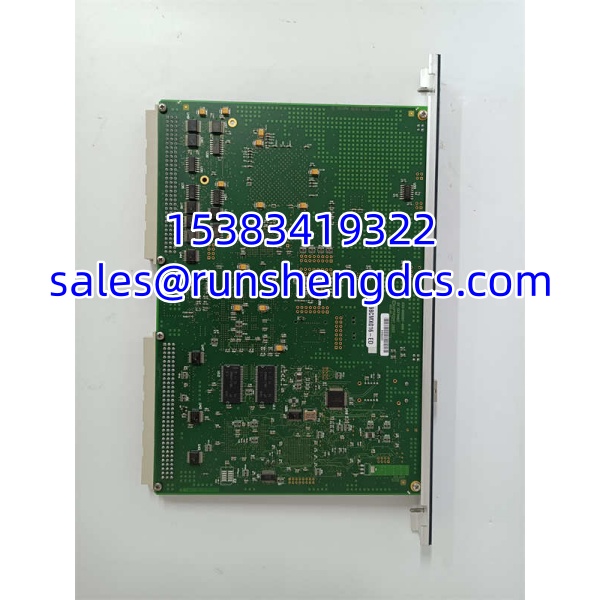
GE IC698CMX016-ED VMIVME-5567-000 350-005567-000 E
Application Scenarios
- RX7i multi-rack synchronization — Sharing deterministic control data between RX7i CPUs without Ethernet latency jitter.
- Hybrid reflective-memory rings — Connecting RX7i controllers with VMIC 5565-series nodes in test cells, motion platforms, or energy systems.
- Legacy ring restoration — Replacing a failed CMX node after fiber ring communication loss or parity faults.
- Commissioning and migration — Validating node IDs, optical power, and memory mapping after a rack overhaul or system migration.
FAQ
1. What is IC698CMX016-ED?
It is an RX7i Control Memory Xchange module that provides reflective-memory data sharing over a 2.12 Gbaud fiber-optic ring.
2. Is it the same as VMIVME-5567-000?
Not directly. IC698CMX016 is an RX7i rack module. VMIVME-5567 is a VME-bus reflective-memory node. They may share protocol lineage but differ in bus interface, mechanical format, and configuration.
3. How many nodes can it support?
Up to 256 nodes per reflective-memory ring, depending on configuration and fiber budget.
4. What fiber type does it use?
LC-type fiber connectors, typically multimode for distances up to ~300 m. Single-mode use must be confirmed from the installed hardware.
5. Does it need CPU processing to transfer data?
No. Reflective-memory propagation is handled by hardware logic. The CPU writes to local memory, and the module replicates it around the ring.
6. What software is required?
Proficy Machine Edition / Logic Developer PLC 4.5 or later for RX7i CMX configuration.
7. Can it replace older CMX modules?
Often yes, but revision, firmware, memory map, and ring compatibility must be verified. Do not treat all CMX variants as drop-in replacements.