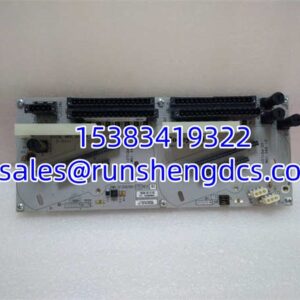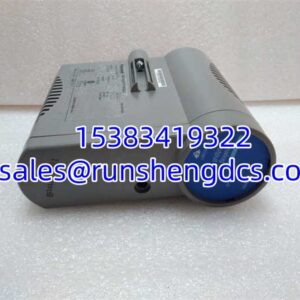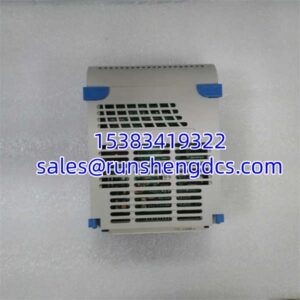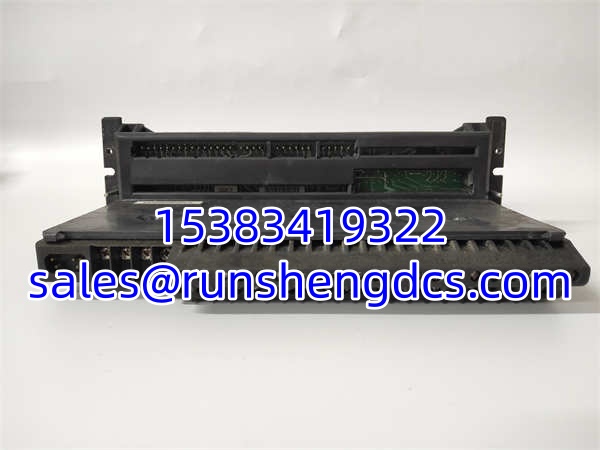
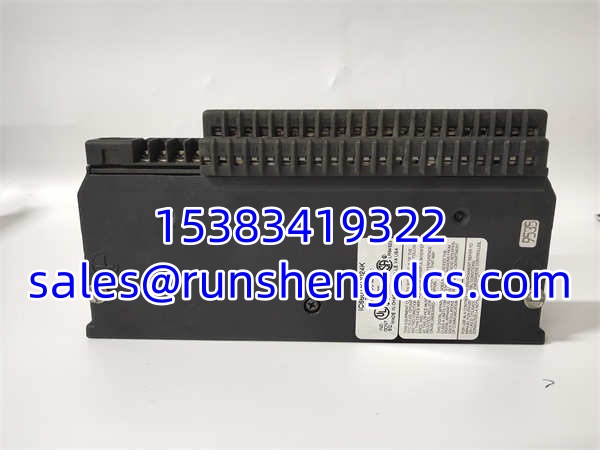

Description
Key Technical Specifications
- Product Model: IC660TBD024K
- Manufacturer: GE Fanuc
- Product Category: Genius I/O Terminal Base
- I/O Point Count: 32 Discrete Inputs/Outputs
- Operating Voltage: 10-30 VDC (Rated 12/24 VDC)
- Max Ripple: 10% at 12/24 VDC
- Max Power Dissipation: 18 Watts
- Block-to-Block Isolation: 850 VDC
- Input Impedance: 3.3 kΩ (Typical)
- Input Processing Time: 1.4 ms
- Operating Temperature: 0°C to 60°C
- Dimensions: 224 x 90 x 112 mm (8.8 x 3.5 x 4.4 in)
Product Introduction
When a Genius I/O block fails, the first question is always: is it the electronics or the wiring base? The GE IC660TBD024K is the answer to the second question. It’s the passive, screw-terminal backbone that carries every field wire and power connection for a 32-point discrete block. You don’t replace this unless the terminals are stripped, the plastic is cracked, or you’re migrating to a new I/O block and need a fresh, guaranteed interface.
This base is the unsung hero of the Genius system. The GE IC660TBD024K handles all the dirty work of field wiring, keeping the sensitive electronics in the IC660BBD024 or IC660EBD024 block safe from accidental shorts during maintenance. With 850V isolation between blocks and a 18W power dissipation rating, it’s built to handle the electrical noise and heat of a 32-point discrete card running at full load. Bottom line — it’s a simple, robust piece of hardware, but when it fails, your entire I/O block is dead in the water.
QA/QC Transparency SOP
Terminal bases are passive, but they still fail. We don’t just ship them; we verify they can actually carry a load. Every GE IC660TBD024K goes through this process:
- Intake & Origin Verification: We check the IC660TBD024K label and inspect every terminal for stripped threads, corrosion, or melted plastic from past overcurrent events.
- Live Functional Testing: We mount a known-good IC660BBD024 block and apply 24VDC. We verify the base distributes power correctly and that the bus connector makes solid contact.
- Electrical Parameter Tests: Using a low-resistance ohmmeter, we verify continuity from each terminal to the bus connector pin. We also megger between terminals and ground to confirm the 850V isolation barrier is intact.
- Firmware/Config Verification: N/A for passive bases, but we verify the EEPROM socket (if present) is not damaged and can accept a configuration chip.
- Final QC & Anti-Static Packaging: The base is cleaned, terminals are capped to prevent damage, and it’s sealed in anti-static shielding with a printed test certificate.
Field Engineer Gotchas
- K-Suffix Terminal Type: The “K” in IC660TBD024K denotes a specific terminal style (often screw-clamp vs. screw-down). If you order the wrong suffix, your field wires won’t seat properly, leading to intermittent faults that will drive you crazy. Solution: Always photograph the old base’s terminal style before ordering. I’ve seen a tech spend 4 hours chasing a ghost fault because the wire was barely making contact.
- Bus Connector Seating: The Genius bus connector on the back of the is a common failure point. If the locking tabs are broken or the connector is corroded, you’ll get random “Bus Fault” alarms. Warning: Never force the I/O block onto the base. If it doesn’t slide on smoothly, check the connector pins for bending.
- Power Distribution Limits: This base is rated for 18W max dissipation. If you’re running 32 outputs at 0.5A each at 24VDC, you’re at 384W of load, but the base itself only handles 18W of its own heat. Don’t confuse load current with base power rating. Fix: Ensure your power supply is sized for the load, not just the base.
- EEPROM Configuration: The has an EEPROM that stores the block’s configuration. If you swap the base without transferring the EEPROM from the old base, the new I/O block will show up as “Unconfigured” in your PLC. Rule of thumb: Always move the EEPROM chip first.
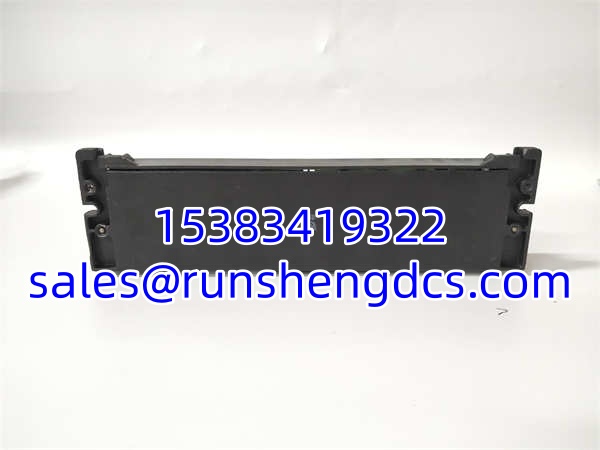
GE IC660TBD024K
Application Scenarios
- Legacy Manufacturing Lines: Replacing failed terminal bases on 20-year-old GE Fanuc PLCs where the original wiring is still intact and re-terminating is not an option.
- Harsh Environment I/O: Serving as the wiring interface in panels with high vibration, where terminal integrity is critical for preventing intermittent sensor faults.
- System Migrations: Providing a known-good wiring base when upgrading from an older IC660BBD024 block to a newer revision, ensuring the field wiring remains untouched.
Real-World Case Study: A bottling plant had a Genius I/O rack that kept dropping off the bus. The integrator replaced the I/O block twice. We suspected the base. On inspection, the bus connector pins were corroded from a minor coolant leak. We supplied a new base, transferred the EEPROM, and reseated the block. The bus fault cleared immediately. The problem wasn’t the electronics; it was the $200 wiring base.
FAQ
Can I use this base with an IC660BBD025 block?
No. The is specifically designed for 32-point discrete blocks like the IC660BBD024. The IC660BBD025 is a 16-point block and uses a different base (IC660TBD025). Mixing them will result in missing I/O points and potential bus errors.
Is this base hot-swappable?
No. The Genius bus does not support hot-swapping the terminal base. You must power down the entire Genius bus or at least the segment before replacing the . Pulling it live will likely damage the bus connector on the I/O block.
What does the 850V isolation mean?
It means there is 850V of dielectric strength between this base and adjacent bases on the same rack. This protects against ground loops and transient surges jumping between blocks. Do not compromise this isolation by using non-OEM terminal inserts.
Does this base include the I/O block?
No. The is only the wiring base. The active electronics (the IC660BBD024 or IC660EBD024) are sold separately. You need both to make a functional I/O point.
How do I know if my base is bad?
If you have intermittent I/O faults, check the terminal screws for tightness. If they’re tight and the fault persists, measure resistance from the terminal to the bus connector pin. High resistance indicates a cracked trace or corroded contact inside the .
Can I repair a stripped terminal?
Technically, yes, but you shouldn’t. The internal bus bar is crimped, not soldered. Attempting to repair a terminal on a risks damaging the bus connection. Replace the entire base.
The “K” suffix typically denotes a revision or terminal style change. In most cases, they are functionally identical, but the terminal screw type or pitch may differ. Always verify the physical terminal style matches your existing wiring.