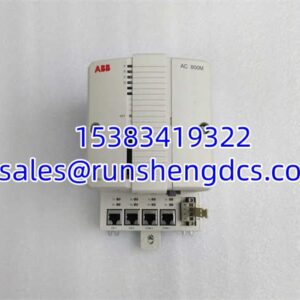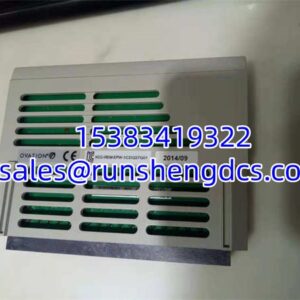

Description
Key Technical Specifications
| Parameter | Specification |
|---|---|
| Product Type | Current Source Analog I/O Block |
| Manufacturer | GE Fanuc (now ABB) |
| Model Number | IC660BBA104 |
| Part Number | 6231BP10910 |
| System Platform | GE Genius Distributed I/O Bus |
| Compatible Controllers | GE 90-30, 90-70, IC697 series PLCs; Genius Bus Controllers |
| Input Channels | 4 analog inputs, 4-20mA (overrange to 0-25mA) |
| Output Channels | 2 analog outputs, 4-20mA (overrange to 0-24mA) |
| Input Accuracy | ±0.1% of full scale at 25°C |
| Output Accuracy | ±0.15% of full scale at 25°C |
| Input Resolution | 1 µA (≈12-bit) |
| Output Resolution | 6 µA |
| Input Conversion Time | 16.6 ms to 400 ms, user-selectable |
| Output Update Rate | 6–8 ms (typical) |
| Input Filtering | Configurable up to 1024 ms |
| Isolation | 1500 Vrms channel-to-channel, block-to-block, and group-to-group (1-minute withstand) |
| Power Supply | 115 VAC (93–132 VAC) or 125 VDC (105–145 VDC) |
| Power Consumption | ~12 W |
| Communication | GE Genius Bus (via Bus Switch Module, e.g., IC660BSM021) |
| Diagnostics | Input over/underrange, high/low alarm, open-wire detection; output over/underrange, feedback error; internal fault reporting |
| Hot-Swap | Yes — supports online replacement without system shutdown |
| Configuration | Software-configurable via Genius configuration tool or handheld monitor (IC660HHM500/501) |
| Dimensions | 224.4 mm × 84.8 mm × 99.3 mm (8.83″ × 3.34″ × 3.91″) |
| Weight | 1.8 kg (4 lbs) |
| Operating Temperature | 0°C to +60°C (+32°F to +140°F) |
| Storage Temperature | -40°C to +100°C (-40°F to +212°F) |
| Humidity | 5% to 95% RH, non-condensing |
| Enclosure Rating | IP20 (panel-mount inside cabinet) |
| LED Indicators | Unit OK, I/O Enabled |
| Calibration | No user calibration required |
Product Introduction
The GE IC660BBA104 (part number 6231BP10910) is a current source analog I/O block within the GE Genius Distributed I/O system, designed to interface 4-20mA field devices with GE programmable logic controllers. Unlike voltage/current hybrid modules (such as the IC660BBA100), the BBA104 variant is purpose-built for current loop applications, making it the preferred choice in process industries where 4-20mA transmitters and control valves dominate. The module provides four isolated analog inputs for reading process variables (temperature, pressure, flow, level) and two isolated analog outputs for driving control elements, with 1500Vrms galvanic isolation between every channel, between groups, and between blocks — a critical feature for protecting the PLC and operator from ground loops and high-voltage transients in electrically noisy environments like substations, pump stations, and turbine halls. The 115VAC/125VDC power supply matches common industrial control power distributions, and the ~12W power draw means no special cooling is required.
Bottom line — the IC660BBA104 is a legacy GE Fanuc module that has been discontinued, and every unit on the market today comes from surplus inventory or pulled-from-service stock. Before installing a replacement, verify that your application truly needs the current source variant (BBA104) and not the voltage/current hybrid (BBA100) or the 24/48VDC version (BBA024) — the part numbers look similar but the power supply and signal types are different. Confirm the Genius Bus Switch Module (BSM) in your rack is compatible (e.g., IC660BSM021 for 24/48VDC BSM control). And because this module is hot-swappable, you can replace a failed unit without shutting down the process — but always verify the replacement module’s configuration matches the original (input filtering, alarm thresholds, output fail-safe state) before putting it into service. A mismatched configuration can cause a process upset the moment the module comes online.
Troubleshooting Quick Reference
| Fault | Probable Cause | Relevancy | Quick Check | Fix |
|---|---|---|---|---|
| No I/O communication on Genius Bus | BSM failure, bus cable fault, or module not seated | High | Check front-panel LEDs (Unit OK, I/O Enabled); verify BSM status | Reseat module; check bus cable connections; replace BSM if needed |
| Input reading stuck at zero or full scale | Open wire, sensor failure, or wiring error | High | Measure loop current at terminal block with multimeter; check for 4-20mA presence | Verify field wiring; check sensor power supply; replace sensor if open |
| Inaccurate input readings | Ground loop, noise coupling, or degraded isolation | Medium | Check for voltage between signal common and chassis ground; compare with field instrument local display | Verify single-point grounding; check shield termination; replace module if isolation is compromised |
| Output not driving valve/actuator | Output feedback error, open load, or configuration mismatch | Medium | Measure output current at terminals; check valve positioner response | Verify load impedance (<300Ω for internal supply); check valve wiring; reconfigure output in software |
| Module reports “Wiring Error” on HHM | HHM firmware version mismatch (known issue with IC660HHM501 v3.5) | Low | Check HHM model and firmware version | Upgrade HHM to latest firmware version |
| Intermittent communication loss | Loose bus connector or BSM power issue | Medium | Check BSM power supply (24/48VDC); verify bus connector seating | Retorque bus connectors; verify BSM supply voltage; replace BSM if unstable |
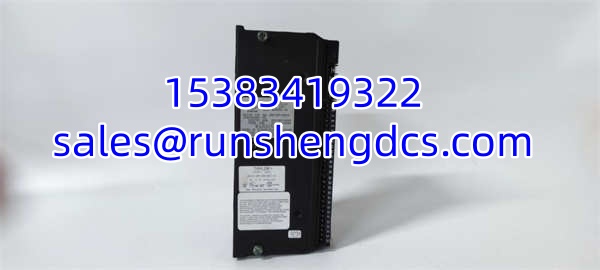
GE IC660BBA104 6231BP10910
Application Scenarios & Pain Points
Wastewater treatment plant process control: In a municipal wastewater facility, the IC660BBA104 interfaces with 4-20mA sensors monitoring influent flow, aeration basin dissolved oxygen, clarifier sludge level, and effluent pH, while driving control valves for chemical dosing and return activated sludge flow. The 1500Vrms isolation is critical here, where long cable runs across the plant (sometimes hundreds of meters) pick up ground potential differences that would destroy a non-isolated module. The configurable input filtering (up to 1024ms) helps reject noise from variable frequency drives running the blowers and pumps. A failed input channel means the PLC loses visibility into a critical process variable — for example, a stuck-low DO reading could cause the aeration system to over-oxygenate, wasting energy and potentially damaging the biological process.
Power plant auxiliary system monitoring: In a fossil or combined-cycle power plant, the BBA104 module monitors bearing temperatures, lube oil pressure, and cooling water flow on auxiliary equipment (feedwater pumps, condensate pumps, fan motors). The 4-20mA current loop is inherently noise-resistant, which is essential in the electrically hostile environment near generators and large motors. The module’s open-wire detection feature provides early warning of sensor cable damage — a broken wire in a temperature loop could mean the PLC sees a false low reading and fails to trip on an actual overtemperature condition. The hot-swap capability allows maintenance technicians to replace a faulty module during a planned outage without taking the entire auxiliary system offline.
Chemical batch process control: In a specialty chemical plant, the IC660BBA104 reads reactor temperature, jacket pressure, and agitator speed feedback from 4-20mA transmitters, and outputs control signals to steam control valves and cooling water valves. The configurable output fail-safe state is critical here — if communication with the PLC is lost, the outputs can be configured to hold their last state (maintaining the current valve position) or go to a predefined safe state (closing the steam valve, opening the cooling valve), preventing a runaway reaction. The ±0.1% input accuracy ensures precise temperature control, which directly impacts product quality and batch-to-batch consistency.