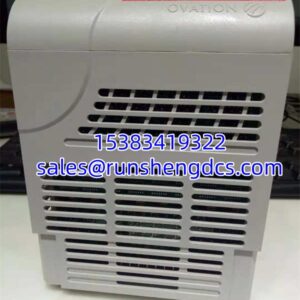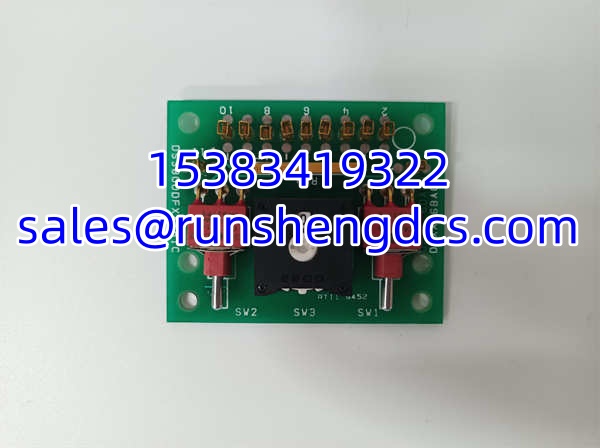

Description
Key Technical Specifications
| Parameter | Specification | Field Note |
|---|---|---|
| Part Number | DS3800DFXA1B1C | Core GE identifier |
| Module Type | TCQA | RST Analog I/O Board |
| System Platform | Mark V | Gas Turbine Control System |
| Core Compatibility | R1, R2, R3 | Installed on I/O Core |
| Signal Types | LVDT, Servo, Thermocouple, 4-20mA | Scales and conditions signals |
| Connectors | 2PL, 3PL, JE, JAR/S/T | Backplane and terminal routing |
| Dimensions | Standard Mark V Card | Verify mechanical footprint |
| Weight | Standard Industrial | Lightweight electronics |
| Status | Obsolete / Legacy | No new OEM support |
| Condition | Refurbished | Tested on Mark V bench |
| Warranty | 12 Months | Standard surplus warranty |
| Origin | USA | General Electric |
Product Introduction
When a Mark V turbine throws an analog fault, the GE DS3800DFXA1B1C is often the first board you suspect. This isn’t a generic PLC card; it’s a specialized RST Analog I/O board (TCQA) designed to scale and condition raw field signals before they hit the core processor. The GE DS3800DFXA1B1C handles the dirty work: LVDT positioning, servo valve outputs, thermocouple inputs, and 4-20mA process signals.
You spec the GE DS3800DFXA1B1C because your Mark V system is 20+ years old and GE has moved to Mark VI/VIIe platforms. This board keeps your existing turbine control logic running. Expect aging components; the analog scaling op-amps and backplane connectors are the usual suspects after decades of heat and vibration. It’s not about new features anymore; it’s about keeping the turbine spinning until the next major overhaul. Bottom line — it works, but treat it like a vintage turbine controller.
QA/QC Transparency SOP
- Intake & Origin Verification: We verify the GE DS3800DFXA1B1C serial number and suffix (1B1C) against known Mark V production batches to identify revision-specific issues, specifically checking for aging analog scaling components.
- Live Functional Testing: Units are powered up on a Mark V test bench with simulated turbine signals. We verify the GE DS3800DFXA1B1C can correctly scale LVDT, 4-20mA, and thermocouple inputs without drift or noise.
- Electrical Parameter Tests: All DC rails and analog output circuits are checked with a Fluke 87V for proper voltage levels and isolation. We verify the signal conditioning matches the specifications.
- Firmware/Config Verification: Internal jumpers and DIP switches are documented. We verify the configuration matches common Mark V defaults to prevent “Signal Out of Range” or “I/O Fault” alarms on install.
- Final QC & Anti-Static Packaging: Connectors are inspected for pin damage, conformal coating is checked for moisture, and the is sealed in static-shielding bags with desiccant.
Field Engineer Gotchas
- Backplane Connector Wear: The edge connectors wear out after decades of insertion cycles. Risk: Intermittent analog faults that come and go with temperature. Fix: Inspect the gold fingers before installing. If they’re worn thin, clean with contact cleaner or replace the card.
- Analog Scaling Drift: The signal conditioning circuits on the can drift over time. Risk: A 4-20mA fuel flow signal reads 2% off, causing combustion tuning issues. Fix: Calibrate the analog inputs against a precision source before commissioning. Don’t trust the factory calibration.
- Jumper Configuration Hell: The has internal jumpers for signal type selection (LVDT vs. 4-20mA) and core addressing. Risk: Swapping a card from Core R1 to R2 without checking jumpers = wrong signal scaling or comm fault. Fix: Photograph the old card’s jumpers BEFORE pulling it. Label everything.
- Thermocouple Cold Junction: The handles cold junction compensation via JAR/S/T connectors. Risk: If the compensation circuit fails, all thermocouple readings drift with ambient temperature. Fix: Verify the cold junction sensor is intact and the connector is seated properly.
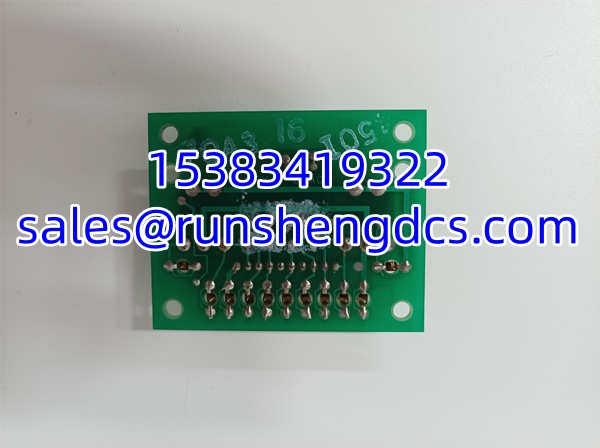
GE DS3800DFXA1B1C
Application Scenarios
- Gas Turbine Combustion Control: The processes fuel valve LVDT feedback and thermocouple inputs for precise combustion tuning. A failed board can cause false trips or inefficient burning.
- Steam Turbine Valve Positioning: The conditions servo valve outputs and position feedback for critical steam admission valves. Signal drift here can cause load swings or overspeed events.
- Compressor Surge Detection: The scales 4-20mA pressure and flow signals for surge protection logic. False readings can cause unnecessary trips or missed surge warnings.
FAQ
Technically yes, but practically no. The Mark V backplane uses a proprietary protocol. Retrofitting would require replacing the entire I/O core and rewriting the turbine control logic. For most legacy turbines, the engineering cost exceeds the value of the upgrade.
Usually, but verify the revision. GE changed some analog scaling in later revisions. If your Mark V system is pre-2000, confirm the hardware revision matches your system’s age.
Does this board support hot-swapping?
Absolutely not. The Mark V backplane is not designed for live insertion. Pulling the while powered can corrupt the core processor. LOTO first, shut down the turbine.
These are older analog circuits. The op-amps and reference voltage sources drift with temperature and age. If the drift exceeds 1%, the card needs recalibration or replacement. Don’t try to compensate in the control logic; fix the root cause.
Can you repair the original board instead of replacing it?
Yes, but lead times are 3-6 weeks for obsolete components. A refurbished from stock gets you running in 24-48 hours. For critical turbines, buy the spare now and send the old one for repair later.
LVDT position inputs, servo valve outputs, thermocouples (with cold junction compensation), 4-20mA process signals, vibration inputs, and pulse counters. It’s the workhorse analog board for the Mark V RST core.
We provide a pinout sheet with every shipment. Don’t trust internet PDFs; GE changed pin assignments between Mark V revisions. Verify against the physical label and jumper settings on your .