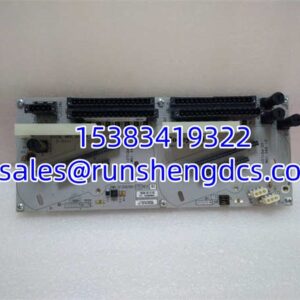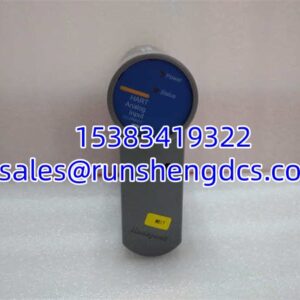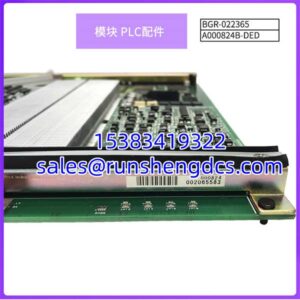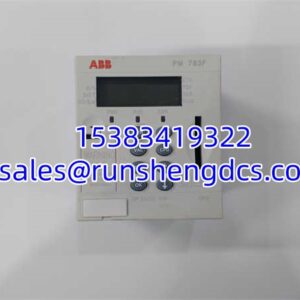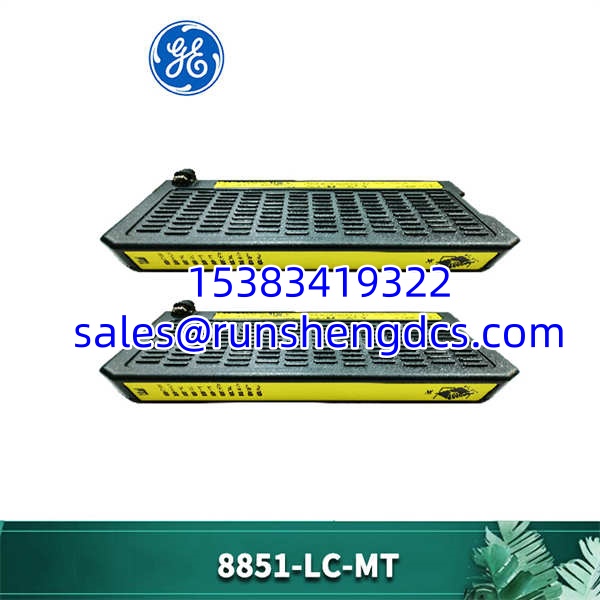
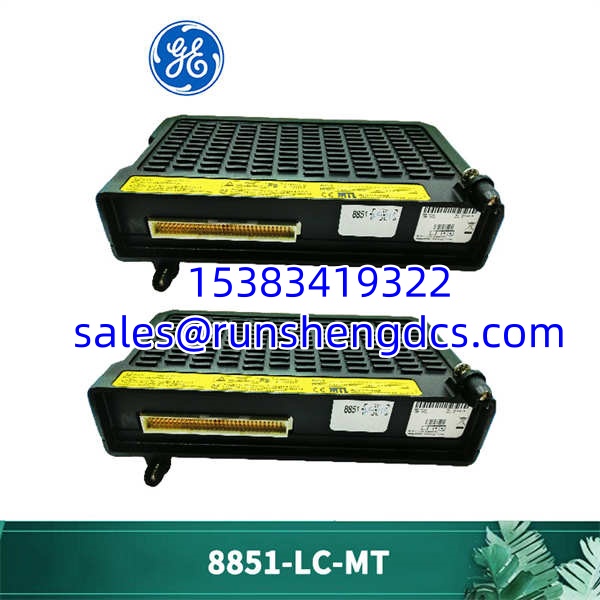

Description
Key Technical Specifications
- Product Type: SafetyNet Controller
- Safety Certification: IEC 61508 SIL 2
- Safety Architecture: 1oo1D (One-out-of-One with Diagnostics)
- I/O Capacity: Communicates with up to 64 I/O modules
- Network: Dual redundant, high-speed fault-tolerant Ethernet LAN
- Serial Connections: Two connections to serial devices
- Controller Redundancy: Supported (Bump-less transfer via Rendezvous)
- Hot Swap: Supported (Real-time maintenance in Class 1, Div 2 / Zone 2)
- Data Capacity: 120 KB
- Power Requirement: 12 VDC
- Operating Temp: -40°C to 70°C
- Dimensions: 232 x 69 x 138 mm
Product Introduction
Process plants running GE Fanuc SafetyNet systems face a critical dilemma when a controller fails: finding a replacement that guarantees safety integrity without halting production for weeks. The 8851-LC-MT serves as the central processing node in this architecture, certified for SIL 2 safety applications under IEC 61508. It manages comprehensive internal diagnostics for a 1oo1D safety architecture and seamlessly controls up to 64 distributed I/O modules.
This controller is engineered specifically for fault tolerance in hazardous environments. It features dual redundant Ethernet ports that automatically re-route traffic if a pathway fails, alongside controller redundancy that guarantees bump-less transfer to a standby unit. Because it supports hot-swapping in Class 1, Div 2 or Zone 2 areas, maintenance teams can replace or upgrade the module without disrupting the safety functions or requiring a full system shutdown.
QA/QC Transparency SOP
- Intake & Origin Verification: We verify the 8851-LC-MT part number and inspect the SafetyNet connector pins for corrosion or damage. Counterfeit safety controllers often lack the proper SIL certification markings on the chassis.
- Live Functional Testing: Modules are mounted on a SafetyNet test carrier. We apply 12 VDC power, verify the internal diagnostics pass, and test the dual Ethernet ports for proper link establishment and failover.
- Electrical Parameter Tests: Using precision multimeters, we verify the 12 VDC input regulation and check continuity across the serial device connections to rule out internal trace damage.
- Firmware/Config Verification: We read the module’s firmware revision and safety configuration parameters. Mismatched safety logic is a critical hazard in SIL-rated systems.
- Final QC & Anti-Static Packaging: Test logs are attached to the shipment. The controller is placed in a static-shielding bag with desiccant and packed with edge protectors to prevent SafetyNet connector damage.
Field Engineer Gotchas
- SafetyNet Cabling: The SafetyNet protocol requires specific shielded cabling and proper termination. Using standard Ethernet cable will cause intermittent communication faults that are nearly impossible to diagnose with standard network tools.
- Redundancy Button Sequence: Controller redundancy requires pressing a specific button on the Carrier after mounting the standby unit. Forgetting this step means the second controller will not sync, leaving you with no bump-less transfer.
- 12 VDC Power Supply: This module requires a dedicated 12 VDC supply. Sharing a power rail with noisy field devices can introduce ripple that causes the controller to fault. Always use an isolated, regulated power supply.
- Zone 2 Hot Swap Protocol: While hot-swapping is supported in hazardous areas, you must follow the exact lockout/tagout and ESD procedures. I’ve seen a tech bypass the grounding strap during a hot swap in a Zone 2 area, frying the SafetyNet transceiver instantly.
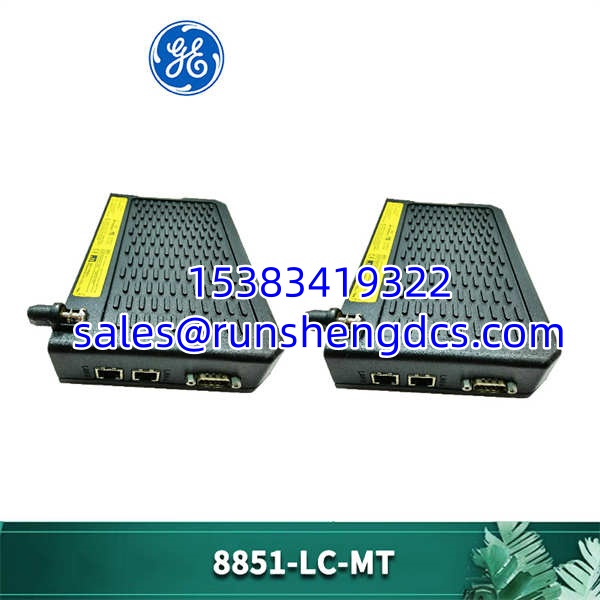
GE-8851-LC-MT
Application Scenarios
- Water Treatment Plants: Manages chemical dosing and pump control with SIL 2 safety interlocks to prevent overflows in municipal facilities.
- Power Generation: Controls turbine safety systems and grid distribution monitoring where dual redundant Ethernet is mandatory for uptime.
- Rail Transit Systems: Operates traffic signal controllers and railway switching logic in outdoor environments with -40°C temperature extremes.
FAQ
Q: What does the “MT” suffix mean in 8851-LC-MT?
It designates the specific hardware revision and feature set within the SafetyNet controller family. Always match the exact suffix when replacing, as pinouts and firmware compatibility can vary between revisions.
Q: Can this controller handle standard (non-safety) I/O?
Yes. The 8851-LC-MT can write to standard output modules without affecting safety functions. This allows you to mix safety and standard control on the same SafetyNet node.
Q: Does it support HART protocol?
Yes. It can pass HART data from smart field devices to asset management software and acquire HART data for use in the process control application.
Q: What is the bump-less transfer time?
Using Rendezvous redundancy, the transfer from master to standby is designed to be bump-less, meaning no process disruption occurs during failover. Exact timing depends on your network load and configuration.
Q: Is this module compatible with PAC8000 nodes?
Yes. The 8851-LC-MT can communicate peer-to-peer with other SafetyNet and standard PAC8000 controllers without routing through a centralized server.
Q: How many events can it log?
The controller can record up to 8,000 events for diagnostic and safety audit purposes.