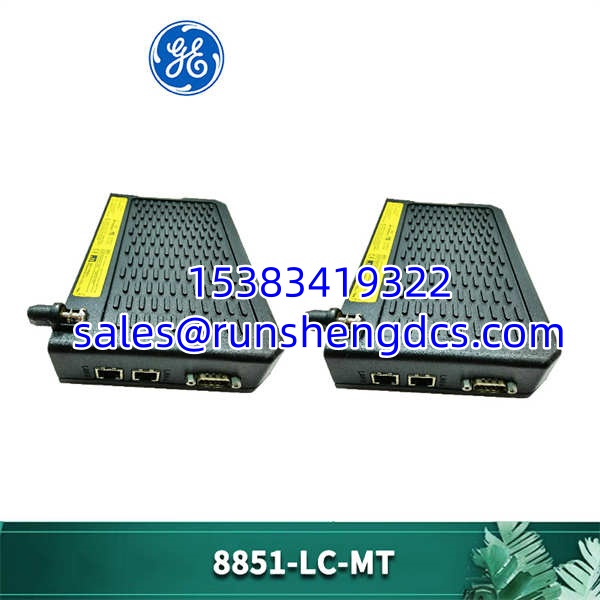

Description
Key Technical Specifications
- Network Architecture: Dual redundant, high-speed, fault-tolerant Ethernet LAN
- I/O Capacity: Supports communication with up to 64 I/O modules
- Configuration: Supports online configuration and reconfiguration without process shutdown
- Protocol: SafetyNet proprietary control protocol
- Form Factor: Rack-mounted SafetyNet controller
- Manufacturer: GE Fanuc / GE Automation
- Application Domain: DCS, Power Generation, Water Treatment
- Redundancy: Fault-tolerant LAN with automatic failover
- Status: Legacy / Discontinued (Verify with OEM datasheet before installation)
Product Introduction
Ground loops and single-point network failures have taken down more continuous processes than bad tuning ever will. This controller was built specifically to stop that, using a dual redundant Ethernet architecture that keeps the process alive even when a cable gets chewed by a forklift.
It acts as the central brain in a GE SafetyNet DCS, managing the real-time chatter between up to 64 distributed I/O modules and the host system. You get online reconfiguration, meaning you can swap out a failed module or tweak logic without tripping the plant. Bottom line — it’s a workhorse for 90s-era power and water facilities, but it’s strictly legacy hardware now. Treat it with respect and keep your spares budget healthy.
QA/QC Transparency SOP
- Intake & Origin Verification: We validate the 8851-LC-MT serial number against GE Fanuc manufacturing records to confirm it’s not a frankenstein board cobbled together from two dead units.
- Live Functional Testing: Controller is racked in a SafetyNet test bed with dummy I/O nodes; we verify dual-LAN failover by physically pulling the primary Ethernet cable mid-scan.
- Electrical Parameter Tests: Power supply rails checked with a Fluke 87V for ripple; backplane connector pins inspected under magnification for green corrosion or pushed-out contacts.
- Firmware/Config Verification: Boot sequence monitored via serial console; firmware rev logged and cross-referenced against the customer’s existing SafetyNet manager version to prevent handshake failures.
- Final QC & Anti-Static Packaging: CMOS battery voltage verified (critical for these vintage boards); sealed in ESD-safe bag with desiccant, labeled with test date, firmware rev, and pass/fail signature.
Field Engineer Gotchas
- Firmware Rev Mismatch: SafetyNet is notoriously picky about firmware alignment. If this controller is rev 4.2 and your SafetyNet Manager is 4.3, expect silent comms drops. Fix: Match the exact rev. I’ve watched a junior engineer spend 6 hours chasing a “ghost” network fault that was just a version skew.
- CMOS Battery Death: These boards are 20+ years old. The CR2032 is likely dead or leaking. Fix: Replace the battery BEFORE racking. A dead battery corrupts the config EEPROM, and you’ll be reloading from scratch at 2 AM.
- Backplane Connector Damage: The high-density DIN connector is fragile. Fix: Never force it. Align the guide pins perfectly. I’ve seen backplane pins bent because someone was rushing during a midnight outage.
- ESD Sensitivity: The SafetyNet ASICs are ancient and unshielded. Fix: Wear a grounded wrist strap. Static discharge during handling can kill the LAN controller silently; it’ll pass power-on self-test but drop packets under load.
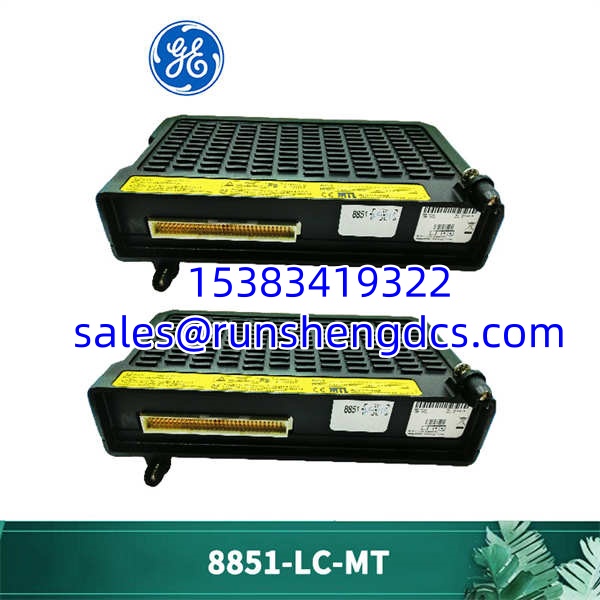
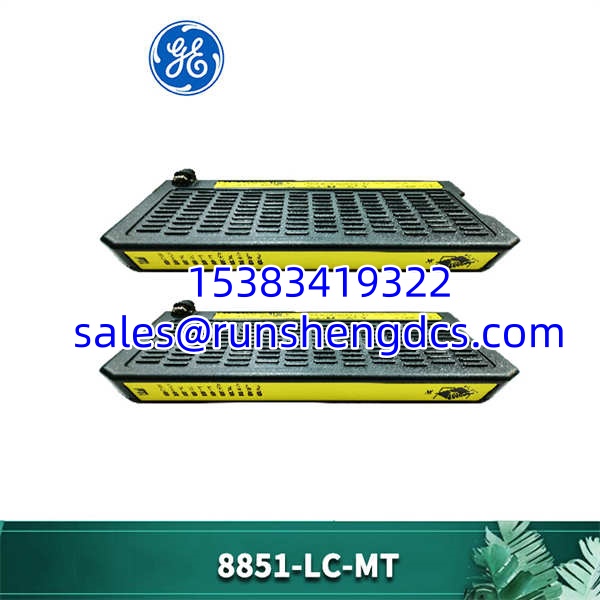
GE 8851-LC-MT
Application Scenarios
- Power Plant Boiler Control: Requires deterministic scan times and redundant networking; the dual LAN keeps the burner management system alive during single-cable faults.
- Municipal Water Treatment: Distributed I/O across large facilities; 64-module capacity handles pump stations, clarifiers, and chemical dosing from one controller.
- Legacy Manufacturing Lines: Automotive or steel mills running 90s-era GE DCS; this module is often the only drop-in replacement for a failed unit.
FAQ
- Is the 8851-LC-MT still manufactured? No. GE discontinued the SafetyNet line years ago. What you’re buying is new surplus or refurbished. Plan your migration strategy accordingly.
- Can I hot-swap this controller? Absolutely not. SafetyNet controllers are not hot-swappable. Rack it with power off or risk frying the backplane.
- Will it work with my existing I/O modules? Only if they’re SafetyNet-compatible and the firmware rev matches. Check the I/O module’s front-panel rev code against the controller’s. Mismatched revs = silent failures.
- What’s the max distance for the redundant Ethernet? 100m per segment for copper. If you’re running longer, you need fiber media converters. Don’t daisy-chain more than 3 switches between controller and I/O.
- Does it support modern protocols like Modbus TCP? No. This is a proprietary SafetyNet controller. You’ll need a protocol gateway (e.g., ProSoft or Moxa) to talk to modern SCADA.
- How do I know if the CMOS battery is good? Measure it with a multimeter before racking. Anything under 2.8V is suspect. Replace it proactively — it’s cheaper than a midnight reload.
- What’s the typical MTBF? GE doesn’t publish it for this vintage. Field experience suggests 15-20 years in climate-controlled rooms. If yours is 20+ years old, treat every failure as a potential end-of-life event.