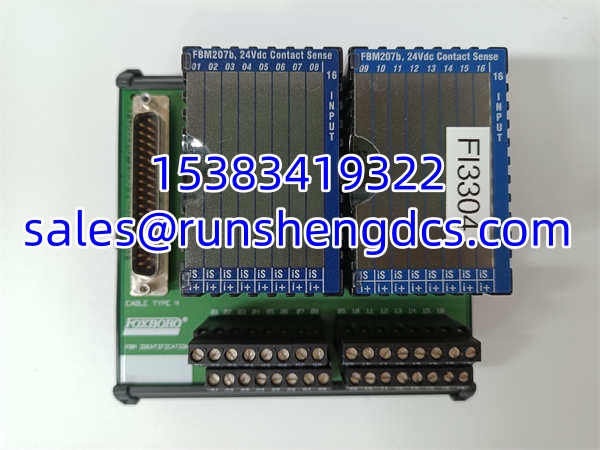
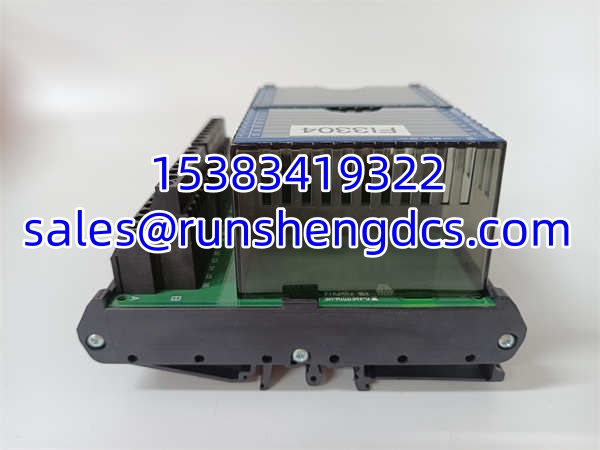

Description
Key Technical Specifications
| Spec | P0916PH (Voltage Monitor) | P0916JS (Modular Baseboard) |
|---|---|---|
| Product Type | Voltage monitoring module | DIN rail modular baseboard / power module |
| System | Foxboro I/A Series DCS | Foxboro I/A Series DCS |
| Core Function | Voltage signal acquisition, data processing, quality monitoring, fault diagnosis | Installation platform and communication backplane for DIN rail modules |
| Module Positions | N/A (single module) | 2, 4, or 8 module positions (vertical/horizontal mount) |
| Fieldbus | N/A | 2 Mbps module fieldbus; 268 Kbps fieldbus for 100-series FBM |
| Power | N/A | Primary and secondary 24VDC power communication connection |
| GPS Time Gating | N/A | Optional GPS time-gated connection for FCP280, FCP270, FCM100Et |
| Configuration | DIP switches for module identification | DIP switches for specific module identification on baseboard |
| Compatibility | I/A Series voltage monitoring applications | Backward compatible with existing DIN I/O; supports hot-swap expansion with redundant bus |
| Associated FBM | Voltage/power monitoring loops | FBM207B (documented suffix: P0916JS-0E) |
| Origin | USA (Foxboro global manufacturing) | USA (Foxboro global manufacturing) |
Product Introduction
These two modules serve fundamentally different roles in a Foxboro I/A Series DCS rack, even though they share the P0916xx part number family.
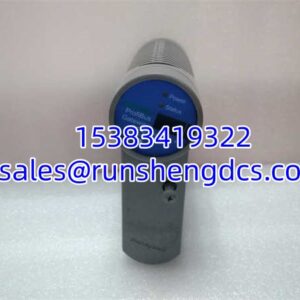
P0916PH is a voltage monitoring module — it sits in the I/O rack and continuously samples voltage signals from the process (power distribution buses, UPS outputs, critical motor feeders). It feeds that data back to the Foxboro controller for alarming, trending, and interlock logic. If your plant has a loop that trips on undervoltage or overvoltage, this is likely the module doing the actual sensing. It’s not a general-purpose analog input card; it’s purpose-built for voltage waveform and quality monitoring.
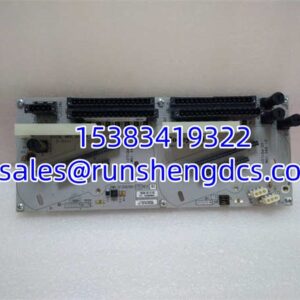
P0916JS is something else entirely — it’s the modular baseboard (substrate) that DIN rail-mounted FBM modules plug into. Think of it as the mechanical and communication backbone: it provides the physical mounting positions (2, 4, or 8 slots), the 2 Mbps fieldbus communication path back to the controller, and the primary/secondary 24VDC power distribution to the modules seated on it. The documented suffix P0916JS-0E is associated with FBM207B. It also supports optional GPS time-gating for FCP280/FCP270/FCM100Et modules, which matters when you need synchronized timestamps across distributed control nodes. The baseboard is backward compatible with existing DIN I/O and supports hot-swap expansion when redundant bus architecture is in place — meaning you can add modules without taking the system offline.
Both are legacy I/A Series hardware. Foxboro’s current product line has moved well beyond this generation, so these modules now live exclusively in the surplus market.
Troubleshooting Quick Reference
| Fault | Likely Cause | Probability | Quick Check | Fix |
|---|---|---|---|---|
| P0916PH not reporting voltage data | Module not seated or fieldbus communication fault | ~30% | Check module seating on baseboard; verify fieldbus cable to controller | Reseat module. Check fieldbus terminator. |
| P0916PH reading inaccurate voltage | Input terminal wiring fault or module calibration drift | ~25% | Measure actual voltage at module terminals with DMM; compare to DCS display | Check field wiring. Recalibrate or replace module if drift confirmed. |
| P0916JS not powering modules on baseboard | 24VDC supply failure or baseboard power distribution fault | ~20% | Measure 24VDC at baseboard power input terminals; check each module slot voltage | Verify external 24VDC supply. Check baseboard internal fuse if accessible. |
| P0916JS fieldbus communication down | Fieldbus cable fault or terminator missing | ~15% | Check 2 Mbps fieldbus cable continuity; verify end-of-bus terminator installed | Replace cable. Install/verify fieldbus terminator. |
| Modules on not recognized by controller | DIP switch configuration mismatch or module ID conflict | ~10% | Verify DIP switch settings on each module match DCS configuration database | Reconfigure DIP switches. Download correct module config from engineering station. |
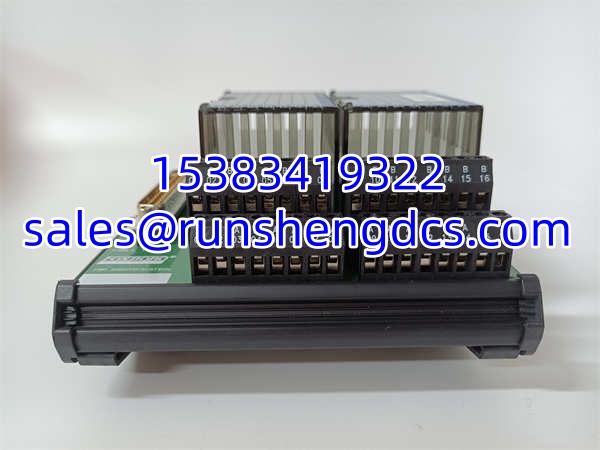
FOXBORO P0916PH P0916JS
Application Scenarios & Pain Points
Power distribution monitoring in refineries
P0916PH modules monitor voltage on critical power buses feeding process units — crude distillation, hydrotreaters, reformers. When voltage dips below threshold, the DCS triggers alarms or trips sensitive equipment. Pain point: a failed P0916PH doesn’t always announce itself with a clean fault alarm. It can start returning slightly low readings that cause nuisance trips or, worse, fail to detect a real undervoltage condition. Regular calibration checks against a handheld DMM catch this, but only if someone actually schedules them.
FBM module mounting in chemical plant DCS racks
baseboards hold multiple FBM modules in a compact DIN rail arrangement — common in retrofit installations where cabinet space is tight. Pain point: the baseboard’s fieldbus communication is a single point of failure for every module seated on it. If the 2 Mbps fieldbus cable corrodes or the terminator fails, you lose communication to all modules on that baseboard simultaneously. The fault looks like multiple module failures, but the root cause is one cable or one terminator.
GPS-synchronized control in power generation
When baseboards are configured with GPS time-gating for FCP280/FCP270 controllers, they enable microsecond-level timestamp synchronization across distributed control nodes — critical for sequence-of-events recording during plant trips. Pain point: GPS antenna cable degradation or receiver drift can desynchronize timestamps silently. The control logic keeps running, but your post-trip forensic analysis is garbage because the event sequence timestamps don’t line up.
Real-world case: A maintenance technician at a petrochemical complex had a voltage monitoring module start reporting intermittent undervoltage alarms on a critical 480V bus feeding a compressor train. The actual bus voltage measured clean at 478VAC on a handheld DMM. The field wiring to the module checked out. Swapped in a surplus from the spare pool — alarms stopped immediately. The failed module was bench-tested and showed intermittent internal ADC conversion errors. The plant had zero spares after that swap and had to source a replacement from a third-party surplus vendor at a 3-week lead time. They ordered two spares after the incident.