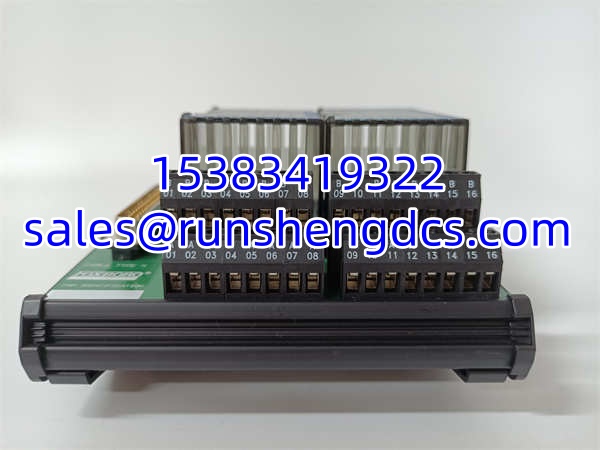

Description
Key Technical Specifications
| Specification | P0916AL (Control Processor) | P0916PH (FBM207 Voltage Monitor) |
|---|---|---|
| Module Type | Central Control Processor (CP40B) | Voltage Monitor Module (FBM207) |
| Processor | 32-bit industrial RISC processor | N/A (field bus module) |
| Instruction Speed | 0.1 μs/Boolean, 0.5 μs/floating-point | N/A |
| Memory | 8MB program + 4MB data | N/A |
| Communication | 100Mbps Ethernet (Foxboro Evo), ControlNet, RS-232, Modbus TCP/IP, Ethernet/IP | Field bus interface to I/A Series backplane |
| FBM Support | Up to 32 FBM direct, 128 via FEM100 expansion | N/A (is itself an FBM) |
| Redundancy | Dual-controller hot-standby with bit-matching verification | N/A |
| I/O Capacity | Up to 256 I/O points + remote I/O expansion | Voltage signal monitoring |
| Power Supply | 24V DC, 10W consumption, redundant power supported | System power via backplane |
| Operating Temp | 0°C to 60°C | Industrial range |
| Storage Temp | -40°C to 85°C | Industrial range |
| Enclosure | Die-cast aluminum, IP20, G3 harsh environment rated | Standard FBM form factor |
| Dimensions | 140mm × 165mm × 45mm | Standard FBM dimensions |
| Weight | 0.6 kg | Standard FBM weight |
| Applications | Process control, logic execution, sequential control, PID loops | Power distribution monitoring, voltage quality analysis,电力系统稳定性监控 |
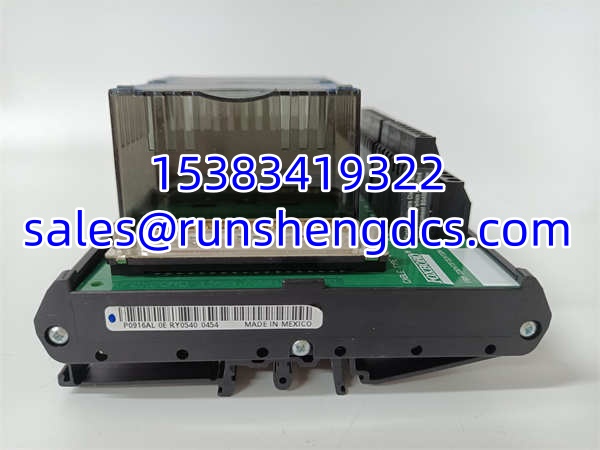
Product Introduction
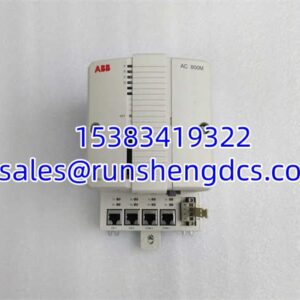
You’re standing in the control room of a 600MW power plant. The turbine governor is adjusting steam flow, the boiler feedwater pumps are modulating, and the operator is watching trends on the Evo workstation. The P0916AL is the module executing all those PID loops in real time — reading pressure transmitters over the fieldbus, adjusting control valve positions, managing the sequential startup of auxiliary systems, and coordinating with the plant-wide control network at 100Mbps. If that processor hiccups, you don’t just lose efficiency. You risk a unit trip that costs tens of thousands of dollars per hour.
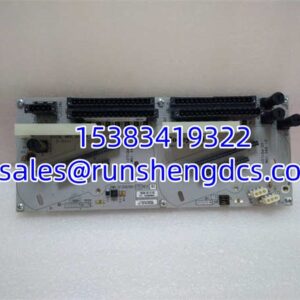
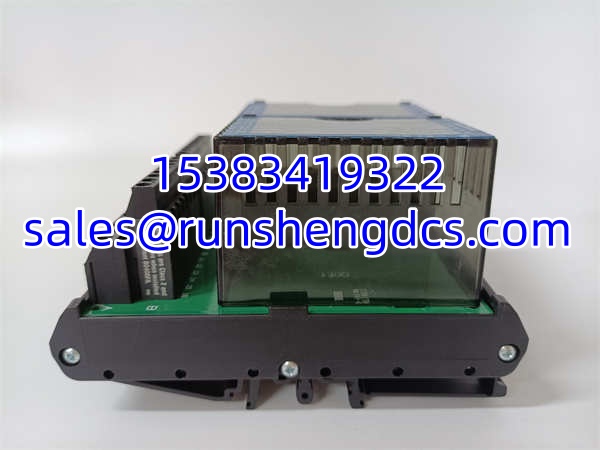
The P0916AL is FOXBORO’s workhorse control processor for the I/A Series DCS — a platform that’s been deployed across power generation, refining, chemical processing, and pulp & paper for decades. It handles everything from simple discrete logic to complex multi-loop cascade control with bit-matching redundancy verification. The hot-standby architecture means you can swap a failed primary controller without taking the process offline. Meanwhile, the P0916PH (FBM207) sits in the I/O rack monitoring voltage signals from the plant’s power distribution system — ensuring that the 480V bus stays within tolerance and flagging any power quality issues before they trip sensitive equipment.
That said, this is a legacy platform. FOXBORO (now under Schneider Electric) has moved on to newer DCS architectures like EcoStruxure, and the I/A Series P0916 modules are no longer in active production. Surplus units are available through aftermarket distributors, but lead times and pricing vary wildly. If you’re running an I/A Series system, start planning your migration strategy now — don’t wait for a controller failure to force your hand.
Troubleshooting Quick Reference
| Fault | Cause | Relevancy | Quick Check | Fix |
|---|---|---|---|---|
| P0916AL processor unresponsive / no communication | Power supply failure or Ethernet network break | 70% chance it’s power or comms | Measure 24V DC at processor terminals; check Ethernet cable continuity and link LEDs | Replace power supply module; repair/replace Ethernet cable; verify network topology and IP configuration |
| Redundancy switchover failure | Standby controller not synchronized or firmware mismatch | 60% chance it’s a sync issue | Check redundancy module status LEDs; compare firmware versions on both P0916AL units | Re-synchronize controllers via engineering workstation; update firmware to matching revision |
| PID loop oscillation or drift | Tuning parameters degraded or FBM signal noise | 55% chance it’s tuning or signal quality | Go online with I/A Series software — monitor PV, SP, and OP trends; check for signal spikes on the FBM | Retune PID parameters; install signal filters or replace noisy FBM module |
| P0916PH voltage readings erratic | Loose field wiring or voltage transient on monitored circuit | 50% chance it’s wiring or power quality | Inspect field wiring terminations on the FBM207; check for voltage spikes on the monitored bus | Re-terminate connections; install surge protection if transients are present; verify FBM calibration |
| Intermittent fault trips | EMC interference or loose terminal connections | 50% chance it’s noise or wiring | Inspect cable shielding and grounding points; check for loose screw terminals on FBM connectors | Re-terminate connections; verify single-point grounding; add ferrite cores if needed |
| Configuration lost after power cycle | Backup battery depleted or flash memory corruption | 40% chance it’s battery or memory | Check battery voltage on processor board; verify if project downloads correctly after power-up | Replace backup battery; re-download configuration from engineering workstation |
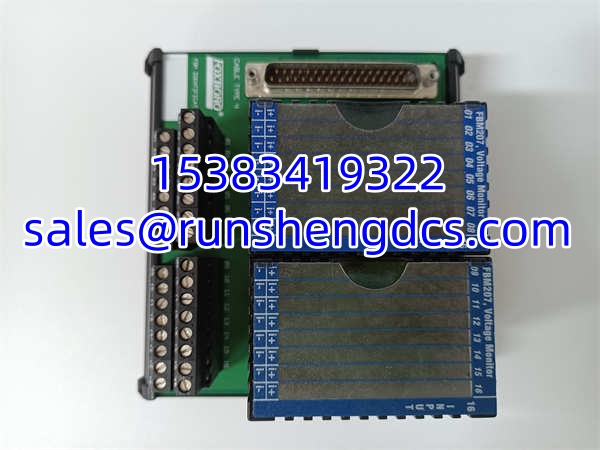
FOXBORO P0916PH P0916AL
Application Scenarios & Pain Points
Power generation — boiler-turbine coordination control: The P0916AL manages the entire boiler-turbine coordination system in a fossil-fired power plant. It reads steam pressure, drum level, and turbine speed, then adjusts fuel flow, feedwater flow, and steam turbine control valves in a tightly coordinated cascade. Pain point: power plants run 24/7 for years between outages. By the time you discover a degrading processor or a failing FBM during an annual maintenance window, you may have already been running with reduced redundancy margin for months. Schedule quarterly redundancy switchover tests — don’t wait for a real fault to find out the backup doesn’t work.
Refining — crude distillation unit control: In a refinery CDU, the executes complex multi-loop control for crude preheat, atmospheric column fractionation, and pumparound circulation. The P0916PH (FBM207) monitors the voltage quality on the unit’s power distribution bus, flagging sags or swells that could trip critical pumps. Pain point: refinery environments are electrically noisy with large motor starters and VFDs generating harmonics. The FBM207’s voltage monitoring is only as good as its wiring — verify that field wiring is properly shielded and that the FBM’s voltage reference is stable.
Chemical processing — batch reactor sequential control: A chemical plant uses the to execute complex batch recipes: charge raw materials, heat to setpoint, hold for reaction time, cool, and discharge. The sequential logic handles interlocks, permissives, and step transitions automatically. Pain point: batch processes are inherently discontinuous, which makes tuning and diagnostics harder than continuous processes. If a batch fails mid-sequence, the operator needs clear diagnostics to determine whether it was a sensor fault, a valve sticking, or a logic error. Ensure your I/A Series alarm configuration provides actionable information, not just “step failed.”
Real-world case: An engineer at a pulp & paper mill had an I/A Series system running the digester control for over 15 years. The primary processor started throwing intermittent communication errors on the fieldbus. The redundancy module had already switched to the standby unit, keeping production running, but the alarm log was filling up with “primary controller communication fault” messages. The maintenance team traced the issue to a degraded Ethernet connector on the primary processor — years of thermal cycling in the control room had caused the RJ45 contacts to oxidize. They replaced the Ethernet cable, reseated the connector, and forced a manual redundancy switchover to verify the primary controller came back clean. Total downtime: 30 minutes. The lesson: in legacy DCS installations, communication infrastructure ages just as fast as the processors themselves. And if you’re still running I/A Series hardware past the 15-year mark, start budgeting for a migration to EcoStruxure or another modern platform.