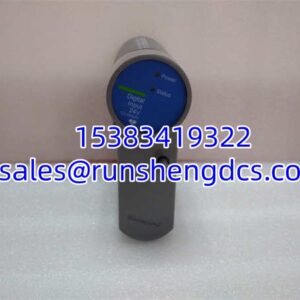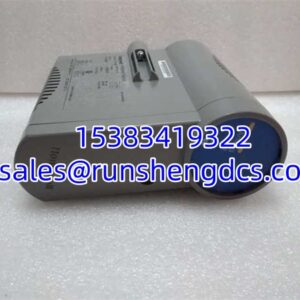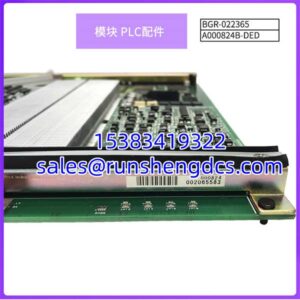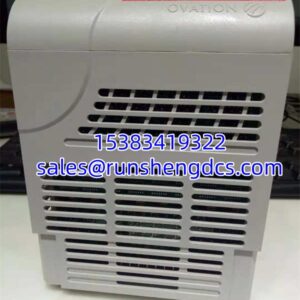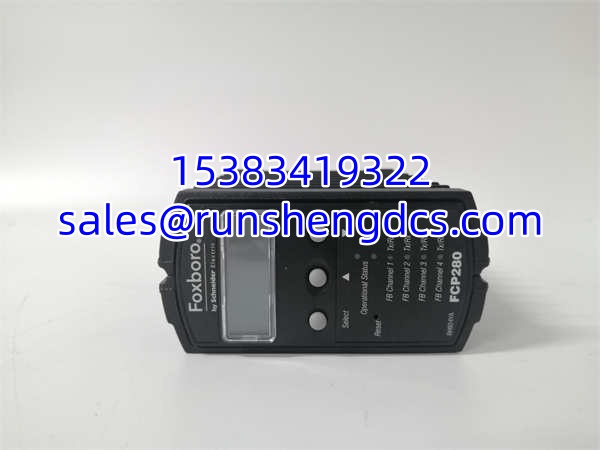

Description
Key Technical Specifications
| Parameter | Specification | Notes |
|---|---|---|
| Max FBM Capacity | 128 Modules | Mix of 100/200 Series (Max 64x 100-Series) |
| Processing Speed | 16,000 Blocks/Sec | High-speed continuous & logic control |
| Control Capacity | Up to 8,000 Blocks | Configurable per application |
| Network Interface | Dual 100 Mbps Ethernet | Copper or Fiber, Mesh topology |
| Fieldbus Ports | 2 Mbps / 268 Kbps HDLC | Dedicated PIO bus ports |
| Fault Tolerance | Patent Pending Redundancy | Dual module pair for zero-bump failover |
| Enclosure Rating | Die-Cast Aluminum | Unventilated, IP-rated for field |
| Environmental | ISA Class G3 | Handles severe corrosive atmospheres |
| Self-Hosted Mode | Supported | Boots from local DB without host WS |
| Time Sync | GPS / External | Optional precision timestamping |
| Software Req | Control Core Services v9.0+ | Mandatory for FCP280 operation |
Product Introduction
Brownfield plants often struggle when legacy DCS controllers fail and OEM support windows close, leaving engineers scrambling to find drop-in replacements that won’t require a full plant rewire. The FCP280 RH924YA acts as a high-capacity field brain, bridging the gap between old I/O and modern Foxboro Evo architecture without forcing a massive rip-and-replace project.
This processor is designed to sit right next to the I/O in unventilated field cabinets, handling up to 128 fieldbus modules and executing 16,000 function blocks per second. Its patented dual-module redundancy means if one CPU dies, the other takes over instantly without dropping a single scan. It also features a self-hosted mode, allowing it to boot and run autonomously from its internal database if the host workstation goes down. Bottom line — it keeps the process running even when the control room loses its mind.
QA/QC Transparency SOP
- Intake & Origin Verification: Inspect the die-cast aluminum housing for impact damage or thermal discoloration. We verify the RH924YA suffix against the OEM BOM to ensure the baseplate pinout matches your specific backplane generation.
- Live Functional Testing: Module installed on a live I/A Series/Evo test rack. We load a verified control database, force I/O points, and verify scan execution times against the 16,000 blocks/sec benchmark.
- Electrical Parameter Tests: Backplane 24VDC draw measured under max FBM load. Continuity and isolation checks on all Ethernet and HDLC fieldbus ports using a calibrated Fluke multimeter.
- Firmware/Config Verification: Readout of internal firmware revision via diagnostic tool. We back up the factory default configuration block to ensure no site-specific IP addresses or rogue parameters are locked in.
- Final QC & Anti-Static Packaging: Functional test report printed and attached. Module sealed in heavy-duty ESD shielding bag with desiccant; rigid corner protectors applied to prevent baseplate pin bending during transit.
Field Engineer Gotchas
- Software Version Mismatch: Risk: FCP280 requires Foxboro Evo Control Core Services v9.0 or higher. Installing it on an older host will result in a bricked controller. Fix: Verify host software version before racking. War Story: Saw a tech spend 6 hours troubleshooting a “bad CPU” that was actually just running v8.3 software. Check the release notes, people.
- Baseplate Suffix Confusion: Risk: RH924YA is a specific hardware variant. Swapping it with a different suffix can cause backplane communication failures or power distribution issues. Fix: Match the exact suffix. Blunt Truth: “Close enough” doesn’t work in DCS. If the suffix doesn’t match, don’t force it.
- FBM Population Limits: Risk: Exceeding 64x 100-Series FBM modules on a single FCP280 causes silent polling failures. Fix: Audit your I/O map; split 100-Series modules across multiple CPUs if needed. Note: The configurator might let you save the config, but the CPU will choke during runtime.
- Cooling Misconceptions: Risk: Assuming the die-cast aluminum enclosure needs forced air ventilation. Fix: Do NOT add fans. The enclosure is designed to act as a heatsink. Warning: Blocking the external fins with cable ties or dust will cause thermal shutdown. Let it breathe.
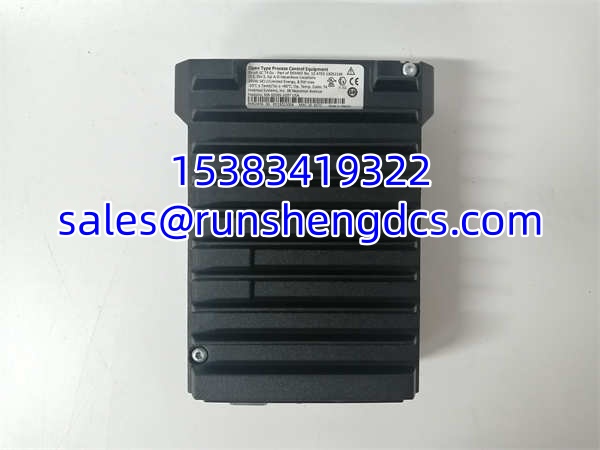
Foxboro FCP280 RH924YA
Application Scenarios
- Remote Pipeline Pump Stations: Unheated, unventilated field cabinets requiring high-density I/O control and redundant processing without climate control.
- Refinery Unit Upgrades: Migrating legacy I/A Series units to Foxboro Evo while retaining existing 100/200-Series FBM field wiring.
- Offshore Platform Modules: Space-constrained, high-vibration environments where centralized control rooms are impractical and G3 corrosion resistance is mandatory.
FAQ
Q: Can I hot-swap this module in a redundant pair?
A: Yes, the FCP280 supports online image upgrades (OLUG) and hot-swapping. The standby module takes over seamlessly. However, always verify the active module is healthy before pulling the standby.
Q: Does this support both 100-Series and 200-Series FBMs?
A: Yes, but with limits. You can mix them, but 100-Series modules are capped at 64 per CPU. 200-Series modules can fill the remaining capacity up to 128 total. Check your I/O count before ordering.
Q: What happens if the host workstation dies?
A: The enters self-hosted mode and continues running from its local database. You won’t be able to edit configs, but the process stays alive. It’s a lifesaver during IT outages.
Q: Is the RH924YA suffix compatible with older I/A Series baseplates?
A: Not guaranteed. The RH924YA is tied to specific Evo/I/A Series generations. Verify the baseplate part number against your existing chassis. Mismatched baseplates = no backplane power.
Q: Does it require external GPS for time sync?
A: No, GPS is optional. The CPU will sync from the host workstation or network NTP by default. GPS is only needed for sub-millisecond timestamping across distributed sites.
Q: What’s the max scan time for a full 8,000-block config?
A: At 16,000 blocks/sec, a full 8,000-block config executes in ~500ms. If your scan exceeds this, you’re either overloaded or have a blocking function. Audit your logic for inefficient timers or loops.
Q: Is this module still manufactured?
A: It’s in the mature product lifecycle. New units are available but with longer lead times. Most stock is surplus/refurbished. Secure spares now; future availability isn’t guaranteed beyond 2030.