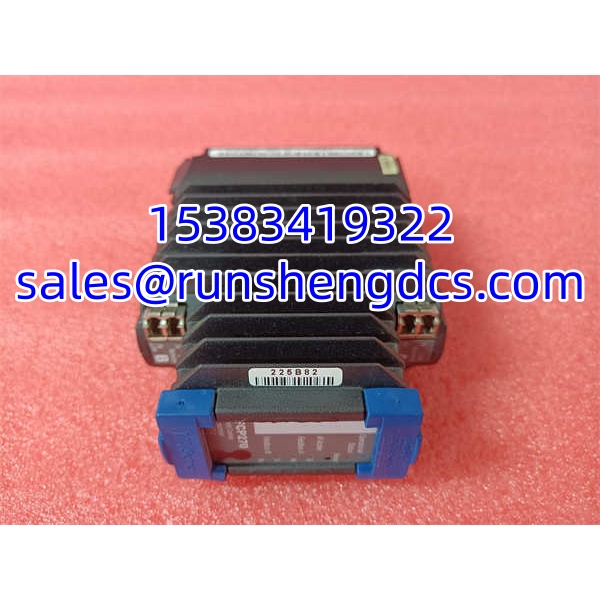

Description
Key Technical Specifications
| Parameter | Value / Note |
|---|---|
| Function | Field Control Processor for I/A Series / Foxboro Evo |
| Processor | Motorola PowerPC 405, 270 MHz (per public listings) |
| Memory | 16 MB SDRAM, 32 MB Flash (per public listings) |
| Control network | 100 Mbps fiber Ethernet to Foxboro Evo control network |
| Field bus | 2 Mbps or 268 Kbps HDLC to FBM I/O |
| Supported FBM | Up to 32 FBM200-series; up to 128 with FEM100; up to 64 FBM100-series |
| Power supply | 24 VDC redundant input |
| Power consumption | Up to 8.5 W per non-fault-tolerant module (verify with OEM) |
| Operating temperature | 0 °C to +60 °C (per public listings) |
| Storage temperature | -40 °C to +85 °C (per public listings) |
| Enclosure | Die-cast aluminum, suitable for G3 harsh environments |
| Software support | I/A Series v8.4–v8.8 or Foxboro Evo v9.0+ (verify with OEM) |
Product Introduction
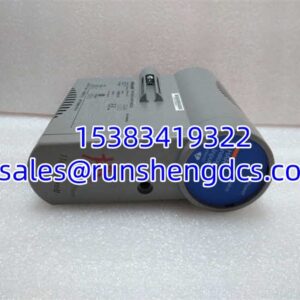
Field controllers that sit outside the control room do not get the benefit of clean air, stable temperature, or gentle handling. The FOXBORO FCP270 P0917YZ is a field-mounted control processor for the I/A Series / Foxboro Evo architecture, designed to run regulation, logic, timing, and sequence control directly at the process unit. It connects to FBM I/O over HDLC field bus and ties back to the control network through 100 Mbps fiber Ethernet.
This module is useful where you need distributed control without stuffing every I/O drop into a central rack. A single non-fault-tolerant FCP270 can manage up to 32 FBM200-series modules, or 128 with FEM100 expansion; FBM100-series support tops out at 64. Fault-tolerant configurations run two modules in bit-for-bit agreement, so a single hardware fault does not push bad data onto the network. Power draw is modest — around 8.5 W per non-fault-tolerant module — but verify the exact rating and firmware level before declaring it a drop-in replacement.
QA/QC Transparency SOP
- Intake & Origin Verification — Record model P0917YZ, serial number, hardware revision, and any fault-tolerant pairing label. Inspect the die-cast housing, fiber ports, field-bus connectors, and base plate for corrosion, impact damage, or stripped threads.
- Live Functional Testing — Power with a regulated 24 VDC supply. Confirm boot, LED status, and field-bus initialization. Verify fiber Ethernet link on a compatible test switch. If possible, confirm module recognition in an I/A Series / Foxboro Evo test environment.
- Electrical Parameter Tests — Measure supply current at idle and under communication load. Confirm redundant 24 V input behavior. Check continuity on field-bus and grounding points. Do not apply megger voltage to Ethernet or field-bus circuits without OEM limits.
- Firmware/Config Verification — Read software/firmware level and module identity. Confirm compatibility with the customer’s I/A Series or Foxboro Evo version. For fault-tolerant pairs, verify both modules match and are not flagged as failed.
- Final QC & Anti-Static Packaging — Bag in ESD packaging with desiccant. Seal fiber ports with dust caps. Attach a test report covering power-up, communication, current draw, firmware readout, and physical condition. Label as “Verify compatibility with existing FCP270 node before installation.”
Field Engineer Gotchas
- Software version mismatch — Risk: module powers up but will not accept download or join the control network. Solution: confirm I/A Series / Foxboro Evo software level before swapping. War story: a plant replaced an FCP270 during a turnaround; the node appeared online, but the application would not validate until the software revision matched the existing domain.
- Fault-tolerant pair mismatch — Risk: one module is fault-tolerant-capable, the other is not, or firmware levels differ. Solution: treat FCP270 pairs as matched sets. Do not mix a single-module replacement into an existing fault-tolerant pair without OEM confirmation.
- Fiber Ethernet polarity and cleanliness — Risk: link fails even though the module is healthy. Solution: inspect fiber connectors, verify TX/RX orientation, and clean end faces. A dirty fiber port looks exactly like a dead controller until you check the obvious.
- Field-bus address/termination errors — Risk: FBM modules drop off or report intermittent communication faults. Solution: confirm HDLC bus speed (2 Mbps vs 268 Kbps), FBM addressing, and any required FBI/FEM configuration before blaming the processor.
- 24 VDC supply quality — Risk: reboot loops or erratic diagnostics in field cabinets. Solution: measure supply voltage under load, check redundant feed diodes, and verify ground integrity. The FCP270 is rated for harsh environments, but it still needs clean power.
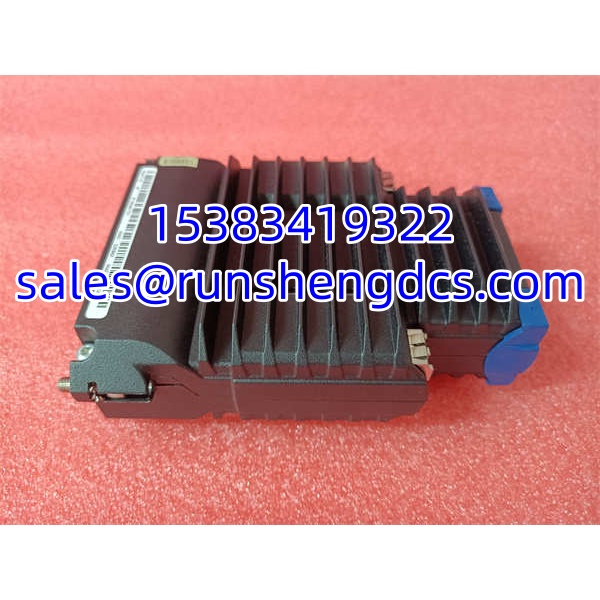
FOXBORO FCP270 P0917YZ
Application Scenarios
- Remote wellhead or pipeline station control — Field-mounted handles local pressure, flow, and valve control while communicating back over fiber Ethernet.
- Power plant auxiliary control islands — Feedwater, condensate, or balance-of-plant loops run on distributed nodes to reduce central I/O wiring.
- Chemical unit process control — Reactor temperature, level, and interlock logic execute locally with FBM I/O, keeping control close to the process.
- Brownfield I/A Series maintenance — Replacing a failed field processor where migration is not yet approved and the existing FBM topology must remain unchanged.
FAQ
It is a DCS field control processor for the FOXBORO I/A Series / Foxboro Evo system. It is not a standalone PLC.
2. How many FBM modules can it support?
Up to 32 FBM200-series modules, up to 128 with FEM100 expansion, or up to 64 FBM100-series modules.
3. Does it support redundancy?
Yes. A fault-tolerant configuration uses two modules running in parallel with bit-for-bit agreement. Do not assume a single module provides fault tolerance.
4. What network does it use?
It connects to the Foxboro Evo control network via 100 Mbps fiber Ethernet. Field I/O communication uses HDLC field bus to FBM modules.
5. Can I install this as a drop-in replacement?
Only after confirming software version, fault-tolerant status, field-bus configuration, and fiber Ethernet settings. It is not a universal swap.
6. What power does it need?
24 VDC redundant input, with public listings citing up to 8.5 W per non-fault-tolerant module. Verify actual draw on your specific configuration.
7. Is it suitable for field installation?
Yes. It uses a die-cast aluminum enclosure and is rated for G3 harsh environments. Still protect fiber ports and connectors during storage and shipping.