
Description
Key Technical Specifications
| Parameter | Specification |
|---|---|
| Communication Rate | 10 Mbps or 100 Mbps Auto-sensing |
| Max Device Count | 64 external devices per module |
| DCI Block Capacity | Up to 2,000 connections |
| Protocols | UDP/IP, TCP/IP, Modbus TCP (Verify driver) |
| Power Supply | 24V DC (+5%, -10%), Redundant Input |
| Max Power Draw | 7W (Typical) |
| Operating Temp | -10°C to +70°C (G3 Environment) |
| Min Scan Cycle | 500ms ECB Block Period |
| Data Types | 2/4-byte Int, Float, Binary |
| IP Config | Fixed IP or DHCP |
Product Introduction
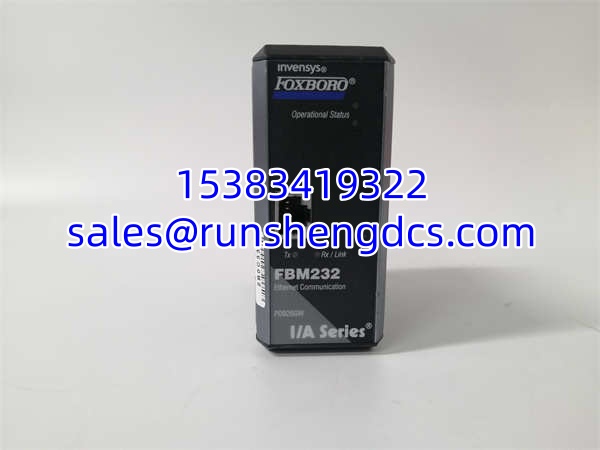
Integrating legacy field devices into modern DCS architectures often creates a bottleneck at the communication layer. You aren’t just moving data; you’re translating protocols without adding latency that kills control loop performance. The FBM232 P0926GW solves this by acting as a dedicated Field Device System Integrator (FDSI), sitting between single-port field I/O and the Foxboro Evo or I/A Series controller.
It handles the heavy lifting of protocol translation and data mapping, supporting up to 64 devices and 2,000 DCI blocks on a single 10/100 Mbps Ethernet link. Bottom line — it keeps your fieldbus traffic off the main control network while maintaining a minimum 500ms scan cycle for critical blocks. With a 7W max power draw and G3 environmental rating, it fits standard I/O cabinets without requiring extra cooling or power budget headaches.
QA/QC Transparency SOP
- Intake & Origin Verification: Visual inspection for PCB delamination, capacitor leakage, or terminal corrosion. We cross-reference the P0926GW suffix against OEM revision logs to confirm hardware compatibility before it ever hits the test bench.
- Live Functional Testing: Module is racked in a live I/A Series node. We force a 100Mbps link, flood the port with Modbus TCP requests, and verify zero packet loss over a 4-hour soak test. Comms LEDs must track actual traffic.
- Electrical Parameter Tests: 24V DC input is monitored under full load. We check for voltage ripple >50mV and verify redundant power switchover occurs in <10ms without module reboot. Ground continuity is confirmed to chassis.
- Firmware/Config Verification: EEPROM is read and checksummed against known-good baselines. We attempt a config download via the FDSI Configurator; failure here means a bad flash chip, and the unit is scrapped.
- Final QC & Anti-Static Packaging: Pins are inspected for straightness and oxidation. Unit is sealed in static-shielding bag with desiccant, labeled with test date, firmware rev, and technician ID. No exceptions.
Field Engineer Gotchas
- Firmware Rev Mismatch: Don’t assume “P0926GW” is enough. A Rev B won’t talk to a Rev D controller without a firmware flash. War story: Saw a tech spend 6 hours troubleshooting “comms faults” only to find the replacement module was 3 revs behind. Check the label. Twice.
- DHCP vs. Fixed IP Trap: The module defaults to DHCP in some firmware versions. If your DCS expects a fixed IP and the module grabs a random one, you’re dead in the water. Always set a static IP via the FDSI Configurator before racking.
- Power Polarity on Terminals: The 24V DC input is unforgiving. Reverse polarity doesn’t just blow a fuse; it can fry the internal DC-DC converter. Blunt warning: Label your wires. Multimeter check before insertion. I’ve seen $4k modules turned into paperweights in 2 seconds.
- Scan Cycle Misconfiguration: Pushing 64 devices at 100ms scan will choke the module. Stick to the 500ms minimum ECB period for critical loops. Reality check: Field devices rarely need sub-100ms updates. Over-engineering the scan rate just creates unnecessary bus traffic.
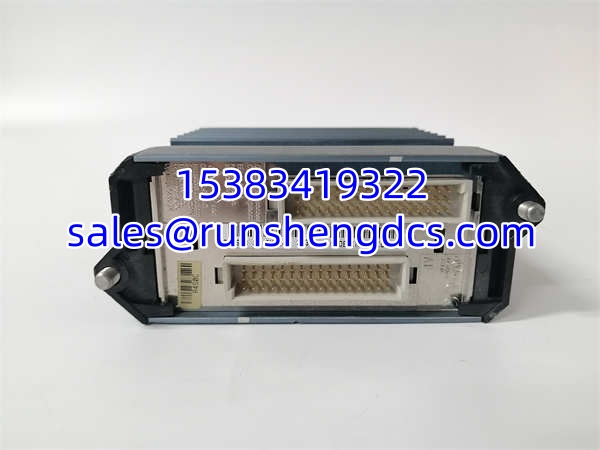
FOXBORO FBM232 P0926GW
Application Scenarios
- Refinery Distillation Columns: Legacy pressure transmitters with serial outputs need integration without ripping out existing marshalling panels. FBM232 aggregates 32 devices onto one Ethernet uplink.
- Power Plant Coal Handling: High-vibration, G3 environment with dust and temp swings. Module’s -10°C to +70°C range and conformal coating handle the abuse where standard PLCs fail.
- Chemical Batch Reactors: HART-enabled valve positioners require bidirectional comms for diagnostics. FBM232 passes HART commands through TCP/IP without dedicated HART cards.
FAQ
- Does this support hot-swapping? Yes, but only if the I/O node is configured for hot-swap and you’ve verified the module firmware matches the node. Hot-swapping a mismatched rev can hang the entire I/O bus.
- Can I use this with non-Foxboro field devices? Technically yes, if they speak Modbus TCP or UDP/IP. But you’ll need to write or source a custom XML device file for the FDSI Configurator. Don’t expect plug-and-play with random vendors.
- What’s the max cable length to the first device? Standard Ethernet rules apply: 100m for copper. If you’re pushing beyond that, you need fiber media converters. The module itself doesn’t extend the physical layer.
- Is P0926GW interchangeable with P0926GX? No. The “X” suffix typically denotes a different hardware revision or feature set (often FBM233). Verify your exact BOM. Substituting without checking is a gamble.
- Do I need a separate license for this module? Generally no. FBM232 licensing is usually tied to the DCS controller or I/O node, not the individual module. Confirm with your Schneider/Invensys rep if you’re on a legacy license agreement.
- What happens if power drops below 21.6V? The module will brown out and reboot. Redundant power inputs help, but only if both sources are healthy. Test your PSU ripple under load; marginal supplies cause intermittent comms drops that look like network issues.