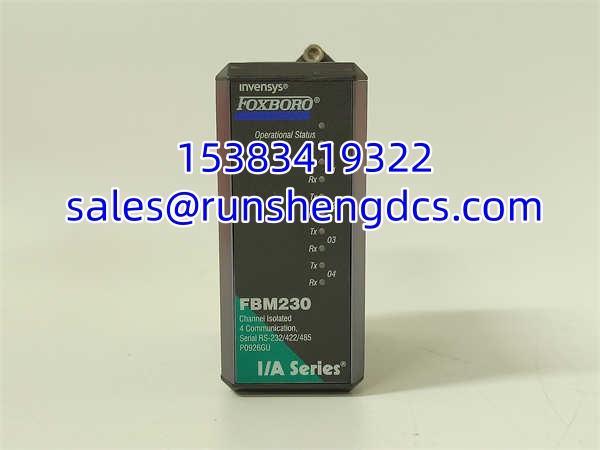

Description
Key Technical Specifications
| Parameter | Specification |
|---|---|
| Channels | 2 (Channel Isolated) |
| Input Voltage | 380 … 480 V |
| Frequency | 50/60 Hz |
| Communication | RS-232/422/485, Modbus |
| Analog Outputs | 1 |
| Digital I/O | 5 Inputs / 1 Output |
| Output Current | 9.7 A (Normal), 8.8 A (Light Overload) |
| Power Rating | 4 kW (Normal/Light Overload) |
| Apparent Power | 6.7 kV·A |
| Protection Class | IP20, Open Type |
| Dimensions | 217 x 132 x 344 mm |
| Weight | 1.8 kg |
Product Introduction
Field wiring noise kills signal integrity faster than almost anything else in legacy I/A Series racks. This module exists to stop that bleed before it hits the backplane, using channel-to-channel isolation that actually holds up under industrial ground loops.
It sits in the FBM230 slot as a high-performance interface between field devices and the DCS, handling real-time data exchange without the typical scan-time penalties. You get 2 isolated channels with built-in PID logic for pump/fan control, meaning less load on the main processor. Bottom line — it works for variable torque loads up to 4 kW, but don’t expect it to handle heavy overload cycles without thermal derating.
QA/QC Transparency SOP
- Intake & Origin Verification: We trace lot numbers against OEM shipping manifests to filter out grey-market fakes; if the PCB revision doesn’t match the P0926GU schematic, it gets scrapped.
- Live Functional Testing: Module goes on a test rack simulating 480V bus; we inject 4-20mA signals and verify channel isolation >1MΩ while monitoring for crosstalk.
- Electrical Parameter Tests: Megger test on all isolated channels at 500V DC; continuity check on terminal blocks to ensure no cold solder joints from previous field use.
- Firmware/Config Verification: Readout via Modbus RTU to confirm firmware rev matches I/A Series compatibility matrix; backup of any user-configurable parameters before wipe.
- Final QC & Anti-Static Packaging: Visual inspection for capacitor bulge or trace corrosion; sealed in ESD-safe bag with desiccant, labeled with test date and pass/fail signature.
Field Engineer Gotchas
- Firmware Rev Mismatch: I/A Series is picky. If your DCS is on FCP270 v5.2 and this module is v4.x, expect comms timeouts. Fix: Check the silkscreen rev code before racking. I’ve seen entire shifts wasted chasing “ghost” network faults that were just version skew.
- DIP Switch/Jumper Errors: Channel isolation jumpers are tiny and easy to miss. Leaving them open when you need isolated ground will fry the input stage. Fix: Use a magnifying lamp. One open jumper = one dead channel.
- Wiring/Terminal Block Incompatibility: P0926GU uses specific screw terminals; forcing standard pitch blocks strips the threads. Fix: Torque to 0.5 Nm max. I’ve seen terminals arc out because someone used an impact driver on a 20-year-old module.
- Power Draw/ESD Risks: This module draws standby power even when disabled. Fix: Always rack with power off. Backplane transients during hot-swap can latch up the input ASIC. Treat it like glass.
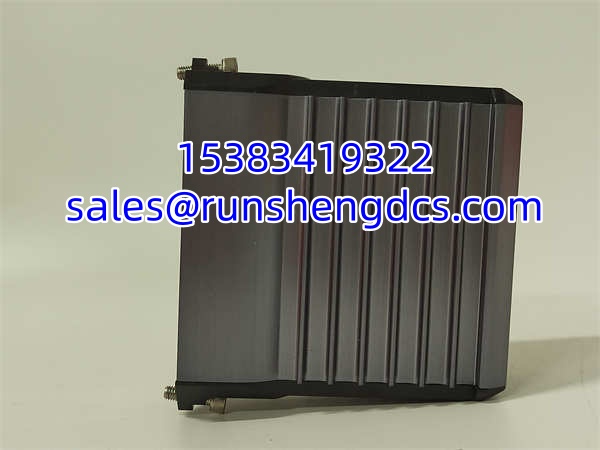
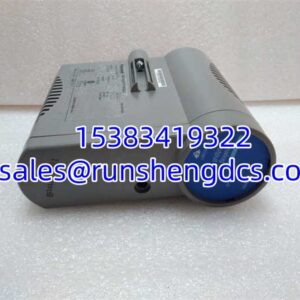
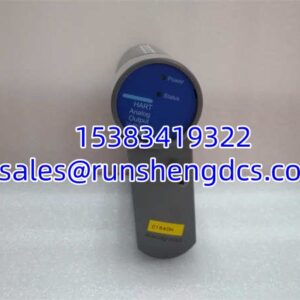
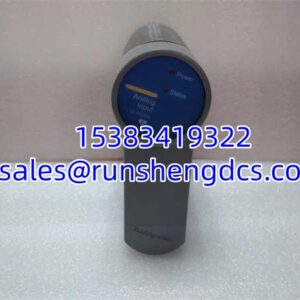
FOXBORO FBM230 P0926GU
Application Scenarios
- Boiler Feedwater Pumps: Requires precise flow control with pressure feedback; built-in PID handles the loop locally to reduce DCS scan load.
- HVAC Return Fans: Variable torque application where 4 kW output matches typical motor loads; Modbus RTU integrates with legacy BMS without protocol converters.
- Chemical Dosing Skids: Channel isolation prevents ground loops from corrupting pH readings in wet, corrosive environments.
FAQ
- Does this support hot-swapping in I/A Series? No. Backplane transients during insertion can damage the isolation barrier. Always de-energize the rack.
- Will P0926GU replace P0926GW? Not directly. GW is FCM100-based with Ethernet; GU is Modbus RTU. Check your FCP270 config before ordering.
- What’s the max cable length for RS-485? 1200m at 9600 baud, but keep it under 300m if you’re running near VFDs. Shield and ground at one end only.
- Is the 4 kW rating continuous or peak? Continuous at 40°C ambient. Derate 2% per °C above that. Don’t push it in a hot cabinet without forced air.
- Do I need external termination resistors? Yes, for RS-485. Module doesn’t include them. Use 120Ω, 1/4W, mounted at the last node.
- Can I use this for 0-10V inputs? Technically yes, but it’s designed for current loops. Voltage mode has lower input impedance; verify with OEM if your signal source is high-impedance.
- What’s the MTBF? OEM doesn’t publish it for this vintage. Field data suggests 15-20 years in climate-controlled rooms; half that in harsh environments. Plan for obsolescence.