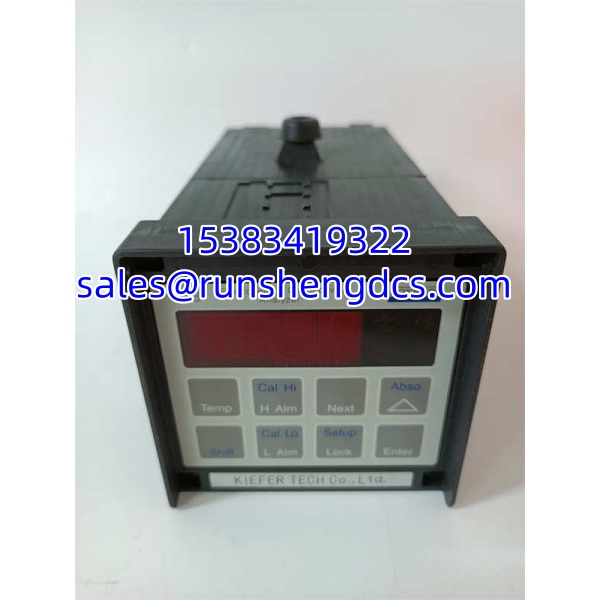

Description
Key Technical Specifications
| Parameter | Specification |
|---|---|
| Manufacturer | Foxboro (Invensys / Schneider Electric) |
| Model Number | 873EC-JIPFGZ |
| Product Type | Electrochemical Conductivity Analyzer |
| Measurement | Aqueous conductivity (µS/cm, mS/cm, or % concentration) |
| Temperature Compensation | Automatic, via RTD input from sensor |
| Analog Output | Isolated 4-20 mA (single output on plastic housing; dual isolated outputs on metal housing) |
| Alarm Outputs | Dual relay alarms |
| Display | Front-panel LCD |
| Configuration | Front-panel keypad with EEPROM storage |
| Enclosure | NEMA 4X (plastic or extruded aluminum metal housing) |
| Mounting | Panel, pipe, or surface mount (metal); panel mount (plastic, 1/4 DIN) |
| Compatible Sensors | Foxboro 871EC (toroidal/inductive), 871CC, 871FT conductivity sensors |
| Communication | RS-232 serial port (model-dependent) |
| Power | AC or DC line-powered (variant-dependent; confirm from nameplate) |
| Hazardous Area | Metal unit suitable for certain hazardous area classifications (verify suffix) |
| Successor Platform | 875EC analyzer / 876EC transmitter |
Product Introduction
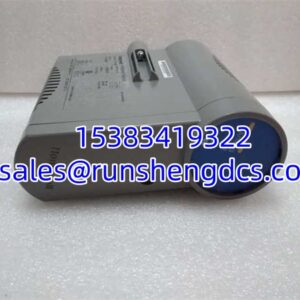
A drifting conductivity reading is one of those problems that does not announce itself until the boiler water chemistry is already out of spec. The Foxboro 873EC-JIPFGZ is a line-powered electrochemical analyzer from the 873 series, designed to measure aqueous conductivity — and optionally chemical concentration — with automatic temperature compensation. It is the kind of instrument you find on boiler feedwater lines, condensate polishers, reverse osmosis skids, and chemical dosing loops where conductivity is the primary indicator of water quality.
What makes the 873EC useful in the field is its flexibility. It can display conductivity in µS/cm, mS/cm, or percent concentration, and it supports preprogrammed temperature-compensation and concentration curves for common chemicals. The metal-housed version provides two isolated 4-20 mA outputs and dual alarm relays, which means one loop can feed the DCS while the second drives a local recorder or PLC interlock. Configuration is stored in EEPROM, so a power cycle does not wipe the setup. The unit accepts Foxboro 871EC toroidal sensors, 871CC contact sensors, or 871FT sanitary sensors, making it adaptable to both clean water and aggressive chemical service.
The suffix code matters. In the 873EC family, the trailing letters define power supply, output configuration, enclosure type, and hazardous-area certification. “JIPFGZ” is a specific build — do not substitute a different suffix without verifying output count, power voltage, and enclosure rating.
QA/QC Transparency SOP
- Intake & Suffix Verification — Record full model 873EC-JIPFGZ, serial number, and nameplate power rating. Confirm enclosure type (plastic vs. metal) and output configuration against the suffix code. Reject units with cracked housings, corroded terminal blocks, or missing nameplates.
- Live Functional Testing — Apply rated power. Confirm display illumination and keypad response. Simulate a conductivity sensor input using a calibrated decade box or known sensor. Verify the 4-20 mA output tracks the displayed value across at least three points (0%, 50%, 100%).
- Temperature Compensation Check — Inject a simulated RTD signal at two different temperatures. Confirm the displayed conductivity compensates correctly per the selected curve. A non-compensating unit will read incorrectly as process temperature changes.
- Alarm Relay Verification — Trip both alarm setpoints and confirm relay actuation. Check for contact welding or excessive bounce. Verify alarm hysteresis matches the configured values.
- Final QC & Packaging — Document power rating, output test points, alarm behavior, and any anomalies. Pack with sensor connector protected. Label clearly with suffix code — a mismatched suffix is the most common installation error.
Field Engineer Gotchas
- Suffix code is not cosmetic. Two 873EC units may look identical but differ in power voltage, number of analog outputs, or hazardous-area rating. Fix: Match the full suffix (JIPFGZ) against the original nameplate. Do not assume “873EC” is interchangeable.
- Sensor type mismatch. The 873EC works with both contact (871CC) and toroidal (871EC) sensors, but the calibration and wiring differ. Fix: Confirm the installed sensor type and verify the analyzer is configured for the correct sensor curve. A toroidal sensor on a contact-sensor configuration will read nonsense.
- Single vs. dual output confusion. Plastic-housed 873EC units typically have one analog output; metal-housed units have two. Fix: If your DCS expects two loops and you install a plastic-housed unit, you will be short one signal. Check the housing before pulling the old unit.
- Temperature compensation curve selection. Using the wrong concentration curve (e.g., NaOH instead of HCl) produces systematically wrong readings. Fix: Document the configured curve before removing the old unit. Re-enter it after replacement.
- Ground loops on analog outputs. The outputs are isolated, but improper grounding at the receiving end can still introduce noise. Fix: Verify shield grounding at one end only. Check for 50/60 Hz hum on the mA signal.
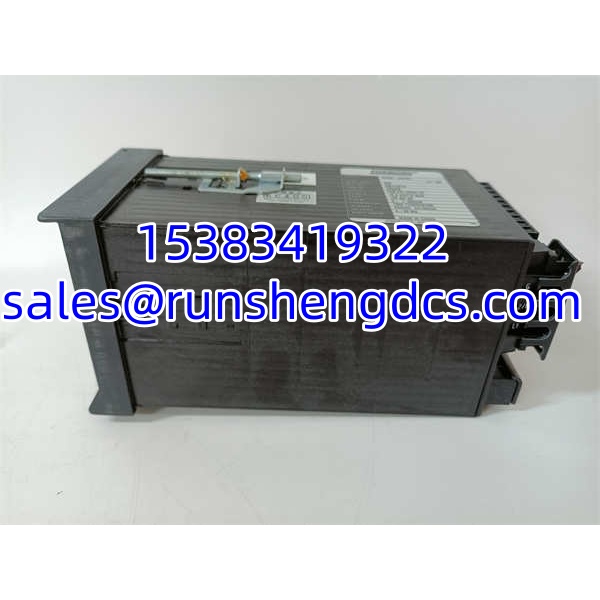
Foxboro 873EC-JIPFGZ
Application Scenarios
- Boiler feedwater and condensate monitoring where conductivity indicates ion contamination and drives blowdown control.
- Reverse osmosis and deionization systems tracking permeate quality in µS/cm.
- Chemical concentration control in acid/caustic dosing loops using preprogrammed % concentration curves.
- Power plant water chemistry where dual 4-20 mA outputs feed both the DCS and a local recorder.
FAQ
What does 873EC-JIPFGZ measure?
Conductivity of aqueous solutions, displayed in µS/cm, mS/cm, or % concentration, with automatic temperature compensation.
Is this the same as a pH analyzer?
No. The 873EC is for conductivity/concentration. Foxboro makes separate 873PH (pH/ORP), 873CC (contact conductivity), 873RS (resistivity), and 873DO (dissolved oxygen) variants in the same 873 family.
How many analog outputs does it have?
Metal-housed units typically provide two isolated 4-20 mA outputs; plastic-housed units provide one. Verify against the specific suffix code.
What sensors does it work with?
Foxboro 871EC (toroidal/inductive), 871CC (contact), and 871FT (sanitary) conductivity sensors.
Is this module still in production?
The 873EC platform is a legacy product. The 875EC analyzer and 876EC transmitter are the newer alternatives in the Foxboro electrochemical lineup.
Can I use it for chemical concentration measurement?
Yes. The 873EC includes preprogrammed concentration curves for common chemicals and supports custom curve generation.
Does it need external power?
Yes. The 873EC is line-powered (AC or DC, variant-dependent). It is not a loop-powered 2-wire transmitter. Check the nameplate for the exact voltage.