
Description
Key Technical Specifications
- Product Model: CPCI-680
- Manufacturer: Force Computers
- Processor: PowerPC G4 7400 @ 400 MHz
- Cache: 1 MB L2 Cache (Half Processor Speed)
- Memory: 128 MB Board-on SDRAM (Expandable to 1GB via module)
- Flash: 8 MB User Flash, 1 MB Boot Flash
- Form Factor: 6U CompactPCI
- Key Technology: Force Sentinel Universal PCI-to-PCI Bridge
- Expansion: Up to 2 PMC Slots
- Interfaces: Up to 3 Fast Ethernet, 2 Serial, Optional SCSI-2
Product Introduction
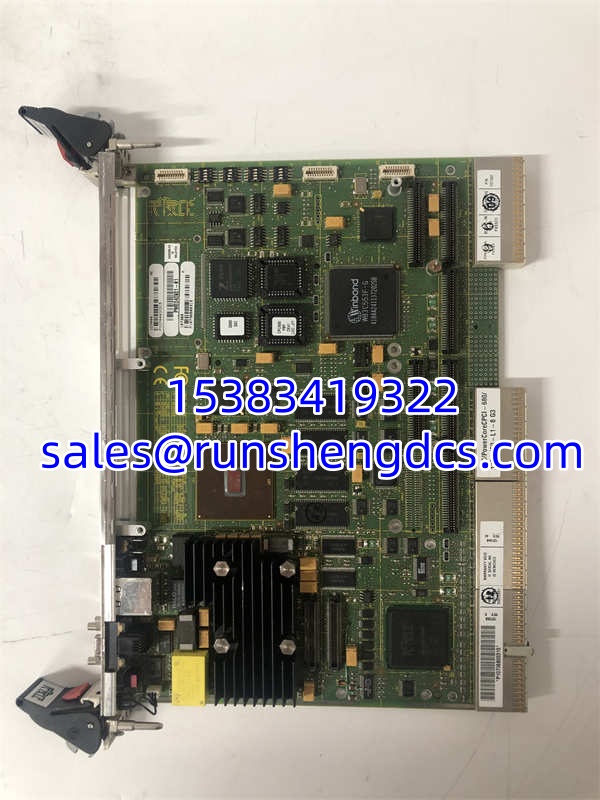
Legacy embedded systems don’t care about your upgrade timeline. You’re staring at a 6U CompactPCI slot in a telecom chassis or industrial controller, and the CPU card is running hot and throwing bus errors. The Force CPCI-680 is a PowerPC G4-based single-board computer that uses Force’s proprietary Sentinel Universal PCI Bridge to act as either a system controller or a peripheral card without hardware reconfiguration. This dual-role capability was a big deal when it launched, and it’s still relevant for maintaining multi-processor backplanes where slot assignment is fixed.
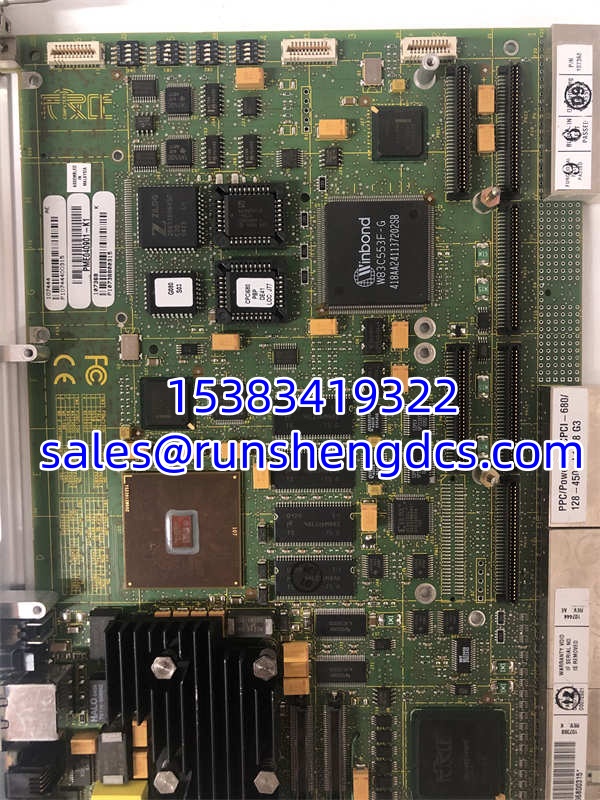
This board runs a 400 MHz PowerPC 7400 with 128MB of onboard SDRAM and supports up to 1GB via memory expansion. The Sentinel bridge is the real engineering win here — it eliminates the need to swap cards or rewire when moving a board between system and peripheral slots. I’ve seen these deployed in military radar systems and telecom switching gear where the backplane topology is set in stone. Bottom line: if your system was designed around the CPCI-680, there’s no direct modern replacement that preserves the Sentinel bridge behavior. You’re either finding NOS stock or redesigning the entire backplane.
QA/QC Transparency SOP
We don’t trust “tested” stickers from random surplus dealers. Here’s what actually happens to every Force CPCI-680 on our bench:
- Intake & Origin Verification: Visual inspection under magnification for cold solder joints, capacitor leakage, or physical damage. We verify the PCB revision and component date codes against Force manufacturing records to rule out counterfeit or pulled-from-scrap units.
- Live Functional Testing: Installed in a verified 6U CompactPCI test chassis with a known-good system controller. We boot VxWorks/Linux, verify POST, and run a 30-minute memory stress test to catch intermittent SDRAM failures.
- Electrical Parameter Tests: Using a Fluke 115, we measure 3.3V and 5V rail stability under load. We also check the Sentinel bridge signal integrity with an oscilloscope to ensure clean PCI bus transitions.
- Firmware/Config Verification: Boot flash is read and verified against known-good images. We confirm the Sentinel bridge correctly reports its mode (system/peripheral) and that PMC slots are enumerated properly.
- Final QC & Anti-Static Packaging: Module is cleaned, placed in an ESD-safe bag with desiccant, and shipped with a test report showing POST status, memory test results, and verified firmware version.
Field Engineer Gotchas
Sentinel Bridge Mode Confusion: The CPCI-680 can operate in system or peripheral mode, but the mode is often set by backplane slot position or jumper configuration. If you plug it into a peripheral slot but the system expects a system controller, you’ll get bus timeouts. Check the manual for your specific chassis. I’ve seen techs spend hours debugging a “dead” board that was just in the wrong mode.
PMC Slot Power Limits: The two PMC slots share power with the main board. If you’re running high-draw PMC modules (like FPGA cards or additional Ethernet), verify the power budget. I’ve seen systems brownout when a second PMC was added because the backplane couldn’t supply enough current. Measure the 3.3V rail at the PMC connector under load.
ESD Sensitivity of the 7400: The PowerPC G4 7400 is notoriously sensitive to static. The CPCI-680 has some protection, but it’s not bulletproof. Always use a grounded wrist strap when handling. I’ve seen boards that tested fine on the bench but failed in the field because a tech handled them without ESD protection during installation.
Memory Module Compatibility: While the spec says “expandable to 1GB,” not all SDRAM modules work. Force had specific qualified lists. Using unqualified memory can cause intermittent crashes that are nearly impossible to diagnose. Stick to known-good modules or verify with Force documentation before blaming the CPU.
Thermal Management in Enclosed Chassis: The 7400 runs hot. In enclosed 6U CompactPCI chassis with poor airflow, these boards can throttle or fail prematurely. Verify your chassis has adequate cooling. I’ve seen CPCI-680s in sealed telecom cabinets that failed after 18 months due to thermal stress, even though the ambient spec was met.
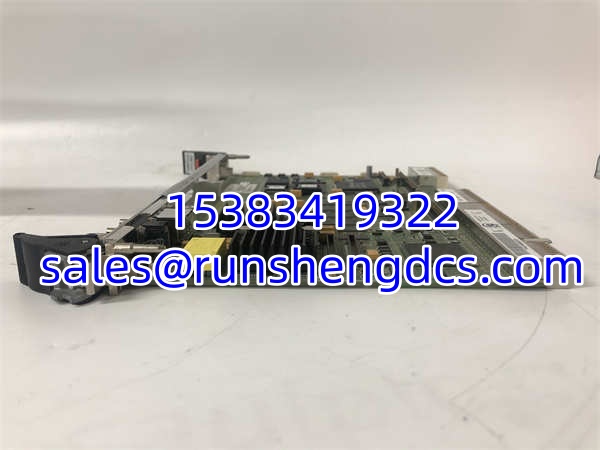
Force CPCI-680
Application Scenarios
Telecom Switching Infrastructure: Legacy telecom switches using CompactPCI backplanes rely on the for line card control and packet processing. The Sentinel bridge allows these boards to be deployed in either system or peripheral slots, simplifying inventory and maintenance. When a board fails, finding an exact replacement is critical — there’s no drop-in modern equivalent.
Military Radar and Signal Processing: Radar systems often use multi-processor CompactPCI arrays where each handles a specific signal processing channel. The deterministic behavior of the PowerPC 7400 and the low-latency PCI bus make it suitable for real-time DSP tasks. Replacing a failed board requires matching the exact firmware and configuration to maintain array synchronization.
Industrial Process Control: Chemical plants and refineries use CompactPCI for distributed control systems. The serves as the local controller for I/O racks, running RTOS for deterministic scan times. When these boards fail, the process can be at risk. Having tested, verified spares is not optional — it’s insurance against unplanned shutdowns.
Real-World Failure: A defense contractor had a radar system where one in a 12-board array started throwing intermittent parity errors. They replaced the board twice with “new surplus” units from different suppliers — same issue. Root cause: the backplane slot had a corroded PCI bus pin that was causing signal reflection. The boards weren’t failing; the backplane was. They cleaned the backplane connector and the third replacement worked perfectly. Always suspect the backplane before condemning the CPU.
FAQ
Only if your chassis and backplane explicitly support CompactPCI hot-swap and the board is configured for it. The has hot-swap support, but the entire system must be designed for it. If you’re unsure, assume it’s not hot-swappable. I’ve seen backplane damage from forced hot-swaps in non-compliant systems.
Is this compatible with modern CompactPCI Serial backplanes?
No. The is a parallel PCI CompactPCI board. CompactPCI Serial uses a different pinout and protocol. They are not electrically or mechanically compatible. Don’t even try.
What OS does this board support?
VxWorks, Linux, and pSOS were the primary supported OSes. Windows CE was also an option. Modern Linux kernels may require significant porting effort due to the age of the PowerPC 7400 and the Sentinel bridge. Verify BSP availability before committing.
Can I use this in a standard PCI desktop PC?
No. This is a 6U CompactPCI board with a different form factor, connector, and bus protocol. It will not fit or function in a standard PCI slot.
Is the 400MHz 7400 sufficient for modern applications?
For legacy maintenance, yes. For new development, absolutely not. This board is for sustaining existing systems, not building new ones. If you’re starting fresh, look at modern ARM or x86 CompactPCI solutions.
The “A” suffix typically indicates a minor revision, often with updated components or firmware. They are usually pin-compatible, but verify the exact specifications. I’ve seen subtle differences in memory timing or flash layout that caused issues when swapping without checking.
How do I verify the Sentinel bridge is working correctly?
Check the system logs or use diagnostic tools to verify the PCI bus enumeration. The Sentinel bridge should report as a PCI-to-PCI bridge with specific vendor/device IDs. If it’s not enumerated or shows errors, the bridge may be faulty or the backplane slot may be damaged.