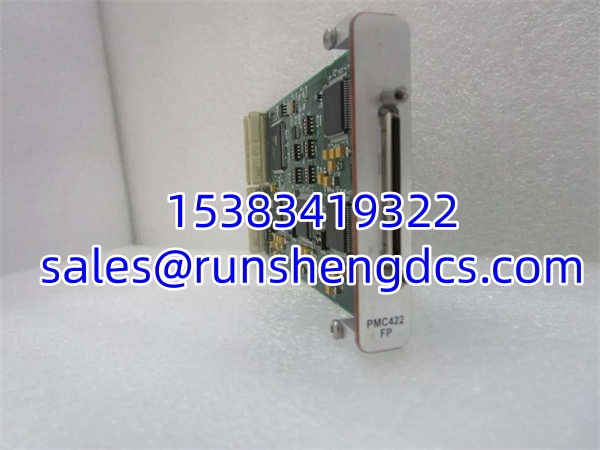

Description
Key Technical Specifications
- Product Model: PMC422FP
- Manufacturer: FANUC / Motorola / GE Fanuc
- Product Type: 8-Port Serial Controller (PMC Format)
- Bus Interface: Fully PCI Compatible (32 MHz / 32-bit)
- Serial Channels: 8 Independent Ports
- UART Architecture: Octal UART (16C550 Compatible Register Set)
- Max Baud Rate: 921.6 KBits/sec
- Buffer Memory: 64-Byte FIFO per Channel
- Signal Configuration: RS232, RS422, or RS485 (via DIP Switch)
- Flow Control: Auto RTS/CTS, DTR/DSR, Xon/Xoff
- Diagnostics: Dedicated 8-bit Switch Input
Product Introduction
Host CPU lockups during high-speed serial polling are a nightmare for legacy system integrators. Traditional single-port UARTs demand an interrupt for every single character, quickly burying the processor in overhead. The FANUC PMC422FP solves this bottleneck at the hardware level. Formatted as a PCI Mezzanine Card (PMC), this module acts as an octal serial controller that handles data buffering and flow control independently, freeing up the host processor to focus on real-time control logic.
Engineers specify the PMC422FP because it guarantees deterministic data handling without software patches. Each of the eight channels features a 64-byte FIFO buffer and supports baud rates up to 921.6 Kbps, ensuring zero data loss even under heavy network loads. It implements a 16C550-compatible register set, meaning it drops into existing VME or PCI backplanes and communicates with legacy device drivers natively. Bottom line — it’s a hardware-level fix for serial communication bottlenecks.
QA/QC Transparency SOP
Surplus serial cards are notorious for dead ports. We don’t just visually inspect the PMC422FP; we stress-test it.
- Intake & Origin Verification: Microscopic inspection of the PCI edge connector and SMT solder joints to rule out counterfeit boards or lifted traces.
- Live Functional Testing: Seated in a test rack to verify PCI enumeration, 32-bit bus handshake, and port enumeration.
- Electrical Parameter Tests: Fluke 115 multimeter checks on the 3.3V/5V PCI rails and UART transceiver outputs to ensure clean power delivery.
- Firmware/Config Verification: Readout of the onboard DIP switch states and validation of the 16C550 register map via test software.
- Final QC & Anti-Static Packaging: Sealed in ESD-safe shielding with a printed test report confirming all 8 channels passed loopback testing.
Field Engineer Gotchas
- DIP Switch Misconfiguration: The PMC422FP relies entirely on physical DIP switches to define RS232, RS422, or RS485 modes. If you wire it for RS485 but leave the switch in RS232, you will fry the transceivers. Always photograph the old card’s switch settings before pulling it.
- FIFO Buffer Overflow: If you’re still seeing data loss, check your software. The PMC422FP has 64-byte FIFOs, but if your host application isn’t clearing the buffer fast enough, it will overflow. Verify your driver is utilizing the hardware flow control (RTS/CTS) rather than relying on software polling.
- PCI Bus Speed Mismatch: This is a 32 MHz / 32-bit card. I’ve seen techs force it into a 66 MHz PCI slot, resulting in intermittent data corruption. Verify your backplane specs before seating the .
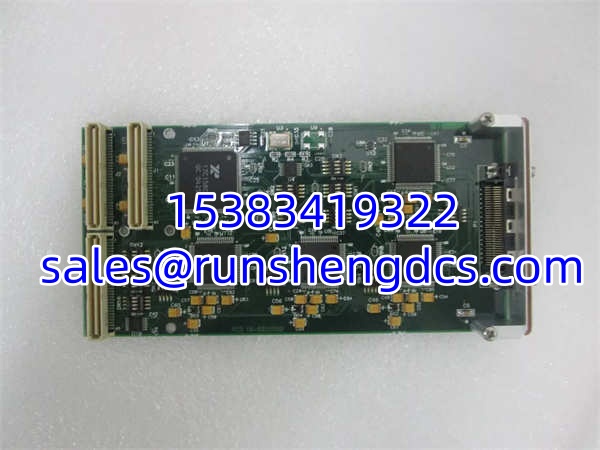
FANUC PMC422FP
Application Scenarios
- CNC Machine DNC Networks: Streaming G-code to multiple FANUC controllers simultaneously requires reliable, high-speed RS232 links. The provides the 8-port density needed to manage entire machining cells from a single host PC without dropping data.
- Legacy SCADA Polling: Refineries running 20-year-old DCS systems often need to poll hundreds of serial instruments. The handles the massive interrupt load via its FIFO buffers, preventing host CPU lockups during peak polling cycles.
- VME System Expansion: Aerospace test stands utilizing Motorola MVME platforms require additional serial ports for instrument control. The slides directly into the PMC mezzanine slot, providing instant I/O expansion without replacing the entire VME chassis.
FAQ
Absolutely not. This is a legacy PCI Mezzanine Card, not a modern hot-swappable I/O module. Pulling it live will crash the PCI bus and potentially corrupt the host system. Always do a controlled shutdown.
Tread carefully here. They share the same PMC form factor and octal UART architecture, but the “FP” suffix denotes a specific hardware revision or transceiver layout. Always verify the exact suffix and DIP switch layout against your existing card before swapping.
My host system is polling 8 devices at 115.2Kbps, but I’m getting FIFO overflows. Is the card bad?
Probably not. At 115.2Kbps, 8 ports generate massive interrupt traffic. The has 64-byte FIFOs, but your host software must be reading the data fast enough. Check your application code for blocking delays, and ensure you are using hardware flow control (RTS/CTS) rather than relying on software Xon/Xoff.
Are these cards brand new or refurbished?
The has been discontinued by FANUC/Motorola for years. True factory-sealed new units are essentially unicorns. Most available units are “New Surplus” (old stock, never used) or professionally refurbished. Always ask the supplier for the exact condition and warranty terms before buying.
Does this card support RS485 half-duplex with auto-direction control?
Yes. The includes dedicated RS485 half-duplex control with optional delay settings. This eliminates the need for external direction-control circuitry when wiring multi-drop sensor networks. Verify the specific DIP switch settings in the Motorola/FANUC datasheet before wiring.
Will this work with my Motorola MVME 162 board?
Yes. The is fully PCI compatible (32MHz/32bit) and was specifically designed for Motorola MVME platforms like the 162, 167, and 1772. It will enumerate as a standard 16C550-compatible octal UART, making driver integration straightforward.