
Description
Key Technical Specifications
| Parameter | Value |
|---|---|
| Product Model | EPCDFBA#219 B2 |
| Manufacturer | EMBEDDED |
| Product Type | Embedded control circuit board |
| Processor | High-performance industrial processor |
| Communication Interfaces | Ethernet, serial port, GPIO |
| Supported Protocols | Modbus, EtherNet/IP |
| Application Focus | Industrial automation, robotics, SCADA, data acquisition |
| Design Characteristics | Compact form factor, low-power consumption |
| Operating Environment | Industrial-grade, suitable for harsh environments |
| Lifecycle Status | Verify with manufacturer or distributor |
Product Introduction
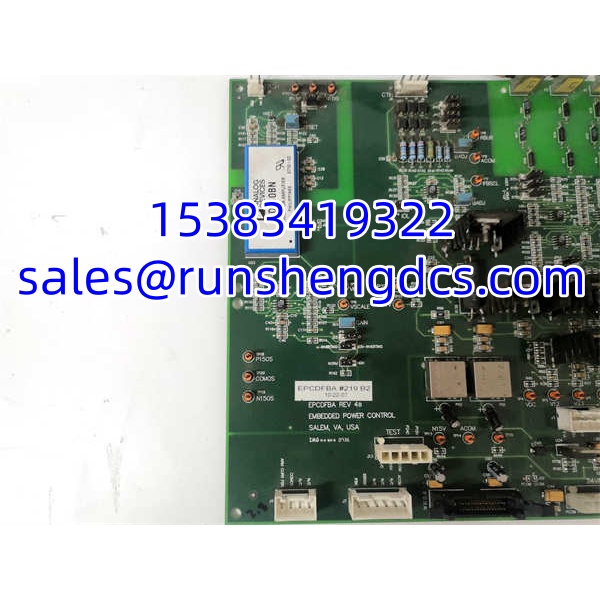
The EMBEDDED EPCDFBA#219 B2 is an industrial embedded control board designed to serve as a core processing unit in automation systems. It integrates a high-performance processor with standard industrial interfaces — including Ethernet, serial ports, and GPIO — to execute control algorithms, handle real-time data acquisition, and communicate with upstream SCADA systems or peer devices.
Unlike general-purpose embedded boards, this module targets industrial environments where reliability and protocol compatibility matter. Support for Modbus and EtherNet/IP allows it to integrate into existing automation networks without requiring proprietary gateways. Its compact, low-power design makes it suitable for space-constrained installations such as robotic controllers, data acquisition platforms, and distributed control nodes.
Because detailed electrical and mechanical specifications are not publicly documented, this board should be treated as a configuration-sensitive component. Always confirm interface pinouts, firmware requirements, and environmental ratings before deployment.
QA/QC Transparency SOP
- Intake & Origin Verification: Photograph the board label (EPCDFBA#219 B2), serial number, and connector condition. Reject units with damaged connectors, corrosion, or unclear markings.
- Power-Up Verification: Apply the specified supply voltage and verify normal boot behavior, LED indicators, and absence of abnormal heating.
- Interface Testing: Verify Ethernet link negotiation, serial port communication, and GPIO signal response. Confirm that all physical interfaces are functional.
- Protocol Validation: Test Modbus and/or EtherNet/IP communication with a compatible master or client device. Verify data exchange stability over an extended run-in period.
- Final QC & Anti-Static Packaging: Seal in ESD-safe packaging with desiccant. Include photos, test notes, and any available firmware or configuration data for traceability.
Field Engineer Gotchas
- Limited public documentation: Unlike ABB or Siemens modules, detailed datasheets for the EPCDFBA#219 B2 are not widely published. Always request the manufacturer’s technical documentation before design-in.
- Power supply unknowns: The exact supply voltage and current requirements are not confirmed. Applying incorrect voltage can permanently damage the board. Verify before powering up.
- Firmware dependency: Embedded boards often carry application-specific firmware. A board without the correct firmware may boot but fail to communicate or execute control logic.
- Interface pinout verification: GPIO and serial pin assignments are not publicly documented. Do not assume standard pinouts — confirm against the manufacturer’s wiring diagram.
- Protocol configuration: Modbus and EtherNet/IP support does not mean plug-and-play. Register maps, IP addressing, and data formats must be configured correctly on both the board and the master device.
- Not a direct replacement: This is not a drop-in replacement for branded PLC or DCS modules. It is a standalone embedded controller that requires custom integration.
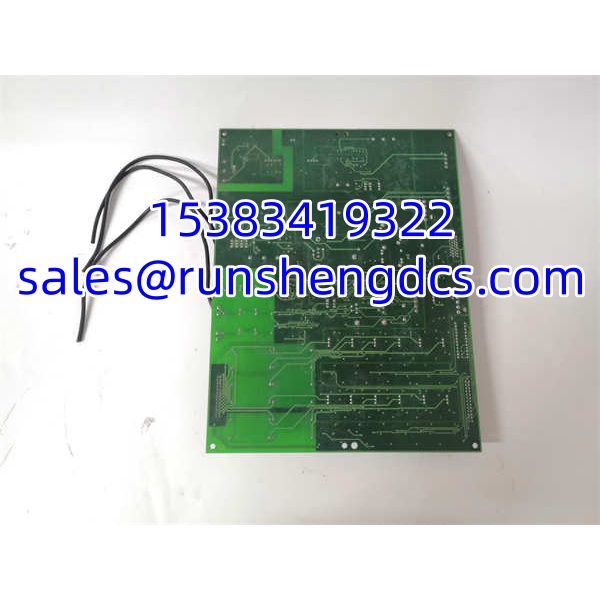
EMBEDDED EPCDFBA#219 B2
Application Scenarios
- Robotic control node: An industrial robot integrator uses the EPCDFBA#219 B2 as a local controller for axis coordination and I/O handling, communicating with the main PLC via EtherNet/IP.
- Remote data acquisition station: A water treatment facility deploys the board at a remote pumping station to collect sensor data via serial and GPIO interfaces, then transmit it to the central SCADA system over Modbus TCP.
- Custom automation equipment: A packaging machine builder integrates the EPCDFBA#219 B2 as the core controller for a specialized labeling station, leveraging its compact size and multi-protocol support.
FAQ
What protocols does the EPCDFBA#219 B2 support?
Modbus and EtherNet/IP are confirmed. Additional protocol support should be verified against the manufacturer’s documentation.
Can it replace an ABB or Siemens PLC module?
No. It is a standalone embedded controller, not a direct replacement for branded PLC or DCS modules. Integration requires custom configuration.
Does it come with pre-loaded firmware?
This depends on the supplier. Some units may carry application-specific firmware, while others may be blank. Confirm before purchase.
What is the supply voltage?
The exact voltage range is not publicly confirmed. Verify against the manufacturer’s datasheet or nameplate before applying power.
Is this module still available?
Availability varies by distributor. Confirm current stock and lifecycle status with your supplier.
How do I confirm authenticity?
Check the board label for the exact model designation EPCDFBA#219 B2, inspect connector condition, and verify functional operation through power-up and communication testing.