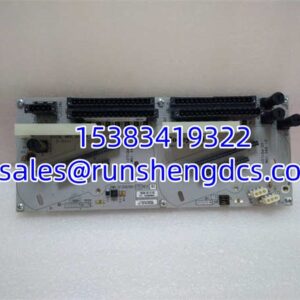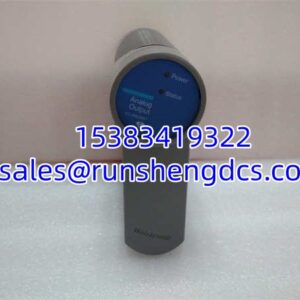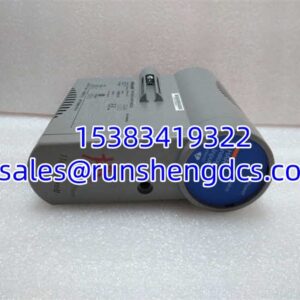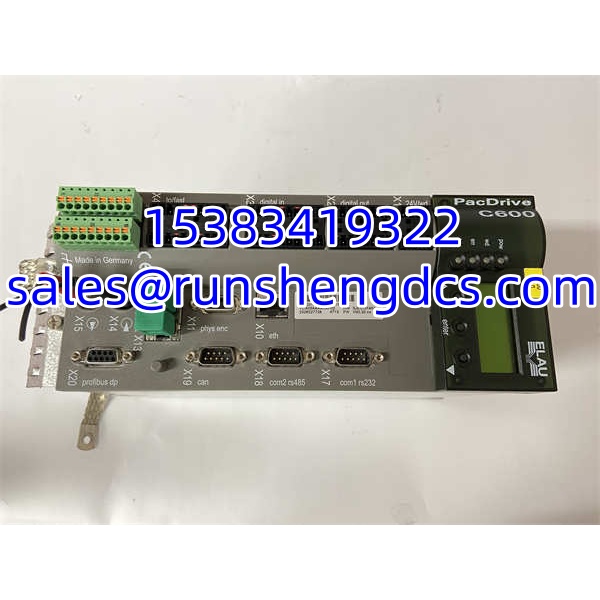
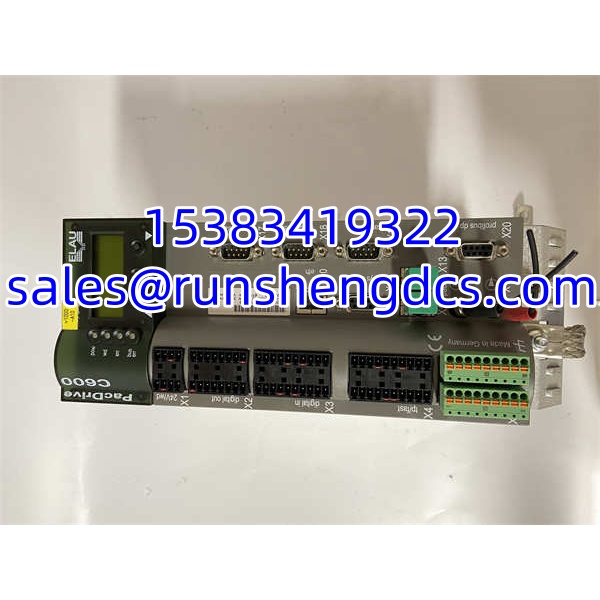

Description
Key Technical Specifications
| Parameter | Specification |
|---|---|
| Supply voltage | 24 V DC (20–33 V DC range) |
| Typical current draw | ~250 mA |
| Typical power consumption | ~85 W |
| Memory | 256 MB (program and data storage) |
| Axis capacity | Up to 16 axes; multi-axis sync response ~2 ms, full sync ~4 ms |
| Communication protocols | EtherCAT, CANopen, Modbus TCP/IP |
| Programming standard | IEC 61131-3 (ST, LD, FBD) |
| Control functions | Electronic cam, electronic gear, PID, position/speed/torque control |
| Protection rating | IP65 / IP67 (configuration-dependent) |
| Dimensions | ~103.2 × 235 × 310 mm |
| Approximate weight | ~2.9 kg |
| Origin | Germany / USA (batch-dependent) |
Product Introduction
When a packaging line loses registration after a controller swap, the problem is rarely the servos. It is usually the motion controller — the piece of hardware that ties encoder feedback, cam tables, and axis synchronization into one coherent program. The ELAU C600/10/1/1/1/00 is that controller. Part of Schneider Electric’s PacDrive family, it runs IEC 61131-3 logic and motion control in a single unit, eliminating the need for a separate PLC-to-drive handshake in many applications.
What makes the C600 practical on the shop floor is its integration. It handles up to 16 axes with synchronization response times around 2 ms, supports EtherCAT and CANopen natively, and stores programs in 256 MB of onboard memory. That means electronic cam profiles, gear ratios, and PID loops all live in one device instead of being split across a PLC, a motion card, and individual drives. Typical deployments include high-speed labeling machines, form-fill-seal packaging lines, and textile machinery where registration accuracy matters more than raw cycle time. Bottom line — it is a legacy PacDrive workhorse, not a new product, but it still holds up when the firmware and configuration are handled correctly.
QA/QC Transparency SOP
- Intake & Origin Verification — Confirm full model number C600/10/1/1/1/00 and verify it is the PacDrive motion controller, not a drive or power supply. Check for physical damage, missing connectors, or tampered seals.
- Live Functional Testing — Power up on a 24 V DC bench supply within the 20–33 V DC range. Verify boot sequence, LED status indicators, and communication port activity (EtherCAT/CANopen).
- Electrical Parameter Tests — Measure supply current draw against the ~250 mA / ~85 W typical spec using a calibrated DC power supply or Fluke multimeter. Flag any unit drawing significantly above spec as a potential internal fault.
- Firmware/Config Verification — Connect via PacDrive engineering software. Read firmware revision, export the existing configuration, and verify axis count, communication settings, and IEC 61131-3 program integrity.
- Final QC & Anti-Static Packaging — Seal in ESD bag with desiccant. Include a test report documenting supply voltage, current draw, firmware revision, communication port test results, and configuration file hash.
Field Engineer Gotchas
- Firmware version mismatch. The C600 is a legacy PacDrive controller. A newer or older firmware revision can cause EtherCAT node discovery failures or cam table incompatibilities. Always read the firmware before loading a site backup.
- Confusing controller with drive. The C600/10/1/1/1/00 is a motion controller, not a servo drive. It does not directly power motors. It communicates with PacDrive drives (e.g., MC-4 series) over EtherCAT or fiber. Swapping it for a drive will not work.
- Lost configuration on replacement. The C600 stores its motion program and axis configuration onboard. A blank replacement unit will not run the machine until the correct project is downloaded. Always export the configuration from the old unit first.
- EtherCAT topology sensitivity. EtherCAT networks are daisy-chained. A single bad cable or misconfigured node order can prevent the entire axis group from coming online. Verify cable integrity and node ordering before blaming the controller.
- 24 V DC supply quality matters. The controller runs on 20–33 V DC. A marginal 24 V supply with excessive ripple or voltage sag during motor acceleration can cause unexpected controller resets. Check the supply under load, not just at idle.
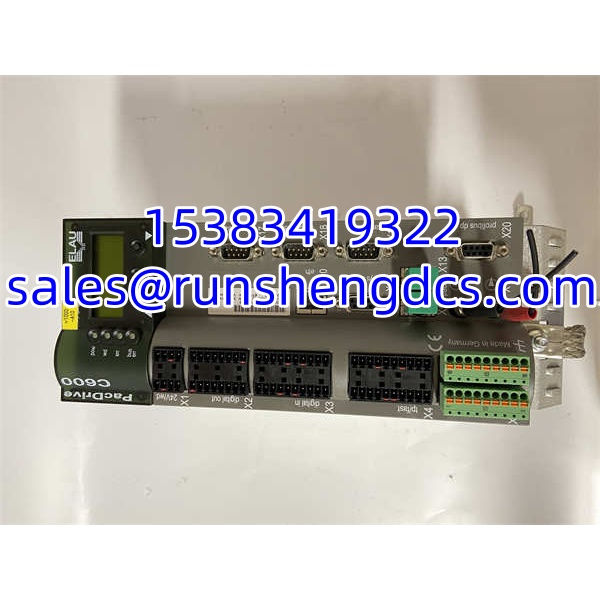
ELAU C600-10-1-1-1-00
Application Scenarios
- High-speed labeling machine. The synchronizes a conveyor axis with a label applicator using electronic cam profiles. Registration accuracy depends on consistent EtherCAT cycle times and stable 24 V DC supply.
- Form-fill-seal packaging line. Multiple axes — film feed, sealing jaws, and cutters — must stay in phase. The handles the cam tables internally, reducing dependency on an external PLC for motion coordination.
- Textile machinery. Electronic gearing between feed rollers and take-up spindles requires tight synchronization. The ~2 ms sync response keeps tension consistent across speed changes.
- Automated assembly cell. The coordinates servo-driven pick-and-place axes with CANopen I/O modules, running the full sequence in IEC 61131-3 structured text.
FAQ
A: Neither, exactly. It is a programmable motion controller. It runs IEC 61131-3 logic like a PLC and manages multi-axis motion like a motion controller, but it does not directly drive motors. It communicates with separate PacDrive servo drives over EtherCAT or fiber.
A: In many cases, yes — the is the successor to the C400 in the PacDrive lineup. But the project must be migrated in the PacDrive engineering software, and the EtherCAT topology may need reconfiguration. It is not a blind drop-in.
Q: Does this unit come with the program loaded?
A: Not unless the seller explicitly states so. A surplus or refurbished typically ships blank. You must download the site-specific configuration and IEC 61131-3 program from your backup.
Q: What programming software does it use?
A: Schneider Electric PacDrive engineering software (formerly ELAU PacDrive Studio), which supports IEC 61131-3 languages including structured text, ladder diagram, and function block diagram.
Q: Can it run standalone without a PLC?
A: Yes. The can execute the full machine program, including logic, motion, and communication, without an external PLC. Some architectures still use a higher-level PLC for supervisory control, but it is not required.
Q: What is the typical lead time for a replacement?
A: Surplus stock is often available for immediate shipment. New units from Schneider may have longer lead times since the is a legacy product. Verify availability with your supplier before planning a shutdown.
Q: Is IP65/IP67 guaranteed on every unit?
A: The rating is configuration-dependent. Some variants are rated IP65 or IP67, but you should verify the exact nameplate marking on your unit before relying on it for washdown or dusty environments.