
Description
Key Technical Specifications
| Parameter | Detail |
|---|---|
| Product Family | Eaton industrial communication module / gateway |
| Model | MPB1-TP |
| Manufacturer | Eaton |
| Module Type | Multi-protocol communication interface |
| Supported Protocols | Modbus, Profibus, CANopen, and others depending on firmware/license |
| Interfaces | Ethernet and/or serial ports depending on variant |
| Supply Voltage | Typically 24 VDC for industrial variants; verify from nameplate |
| Typical Host | PLC, DCS, or industrial controller requiring protocol conversion |
| Mounting | DIN-rail or panel-mount depending on variant |
| Operating Temperature | Industrial-grade variants typically -20 to +60 °C; confirm from datasheet |
| Exact Variant | Confirm firmware, protocol license, interface layout, and host compatibility from nameplate |
Product Introduction
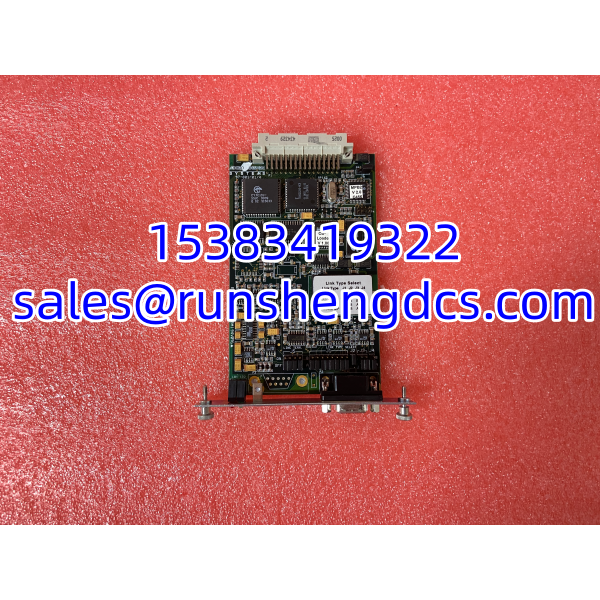
The Eaton MPB1-TP is an industrial multi-protocol communication module used to bridge controllers and field networks. It is commonly referenced in PLC/DCS integration projects where Modbus, Profibus, CANopen, or serial devices must exchange data with a host controller.
MPB1-TP and MPB2-TP are closely related. MPB2-TP is often described with additional support for Siemens S7 MPI interfaces, while MPB1-TP typically covers a broader set of generic drivers and physical interfaces. However, exact capabilities depend on firmware, hardware revision, and licensed protocol options. Because this module is not a standard catalog item with a single universal datasheet, it should never be treated as a drop-in replacement without confirming the host platform, protocol configuration, and interface assignment.
QA/QC Transparency SOP
- Nameplate Verification — Record MPB1-TP model, serial number, hardware revision, firmware version, and any protocol/license markings. Confirm whether it is MPB1-TP or MPB2-TP.
- Mechanical Inspection — Check housing, DIN-rail clips, connector pins, Ethernet/serial ports, terminal blocks, and signs of overheating or corrosion.
- Power-Up Test — Apply the correct supply voltage, typically 24 VDC unless the nameplate states otherwise. Verify power LED, status LED, and boot behavior.
- Interface Verification — Confirm Ethernet link, serial port response, and module identification through the engineering tool or web interface.
- Protocol & Communication Test — Validate configured protocol, baud rate, node address, and data mapping. Test read/write access to a known register or tag.
- Final QC — Record firmware version, IP/serial settings, test results, and any required configuration backup. Pack in anti-static material with nameplate photos.
Field Engineer Gotchas
- — MPB2-TP is frequently associated with Siemens S7 MPI support. may not include the same MPI capability. Do not assume full interchangeability.
- Protocol license mismatch — The physical module may support multiple protocols, but the active protocol depends on firmware and license. A replacement unit may power up but fail to communicate if the protocol is not enabled.
- Host platform dependency — Some MPB variants are configured for specific PLC families. Installing the module without confirming the host driver can cause communication timeouts.
- Firmware version sensitivity — Protocol behavior, tag mapping, and compatibility may change between firmware revisions. Always record the original firmware before replacement.
- Serial parameter errors — Modbus RTU and other serial protocols require matching baud rate, parity, stop bits, and node address. A wrong setting will look like a hardware fault.
- Third-party listing risk — Online listings may describe as a digital input module, servo drive, or touch-screen controller. These descriptions are inconsistent with the commonly referenced communication module variant and should be verified against the nameplate.
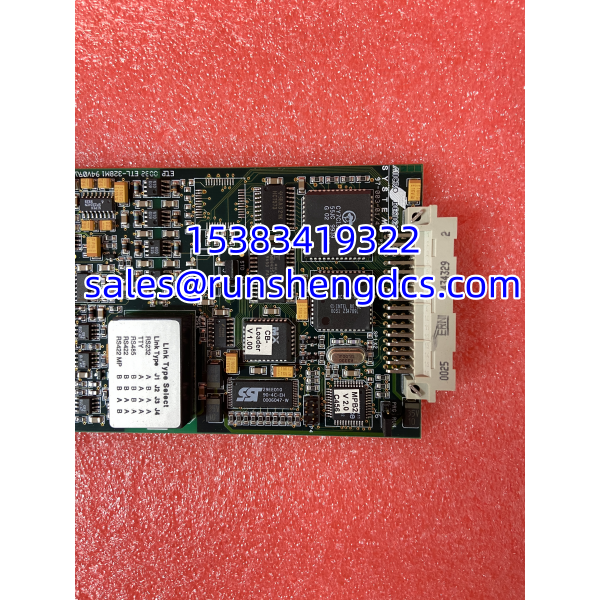
Eaton MPB1-TP
Application Scenarios
- PLC protocol conversion — Connects legacy serial devices or Modbus instruments to a newer PLC or Ethernet network.
- DCS/SCADA integration — Provides a communication bridge between field devices and a DCS or SCADA system using Modbus, Profibus, or CANopen.
- Retrofit projects — Enables communication between mixed-vendor equipment without replacing the entire control system.
- Spare module replacement — Used to restore communication on existing Eaton or third-party systems where an module has failed.
FAQ
It is an industrial multi-protocol communication module used for protocol conversion between PLCs, DCS systems, and field devices.
Not necessarily. MPB2-TP is commonly referenced with additional Siemens S7 MPI support, while covers a different driver set. Confirm firmware and protocol capability before substitution.
What protocols does it support?
Typical references include Modbus, Profibus, CANopen, and other industrial protocols. The active protocol depends on firmware and license.
What supply voltage does it use?
Industrial variants are commonly 24 VDC, but the exact voltage must be confirmed from the nameplate.
Can it replace a failed communication card in an existing system?
Only after verifying the host platform, protocol license, firmware version, interface type, and communication parameters.
Is this module still available new from Eaton?
Availability should be confirmed with Eaton or an authorized distributor. Surplus and tested units are common; always request nameplate photos, firmware details, and test records.