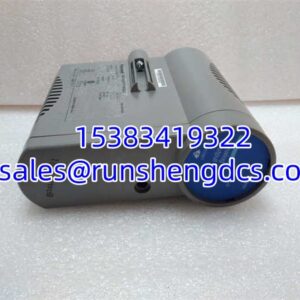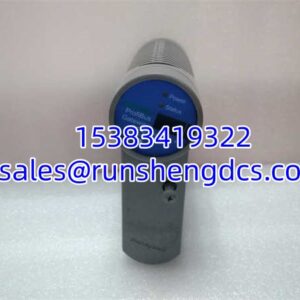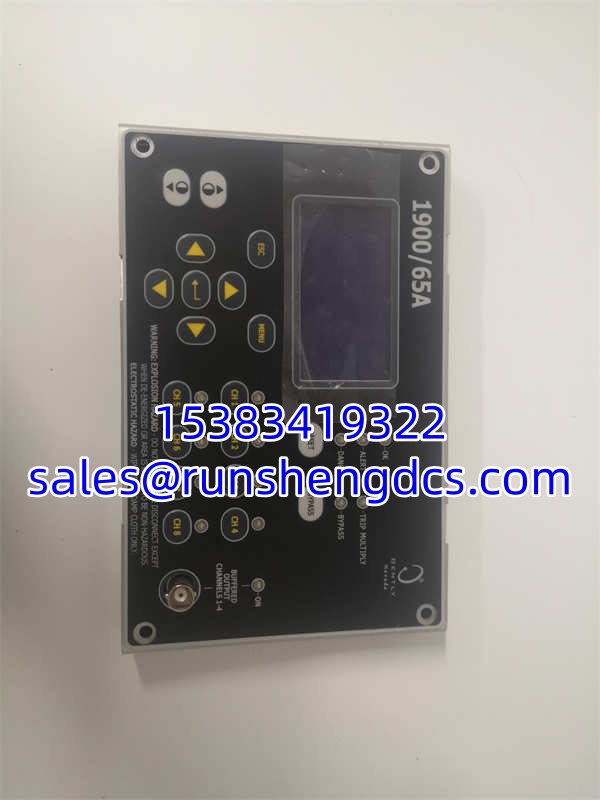

Description
Key Technical Specifications
| Parameter | Value |
|---|---|
| Product Family | Bently Nevada 1900/65A |
| Part Number | 167699-02 |
| Vibration Inputs | 4 channels (configurable) |
| Supported Vibration Sensors | 2-wire/3-wire accelerometers, velocity sensors, Bently Nevada proximity probes |
| Temperature Inputs | 4 channels (E, J, K, T thermocouples; 2-wire/3-wire RTD) |
| A/D Resolution | 24-bit |
| Bandwidth | Up to 25 kHz |
| Filter Capability | Up to 8-pole filtering on selected variables |
| Alarm Levels | 2 levels: ALERT and DANGER |
| Relay Outputs | 6 configurable relays with voting logic |
| Analog Outputs | 4 configurable 4–20 mA recorder outputs |
| Buffered Outputs | 4 monitor buffered outputs + 1 display output |
| Communication | Ethernet Modbus; RS-232/485 serial; Modbus gateway option |
| Display Option | Optional local display/keyboard, mountable up to 75 m (250 ft) away |
| Power Supply | 18–36 VDC; optional 110/220 VAC external supply |
| Mounting | DIN-rail or panel mount |
| Enclosure Options | Optional fiberglass cover or steel door for IP65 panel-mount applications |
| Typical Applications | Fans, pumps, compressors, motors, generators, auxiliary rotating equipment |
Product Introduction
The Bently Nevada 1900/65A (167699-02) is a general-purpose equipment monitor designed for continuous vibration and temperature monitoring of rotating machinery. Unlike the larger 3500 rack-based system used for critical turbine protection, the 1900/65A is a compact, standalone unit intended for auxiliary and general-purpose equipment where full 3500-level monitoring would be cost-prohibitive.
The monitor accepts up to four vibration sensor inputs, which can be individually configured for proximity probes, velocity sensors, or accelerometers. It also provides four temperature inputs supporting common thermocouple types (E, J, K, T) and 2-wire/3-wire RTDs. This combination allows a single unit to monitor both mechanical vibration and bearing or process temperature on the same piece of equipment.
Signal processing is handled by a 24-bit A/D converter with up to 25 kHz bandwidth, and selected variables support up to 8-pole filtering for noise rejection. Each channel can generate multiple derived variables — such as peak, RMS, or integrated displacement — with independent ALERT and DANGER alarm setpoints. Six configurable relays provide trip and alarm outputs, while four 4–20 mA outputs allow integration with DCS, SCADA, or PLC systems. Modbus communication over Ethernet or serial provides an additional path for data integration and trending.
The 1900/65A is configured via dedicated PC software. Configuration data is stored in non-volatile memory. A replacement unit must be loaded with the correct configuration file; it will not automatically inherit the settings from the failed unit.
QA/QC Transparency SOP
- Nameplate & Part Number Verification: Confirm Bently Nevada branding, model 1900/65A, and part number 167699-02. Record serial number and hardware/firmware revision if visible. Reject units with missing labels, cracked housings, or damaged connectors.
- Connector & Terminal Inspection: Check all sensor input terminals, relay terminals, 4–20 mA outputs, communication ports, and power connector for corrosion, oxidation, or mechanical damage.
- Power-Up Self-Test: Apply 18–36 VDC power. Verify normal LED indication and absence of persistent fault conditions.
- Channel Function Test: Apply known sensor signals or use a signal simulator to verify vibration and temperature channel response. Confirm that displayed values and buffered outputs track the input.
- Alarm & Relay Verification: Simulate ALERT and DANGER conditions on at least one vibration and one temperature channel. Verify relay actuation and 4–20 mA output response.
- Communication Test: Verify Modbus communication over Ethernet or serial if test infrastructure is available. Confirm register access and data integrity.
- Configuration Check: Confirm that configuration data is present in non-volatile memory. If the unit is blank, note that it must be configured before field installation.
- Final QC & Packaging: Document test results, configuration status, and condition grade. Pack with terminal protection and ESD-safe materials.
Field Engineer Gotchas
- It is not a 3500 rack module. The 1900/65A is a standalone monitor. It cannot be installed in a 3500 rack and is not directly interchangeable with 3500 modules.
- Configuration does not transfer automatically. A replacement 167699-02 will not carry the original alarm setpoints, relay logic, or channel assignments. The configuration must be restored from backup or rebuilt.
- Vibration channels are configurable, not fixed. Channel 1–4 may be configured for proximity, velocity, or accelerometer inputs. Do not assume the sensor type from the hardware alone.
- Temperature inputs support multiple sensor types. Verify whether each temperature channel is configured for thermocouple or RTD before connecting field wiring.
- Relay voting logic must be confirmed. The six relays can be configured with voting logic. Incorrect assumptions about relay behavior can cause nuisance trips or missed alarms.
- Modbus mapping is user-defined. Register addresses and data mapping depend on the configuration. Always obtain the Modbus map from the original configuration file.
- Power supply range is 18–36 VDC. Do not apply AC power directly to the monitor unless using the specified external AC-to-DC supply.
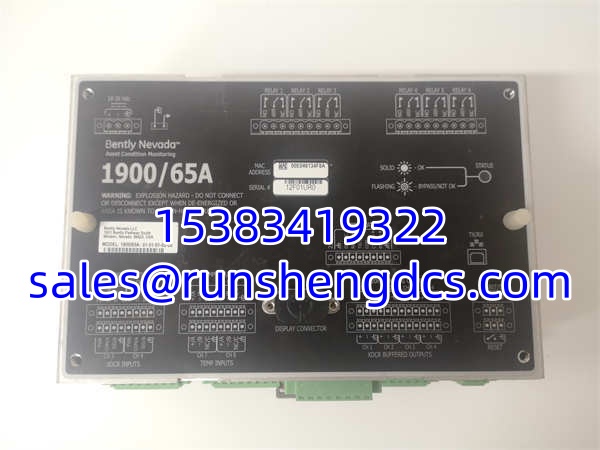
Bently Nevada 1900/65A 167699-02
Application Scenarios
- Auxiliary rotating equipment protection: Continuous monitoring of fans, pumps, compressors, and motors where 3500-level monitoring is not justified.
- Vibration and temperature combined monitoring: Monitoring bearing temperature and shaft vibration on the same machine using a single 1900/65A unit.
- DCS/SCADA integration: Providing 4–20 mA analog outputs and Modbus communication for integration into existing control systems.
- OEM machinery packages: Embedded monitoring for packaged equipment supplied to end users.
- Legacy 1900/65A replacement: Restoring monitoring capability on existing installations where the original unit has failed.
FAQ
What is the Bently Nevada 167699-02?
It is a part number for the Bently Nevada 1900/65A general-purpose equipment monitor.
How many channels does it have?
Up to 4 vibration inputs and 4 temperature inputs, for a total of 8 measurement channels.
Can it replace a 3500 module?
No. The 1900/65A is a standalone monitor and is not compatible with the 3500 rack system.
Does it support Modbus?
Yes. It supports Modbus communication over Ethernet and RS-232/485 serial interfaces.
What sensor types are supported?
Vibration: proximity probes, velocity sensors, 2-wire/3-wire accelerometers. Temperature: E, J, K, T thermocouples and 2-wire/3-wire RTDs.
What should I check before installing a replacement?
Verify the part number, configuration file, channel assignments, sensor types, alarm setpoints, relay logic, 4–20 mA mapping, and Modbus register map.
Is this unit still in production?
The 1900/65A is generally considered a legacy platform. Availability should be confirmed with Baker Hughes or an authorized distributor; otherwise, expect surplus or refurbished supply.