
Description
Key Technical Specifications
- Product Type: High-Frequency Power Controller
- Series: EPIC III
- Control Topology: High-Frequency Switching / Resonant
- Application: Electrostatic Precipitator (ESP) / Industrial Heating
- Input Voltage: Typically 480VAC 3-Phase (Verify with nameplate)
- Output Type: High Voltage DC / Pulsed DC
- Feedback: Arc Detection, Back-Corona, Spark Rate
- Cooling: Forced Air / Heat Sink Dependent
- Mounting: Rack or Panel Mount (EPIC III Chassis)
- Certifications: CE, UL (Verify specific listing for HV equipment)
Product Introduction
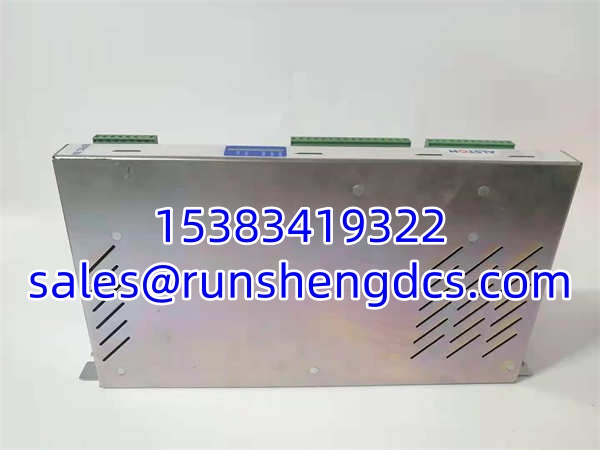
High-frequency power supplies don’t just fail; they take out IGBTs and rectifiers when they go. The ALSTOM EP3-E-4-A is the brain inside the EPIC III chassis, managing the switching logic that converts raw 480VAC into the precise high-voltage pulses needed for electrostatic precipitation. It monitors spark rates, back-corona, and arc conditions in microseconds, adjusting the pulse width to keep the precipitator collecting dust without turning into a lightning rod.
Bottom line — this is a specialized power controller, not a generic PLC card. The ALSTOM EP3-E-4-A handles the dirty, high-stress job of regulating megawatt-class power electronics. You aren’t buying this for data logging; you’re buying it because your ESP rapping system is offline and the plant is about to get fined for emissions. Just verify your chassis is actually EPIC III and not the older EPIC II, because the backplane connectors are different.
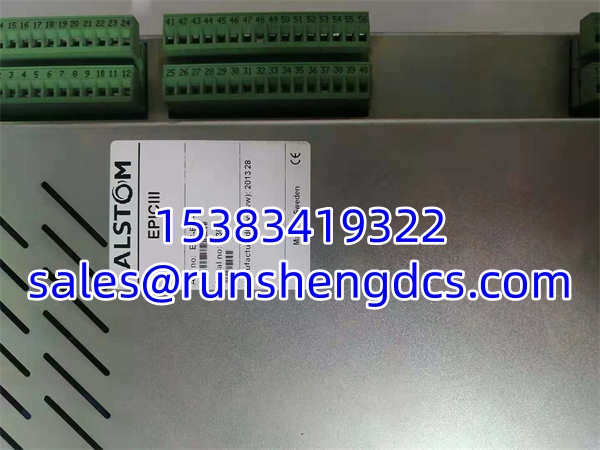
ALSTOM EP3-E-4-A
QA/QC Transparency SOP
- Intake & Origin Verification: We trace the ALSTOM EP3-E-4-A to original Alstom/Areva production batches to confirm it’s not a field-pulled unit with burnt gate drivers.
- Live Functional Testing: Powered up on a low-voltage test bench, verifying PWM output, fault logic response, and communication with the EPIC III supervisor.
- Electrical Parameter Tests: Megger test on HV isolation barriers and continuity checks on all backplane pins.
- Firmware/Config Verification: Readout of control parameters to ensure no corrupted calibration constants or locked-out fault flags.
- Final QC & Anti-Static Packaging: Shipped in ESD-safe bag with printed test certificate and EPIC III configuration backup.
Field Engineer Gotchas
- Chassis Compatibility: EPIC III is not EPIC II. The ALSTOM EP3-E-4-A will not physically fit or electrically communicate with older EPIC II backplanes. Check the chassis label. I’ve seen a tech try to force an EP3 card into an EP2 slot and bend 12 backplane pins.
- Gate Drive Transformer Health: This controller drives IGBTs. If the gate drive transformer is weak, the ALSTOM EP3-E-4-A will trip on “Overcurrent” instantly. Don’t blame the controller until you’ve tested the gate drive circuit. Replacing the card without fixing the gate drive will just fry the new card.
- Cooling Airflow: These boards run hot. If the EPIC III cabinet fans are failing or filters are clogged, the ALSTOM EP3-E-4-A will thermal shutdown. Check the airflow first. I’ve seen three controllers fail in a row because someone blocked the intake vent with a spare parts box.
- HV Isolation: Never assume the HV side is safe. Even with power off, capacitors in the EPIC III chassis can hold lethal charge for hours. Discharge and lockout/tagout before touching the . I’ve seen a tech get shocked because he trusted the “Power Off” LED.
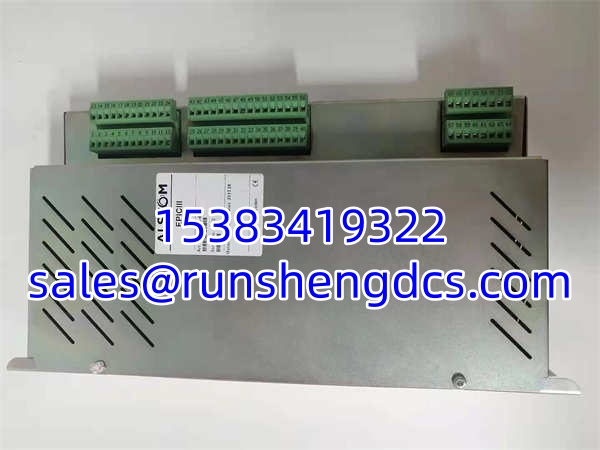
ALSTOM EP3-E-4-A
Application Scenarios
- Coal-Fired Power Plant ESPs: Utilities use the to maintain particulate collection efficiency during high-sulfur coal burns, preventing opacity violations.
- Cement Kiln Dust Collection: Cement plants use it to control back-corona in high-resistivity dust environments, keeping the kiln draft stable.
- Industrial Electrostatic Heating: Specialty glass and metal manufacturers use the for precise high-frequency induction heating control.
Case Study: A power plant had an ESP field tripping on “Arc” every 5 minutes. They replaced the twice. Third time, we found the rapping hammer was mechanically stuck, causing massive mechanical vibration that shook a connector loose on the HV rectifier. Fixed the rapper, reseated the connector, and the controller worked fine. Always check the mechanicals before blaming the electronics.
FAQ
No. EPIC III uses a different backplane connector and communication protocol. The will not fit or function in an EPIC II system. Verify your chassis generation.
Can I hot-swap this controller?
No. High-frequency power controllers require a full power-down and discharge sequence. Hot-swapping the will likely destroy the backplane and the new card. Follow the EPIC III shutdown procedure.
The suffix typically indicates a firmware revision or minor hardware update for specific utility specs. Functionally similar, but some EPIC III supervisors require matching revisions. Check your system manual or contact Alstom support before substituting.
Why is my “Spark Rate” LED solid red?
Solid red usually means a hard arc fault or shorted HV cable. Check the HV cable, insulators, and collector plates. The is doing its job by shutting down. Don’t reset it until you’ve found the arc.
Do you have these in stock right now?
Inventory for legacy Alstom power electronics fluctuates daily. Check the live stock counter or contact us directly. We don’t list phantom inventory.
12 months. If the controller fails to regulate, trips falsely, or won’t communicate under normal conditions, we replace it. No restocking fees on DOA units.