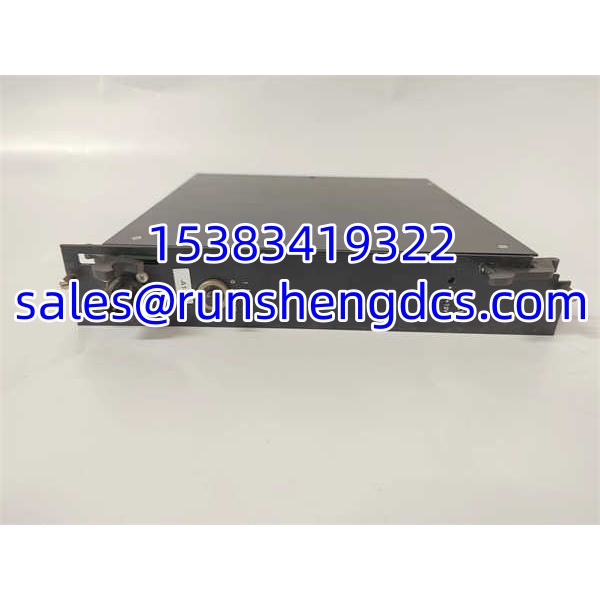

Description
Key Technical Specifications
| Parameter | Value / Note |
|---|---|
| Manufacturer | ALSTOM (GE Energy / ALSPA heritage) |
| Part Number | STO0982E01 |
| Product Type | Control Module / Control Card |
| Series Association | ALSPA / industrial automation control platform |
| Core Function | Process control, monitoring, and system integration |
| Hot-Swap | Supported per supplier documentation; verify with OEM manual |
| Communication Interfaces | Modbus, Profibus, Profinet, RS-232, RS-485, Ethernet |
| Power Input | 24 VDC or 220 VAC variants reported; dual power input possible |
| Operating Temperature | -20°C to +60°C (supplier claim; verify with OEM) |
| Certifications | CE, UL, ROHS claimed by some suppliers |
| Typical Applications | Power plants, industrial automation, process control, transportation systems |
| Weight | ~2.36 kg to ~3.3 kg depending on listing |
Product Introduction
The ALSTOM AL132 / AL132A, commonly referenced with part number STO0982E01, is an industrial control module used in automation and power generation environments. It is associated with ALSTOM’s ALSPA and GE Energy heritage, and is typically deployed where reliable process control, equipment monitoring, and system integration are required. In practice, this type of card sits between field devices and higher-level controllers, handling signal processing, control logic execution, and communication with other automation nodes.
From a procurement and maintenance perspective, the AL132 is a legacy-critical item. Plants running older ALSTOM or GE Energy control systems often keep these modules as strategic spares because lead times for discontinued hardware can be long. Its reported support for hot-swap, modular expansion, and multiple industrial communication protocols makes it flexible for brownfield installations. However, because public specifications vary, every unit should be verified against the installed system revision before deployment.
QA/QC Transparency SOP
- Intake & Origin Verification — Confirm model AL132 or AL132A and part number STO0982E01. Inspect for physical damage, corrosion, burnt components, or rework marks. Verify the ALSTOM/GE nameplate and revision code.
- Power-Up Test — Apply the correct power input per nameplate rating. Verify stable power-on behavior, LED indicators, and absence of abnormal heating or noise.
- Communication Verification — Test available communication interfaces such as RS-232, RS-485, Ethernet, Modbus, Profibus, or Profinet where applicable. Confirm the module responds to polling or configuration tools consistent with the installed system.
- Functional & I/O Validation — If the module includes configurable I/O or control functions, verify input sampling, output response, alarm behavior, and watchdog operation under controlled test conditions.
- Final QC & Packaging — Record hardware revision, firmware version if accessible, power test results, and communication test results. Package in anti-static shielding with desiccant. Include nameplate photo and test report.
Field Engineer Gotchas
- AL132 vs AL132A Confusion — These revisions may differ in firmware, hardware layout, or communication capabilities. Solution: match the revision to the existing installed module or verify compatibility with the system integrator.
- Part Number Ambiguity — STO0982E01 is the most consistent associated part number, but surplus listings sometimes omit it. Solution: do not purchase without a clear nameplate photo showing both AL132/AL132A and STO0982E01.
- Misleading Voltage Claims — Some listings incorrectly associate “132 kV” or high-current ratings with this module. That is not credible for a control card. Solution: treat such claims as listing errors and rely on the physical nameplate.
- Actuator Listing Confusion — A few sources incorrectly describe as an electric actuator. The more consistent evidence points to a control module/card used in automation or power systems. Solution: verify mechanical dimensions and connector types before accepting an actuator description.
- Firmware/Configuration Dependency — Even if the hardware matches, incorrect firmware or configuration can prevent integration. Solution: back up the existing module configuration before replacement.
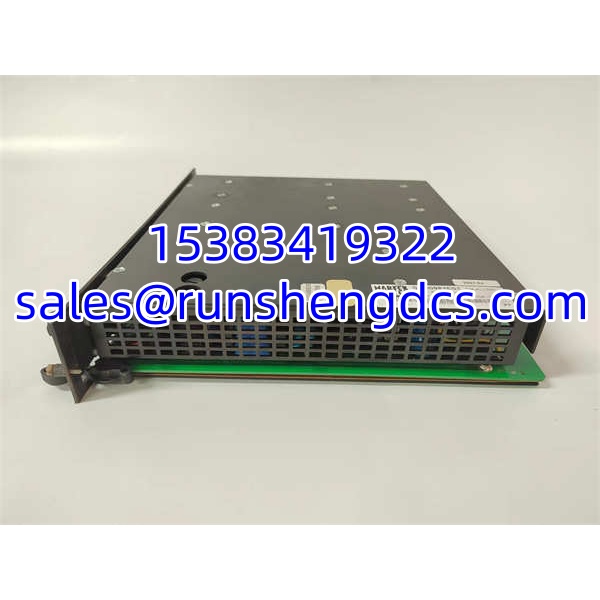
ALSTOM AL132
Application Scenarios
- Power plant control system spare — An ALSTOM/GE Energy control rack loses a control card during operation. A verified /AL132A is used as a like-for-like replacement to restore control logic and communication.
- Industrial process automation node — The module is used in a process control cabinet where it exchanges data with PLCs, HMIs, or DCS controllers via Modbus or Profibus.
- Brownfield system maintenance — A facility running legacy ALSTOM automation hardware sources an module to avoid a full control system retrofit.
FAQ
Not necessarily. and may represent different hardware or firmware revisions. Compatibility should be confirmed against the installed system documentation.
is the part/order code most commonly associated with the ALSTOM / control module. Always match this code when sourcing replacements.
Is this a PLC, DCS card, or actuator?
The most consistent description is a control module/control card used in industrial automation and power systems. Some third-party listings incorrectly describe it as an actuator; those should be verified carefully.
Can it support Modbus or Profibus?
Supplier documentation claims support for Modbus, Profibus, Profinet, RS-232, RS-485, and Ethernet. However, actual supported protocols depend on the specific hardware revision and installed firmware.
Is hot-swap supported?
Hot-swap is claimed in supplier materials, but it should not be assumed. Verify with the OEM manual and the existing system configuration before replacing the module online.
Where is it typically used?
Common application areas include power generation, petrochemical processing, industrial automation, and transportation control systems.
How do I avoid buying the wrong unit?
Require a clear nameplate photo showing ALSTOM branding, model or , part number , and hardware revision. Reject listings that cannot provide this.