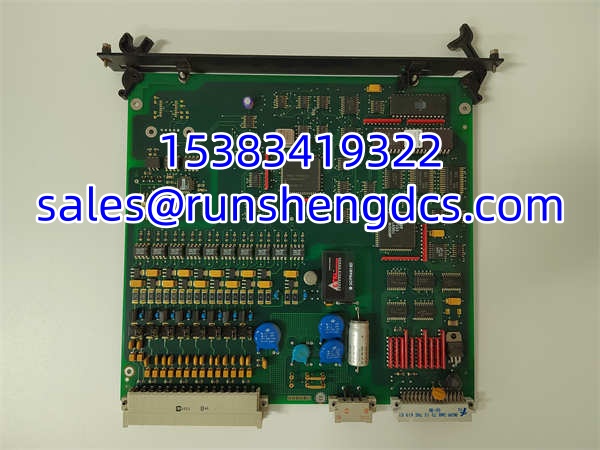

Description
Key Technical Specifications
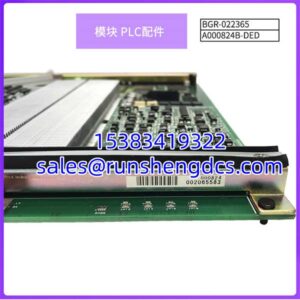
- Product Type: Gas Turbine Control Motherboard
- System Compatibility: ALSTOM Gas Turbine Control Systems
- Core Processing: Advanced Processor + High-Speed Digital Signal Processor (DSP)
- Primary Function: Complex control logic execution & high-precision measurement
- Safety Features: Integrated fault diagnosis and automatic protection mechanisms
- Hardware Architecture: High-capacity memory with rich HMI interfaces
- Manufacturing Standard: Advanced materials with high anti-interference capability
- Reliability: Engineered for high stability in harsh power generation environments
- Integration: Designed for easy integration with existing plant systems
- Application Scope: Gas turbines, steam turbines, and internal combustion engines
Product Introduction
Gas turbines demand absolute precision. The ALSTOM AH116-2 is the core control motherboard designed to serve as the central brain of ALSTOM turbine control systems. It utilizes a high-speed Digital Signal Processor (DSP) to execute complex control logic, monitor real-time operating states, and ensure the unit runs safely and efficiently. Honestly, if your turbine is experiencing erratic load responses or tripping on false diagnostics, this motherboard’s processing unit or memory is usually where the degradation begins.
Why keep using it? Because replacing a turbine control system is a massive capital project. The AH116-2 provides high-precision measurement and robust fault protection that prevents catastrophic mechanical failures during operation. It features rich human-machine interface ports, making local monitoring and maintenance straightforward. Bottom line — it’s the high-reliability core that keeps your power generation assets online, and sourcing a verified, tested unit is critical for minimizing unplanned downtime.
Troubleshooting Quick Reference
- Fault: Turbine Trips on False Diagnostic | Cause: DSP Processing / Memory Degradation | Relevancy: 85% | Quick Check: Review event logs for internal processor faults | Fix: Reseat board, verify HMI connections, replace if persistent
- Fault: Erratic Control Logic / Hunting | Cause: Signal Noise / Anti-Interference Failure | Relevancy: 75% | Quick Check: Measure grounding and shield continuity at HMI ports | Fix: Verify cabinet grounding, replace motherboard if noise persists
- Fault: HMI Comm Loss / Blank Display | Cause: Interface Port Failure | Relevancy: 70% | Quick Check: Ping HMI, check physical cable connections | Fix: Test with known-good cable, inspect motherboard port pins
- Fault: Protection System Fails to Actuate | Cause: Logic Execution Failure | Relevancy: 90% | Quick Check: Force test I/O during maintenance window | Fix: Immediate replacement required if protection logic fails
- Fault: Intermittent System Resets | Cause: Power Supply Ripple / Capacitor Aging | Relevancy: 60% | Quick Check: Measure DC rail voltage on the backplane | Fix: Check system power supply, replace AH116-2 if power is clean
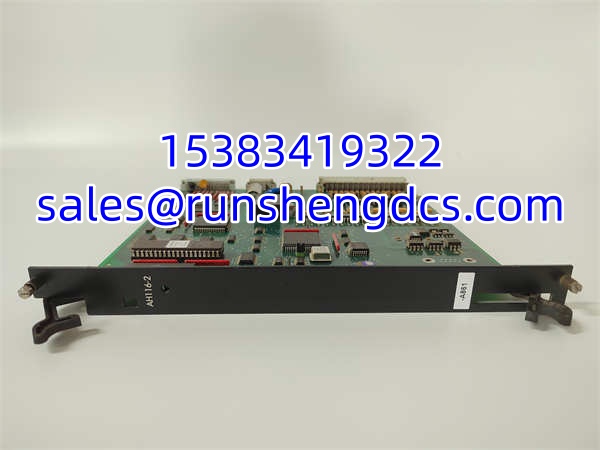
ALSTOM AH116-2
Application Scenarios & Pain Points
- Combined Cycle Power Plants: High-stress environments where turbine efficiency dictates profitability. The AH116-2’s DSP handles rapid load-following commands, preventing thermal fatigue on the turbine blades.
- Steam Turbine Governing: Precise speed and pressure control. The board’s high-capacity memory stores complex thermodynamic models, ensuring smooth synchronization to the grid.
- Internal Combustion Engine Generators: Harsh, high-vibration environments. The AH116-2’s advanced manufacturing and anti-interference design survive the electrical noise generated by large ignition systems.