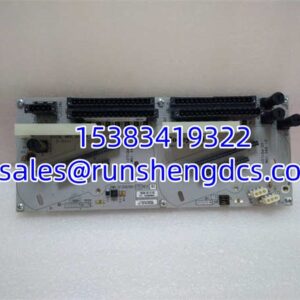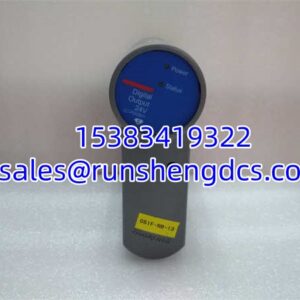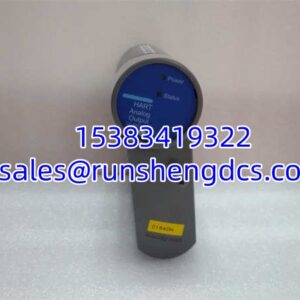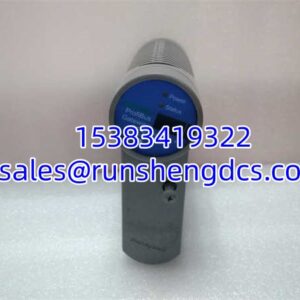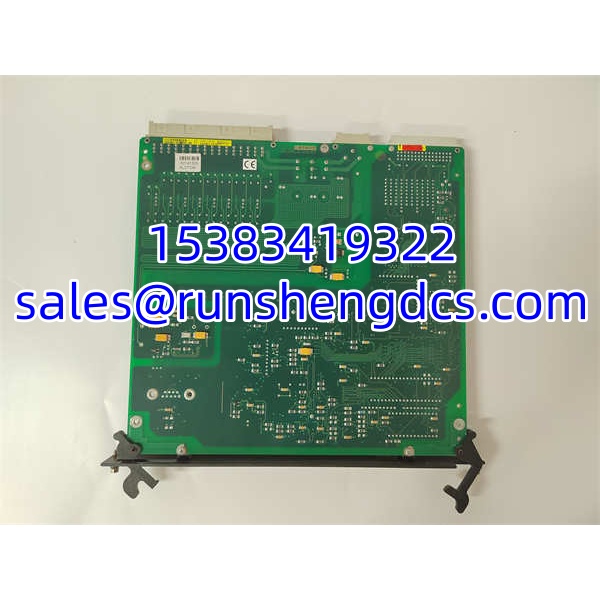

Description
Key Technical Specifications
| Parameter | Value / Note |
|---|---|
| Manufacturer | ALSTOM (Foxboro / GE Power heritage) |
| Product Type | Analog Input Module |
| Compatible System | Foxboro I/A Series DCS (IABus chassis) |
| Channel Count | 16 analog inputs |
| Input Signal Types | 0–20 mA, 4–20 mA, 0–5 V, 1–5 V, 0–10 V, ±10 V |
| Resolution | 16-bit |
| Accuracy | ±0.1% of full scale |
| Sampling Rate | Up to 1000 points/sec (shared across channels) |
| Isolation | Channel-to-channel and channel-to-ground, 250 V AC continuous |
| Overvoltage Protection | Yes, up to 250 V AC |
| Power Supply | +5 VDC from IABus backplane |
| Power Consumption | ~2.5 W (verify against OEM datasheet) |
Product Introduction
Legacy DCS migrations stall the moment you discover that a critical analog input card has no direct replacement in the new platform — and the plant cannot afford a shutdown to rewire every transmitter. The AH116-2 sits squarely in that brownfield reality. It is a 16-channel analog input module for the Foxboro I/A Series DCS, reading 4-20mA and voltage signals from field instruments and digitizing them at 16-bit resolution for the control processor.
From a maintenance perspective, this module is a high-priority spare. Plants still running I/A Series hardware — particularly in power generation and oil & gas — keep AH116-2 units on the shelf because a failed AI card can blind multiple control loops simultaneously. The 250 V AC isolation between channels is not a nice-to-have; it is what prevents a ground fault on one transmitter from cascading across the entire rack. Bottom line — if you are keeping an I/A Series node alive, this card is not optional inventory.
QA/QC Transparency SOP
- Intake & Origin Verification — Confirm model AH116-2, inspect for physical damage, corrosion on IABus connectors, and verify the Foxboro/ALSTOM nameplate. Cross-reference the revision code against known I/A Series compatibility matrices.
- Live Functional Testing — Install the module in a known-good I/A Series FCP or node chassis. Apply calibrated 4-20mA and 0-10V signals to all 16 channels using a Fluke 754 process calibrator. Verify digitized values in the I/A Series workstation within ±0.1% FS.
- Electrical Parameter Tests — Measure backplane current draw at +5 VDC to confirm ~2.5W consumption. Test isolation resistance between each channel and ground (>10 MΩ typical). Verify overvoltage protection does not leak at 250 V AC.
- Firmware/Config Verification — Read the module’s firmware and hardware revision via the I/A Series System Management interface. Confirm compatibility with the installed I/A Series software release (e.g., v10.x, v11.x). Document channel configuration settings.
- Final QC & Anti-Static Packaging — Record all channel calibration readings, revision codes, and test results. Package in anti-static shielding with desiccant. Include a test report and nameplate photo for traceability.
Field Engineer Gotchas
- Revision Code Mismatch — The AH116-2 has undergone multiple hardware revisions under Foxboro, GE Power, and ALSTOM ownership. A newer revision may require a minimum I/A Series software level. Solution: match the revision code to your existing installed modules or verify compatibility in the I/A Series hardware manual before ordering.
- Channel Configuration Drift — After replacing an AH116-2, channel engineering units and signal types (4-20mA vs 0-10V) must be re-verified in the workstation. A defaulted channel reading 0-10V when the field device outputs 4-20mA will produce garbage values. Solution: export the block configuration before removal.
- IABus Seating Force — These modules plug into the IABus backplane with a firm cam-lock mechanism. Forcing the module without releasing the lock can bend bus pins. Solution: use the ejector handles, align guides, and seat evenly. I have seen bent pins turn a 2,000 module replacement into a 10,000 chassis repair.
- Ground Loop on Non-Isolated Field Devices — Although the provides channel isolation, connecting a non-isolated 4-20mA loop with the shield grounded at both ends can still introduce noise. Solution: ground the shield at the field device only.
- Counterfeit/Relabeled Units — Surplus markets sometimes relabel unrelated cards as . Solution: verify the Foxboro/ALSTOM logo, part number engraving, and IABus connector pin count before energizing.
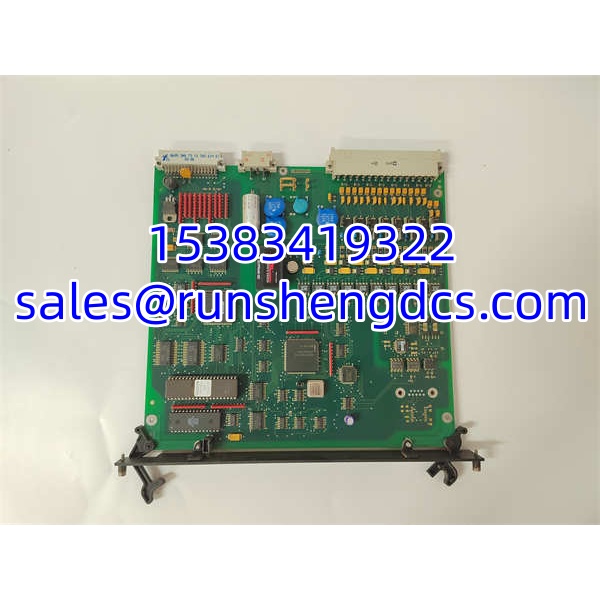
ALSTOM AH116-2
Application Scenarios
- Power plant boiler drum level monitoring — Multiple differential pressure transmitters feed 4-20mA signals into channels for triple-redundant level calculation. A failed channel triggers a voting mismatch alarm; hot-swapping the module restores redundancy without a unit trip.
- Refinery crude distillation temperature cascade — Twelve thermocouple transmitters output 4-20mA to an in a remote I/A Series node. The 16-bit resolution provides the granularity needed for tight temperature control across the column.
- Gas compressor station vibration monitoring — Velocity transmitters on compressor bearings feed into channels. The 1000 samples/sec shared sampling rate captures transient vibration events that slower modules would miss.
FAQ
It depends on the hardware revision of the and your I/A Series software release. Newer revisions may require v10.x or later. Check the Foxboro/ALSTOM hardware compatibility matrix before ordering.
Can I hot-swap this module?
The I/A Series supports online replacement for many modules, but confirm your specific node configuration and software release allow it. Do not assume — check the procedure first.
Does it support HART communication?
No. The reads analog current and voltage signals only. It does not decode HART digital communication.
Why do some listings call it a relay module or servo drive?
Third-party surplus sellers frequently mislabel or conflate part numbers. The most consistent and technically detailed specification identifies the as an I/A Series 16-channel analog input module. Verify against the physical nameplate.
What is the typical lead time for a new unit?
New modules are rarely available from OEM channels due to the age of the I/A Series platform. Surplus and refurbished units are the primary supply source. Lead times vary by vendor stock.
Can I use this in a non-Foxboro DCS?
No. The communicates exclusively via the IABus backplane protocol. It will not interface with ABB, Siemens, Honeywell, or Yokogawa systems.
How do I verify the module is genuine?
Check for the Foxboro/ALSTOM nameplate, engraved part number, and IABus connector pin configuration. Counterfeit units may lack proper isolation and can damage the backplane.